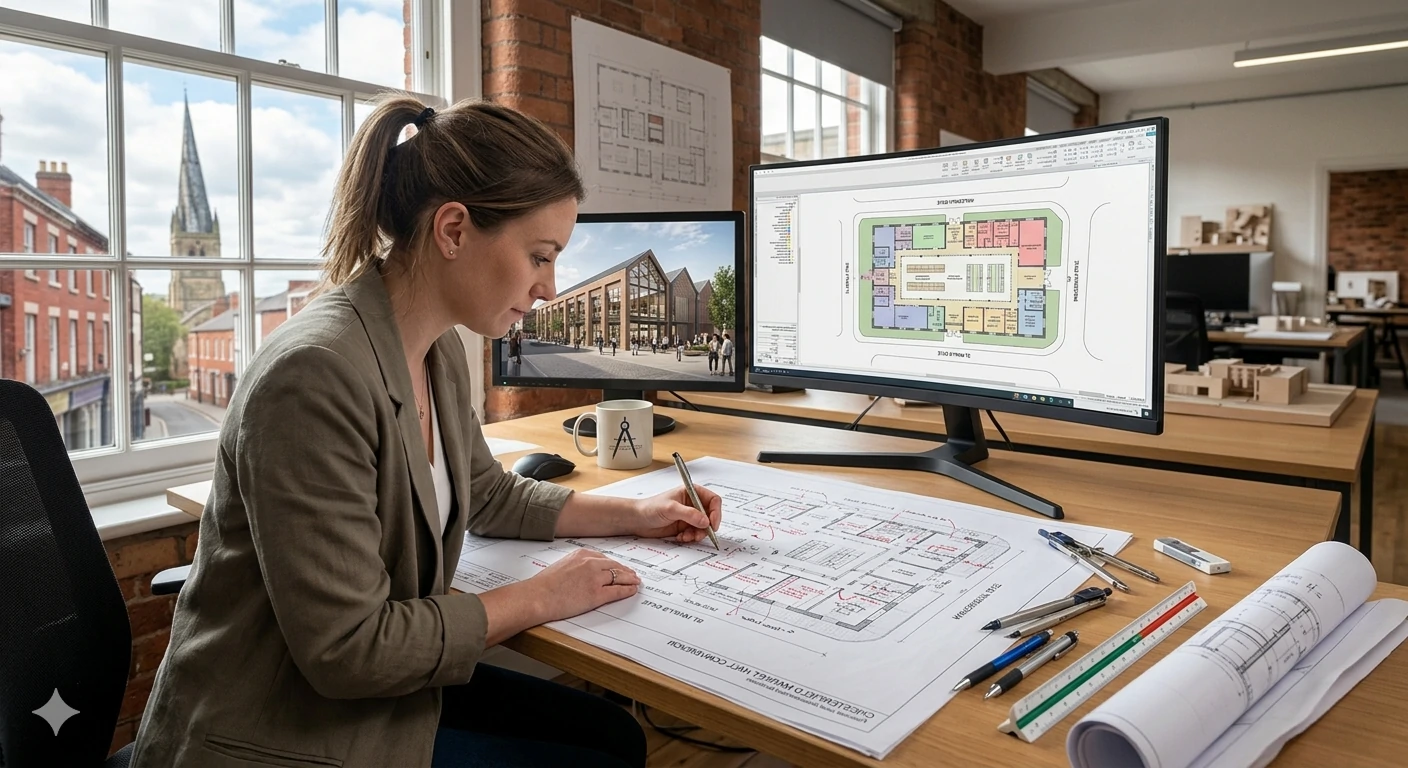
What Architectural Drafting Actually Delivers for Your Project
Most people call about architectural drafting when they've already got a project in mind but no clear way to show it on paper. Maybe your contractor asked for drawings. Maybe the permit office in Chesterfield sent you home because your plans weren't detailed enough. Either way, you need a set of documents that communicates exactly what's being built, where, and how.
That's what architectural drafting actually is. Not design advice. Not decoration ideas. It's the technical translation of your project into scaled, dimensioned drawings that contractors can build from and inspectors can approve.
Here's what a typical set of architectural drafting documents includes for residential projects:
- Floor plans showing room layouts, wall locations, door swings, and window placements
- Elevations that describe exterior and interior wall heights and finishes
- Sections cut through the building to show how floors, walls, and roofs connect
- Site plans that place your project on the lot with setbacks and property lines noted
The team produces these drawings so they line up with what Chesterfield's building department expects to see on a permit application. That matters more than most homeowners realize. A drawing that looks good on screen but doesn't include the right details, the right scale, or the right notes will get kicked back. The team sees this happen to homeowner-submitted plans almost every week.
The drawings don't exist in a vacuum, either. When your project needs structural calculations or beam sizing, the architectural drafting package ties directly into those engineering documents. A room addition in the Wildhorse neighborhood, for example, might need floor plan design paired with structural permit drawings. Both sets reference each other and need to agree.
So what you're really getting isn't just lines on a page. You're getting a buildable, permit-ready document set that keeps your contractor on track and keeps the inspector from flagging problems at the job site.
Not sure if your project needs full architectural drafting or just a simpler scope? Give us a call and the team can tell you in about ten minutes.

Drafter vs. Architect: What Missouri Law Actually Requires
This question comes up in almost every first conversation. A homeowner in Chesterfield calls about a room addition or a kitchen remodel, and somewhere along the way a contractor told them they need an architect. Maybe they do. But probably not for the project they're describing.
Missouri law draws a clear line. According to Missouri Revised Statutes Chapter 327, residential projects under a certain scope don't require a licensed architect's stamp. Single-family homes and most residential renovations fall into this category. Architectural drafting handled by a qualified drafter, paired with structural engineering when needed, covers the legal requirements for your permit application.
So what's the actual difference? A professional architect designs buildings and carries a specific state license. A drafter produces the technical drawings, the floor plans, the elevations, the construction details your contractor and your building department need to move forward. For most residential work in Chesterfield, what's holding up your project isn't a missing architect. It's missing drawings that match what the plan reviewer expects to see.
There are projects that do require an architect or engineer of record:
- Commercial buildings or mixed-use structures
- Multi-family projects above a certain unit count
- Projects where the municipality specifically requires an architect's seal
For a home addition, a basement finish, a new staircase layout, or an interior space renovation, the team handles the architectural drafting and coordinates structural calculations through a licensed engineer. That combination satisfies St. Louis County's plan review process. It's the same outcome you'd get from an architect's office, without the overhead. Understanding the National CAD Standard for architectural drafting helps clarify when engineering sign-off is required alongside your drafting package.
Don't pay for a service your project doesn't legally require. If your scope does need an architect, the team will tell you that upfront. But most homeowners sitting on a remodel in Chesterfield are closer to a permit than they think. They just need the right drawings in the right format.
Chesterfield's Two-Step Approval Process Explained
Most projects in Chesterfield don't get held up because the design is wrong. They get held up because the drawings don't match what the reviewer needs to see at each stage. The city runs a two-step process, and understanding it before you submit saves weeks.
Step one is the plan review. Your architectural drafting package goes to the city's building division. They're checking dimensions, setbacks, structural details, and code compliance. In Chesterfield, the review team pays close attention to residential additions near floodplain boundaries. If your property sits near the Chesterfield Valley, expect extra scrutiny on grading plans and elevation details, that area carries FEMA flood zone designations that trigger specific elevation and load requirements. For projects where structural resilience is a factor, FEMA's Earthquake-Resistant Design Guide for homebuilders outlines construction standards that inform how drawings must document load paths and connection details. A clean, complete set of drawings usually clears this stage in about two weeks. An incomplete set starts a back-and-forth cycle, and every resubmission adds another review round.
Here's what trips people up most often at plan review:
- Missing structural calculations to support beam sizes or header spans
- Floor plans that don't match the elevation drawings
- No clear indication of existing vs. new construction on renovation projects
- Setback dimensions left off the site plan
The team catches these issues before submission. It's the same handful of mistakes that cause rejections.
Step two is the field inspection. Once your permit is issued and work begins, the inspector comes out to verify what's built matches what's on the approved drawings. This is where sloppy drafting really costs you. If the framing doesn't line up with the plans, the inspector flags it. If a load-bearing wall removal shows different header sizes than what's drawn, work stops until it's resolved.
According to the International Code Council, most residential permit delays trace back to incomplete or inconsistent construction documents. That lines up with what the team sees in Chesterfield every month.
Good architectural drafting isn't just about getting a permit issued. It's about making sure the inspector signs off the first time they walk through. That's the part most homeowners don't think about until they're standing in a half-framed room waiting on a callback.
The Drafting Process from First Call to Permit Submission
Most people call because they've got a project in their head but no idea what the permit office actually needs to see on paper. That's the starting point for almost every architectural drafting job the team handles in Chesterfield.
Here's how it works from start to finish:
- Initial conversation and scope. You tell the team what you're planning, room addition, kitchen remodel, finished basement. The team asks about your lot, your timeline, and whether you've already talked to a contractor. This call usually takes fifteen minutes.
- Site measurements or as-built drawings. Before any new plans get drawn, the team needs to know what's already there. Sometimes that means a site visit to measure your existing layout. If you've got original blueprints, those save time, but they're often outdated or missing entirely.
- Draft floor plans and design development. The team builds your plans in CAD. You'll see room layouts, dimensions, wall locations, window placements. This is where your ideas become something a contractor can actually build from and a permit reviewer can approve.
- Structural coordination. If your project involves load-bearing wall removal or beam and header design, the team handles structural calculations at this stage. The permit office won't accept drawings without them.
- Revisions and final review. You get a draft to look over. Changes happen here. Most projects need one or two rounds before everything is right.
- Permit-ready submission package. The final drawings get formatted to meet Chesterfield's municipal requirements, title blocks, code references, all of it.
The whole process typically runs two to three weeks for a standard residential project. Bigger jobs or anything in the Wildhorse or Clarkson Valley area with HOA design review can take longer. Many of Chesterfield's established neighborhoods operate under HOA architectural review, which means the drawing set has to satisfy both the city's building department and the HOA board, two separate approvals, sometimes with different detail requirements.
The number one reason permits get kicked back in St. Louis County municipalities is incomplete drawings. Missing dimensions, no structural details, wrong scale. The team builds every set of plans around what the reviewer is going to check first, because a rejection cycle adds weeks to your project.
How to Know Your Drawing Set Is Ready to Submit
Most permit rejections in Chesterfield don't happen because the design is wrong. They happen because the drawing set is missing something the plan reviewer expected to see on page one.
The team reviews hundreds of drawing sets a year, and the same gaps show up over and over. A floor plan without dimensions. A structural detail that references a beam size but doesn't show the connection. An elevation view that doesn't match the site plan. These aren't design failures, they're assembly problems, the kind that cost you two or three extra weeks in review.
Before you submit anything to St. Louis County or the City of Chesterfield building department, your architectural drafting package should pass a few basic checks:
- Every sheet has a title block with your project address, sheet number, and revision date.
- Floor plans show wall dimensions, door swings, window sizes, and room labels.
- Structural callouts match the engineering calculations. If the engineer says LVL 1.75x11.875, that's what the detail shows.
- Elevation drawings reflect the actual roof pitch, finished floor heights, and exterior materials.
- A site plan shows setbacks from property lines. Chesterfield zoning is specific about side-yard and rear-yard distances.
- Cross-references between sheets are consistent. If Sheet A2 says "see detail 3 on S1," that detail better exist on S1.
The thing that holds up a permit more than anything else is a mismatch between sheets. The plan reviewer catches it, flags it, and your project sits in a queue again.
A clean drawing set doesn't just help with permits. It helps your contractor build accurately, fewer field questions, fewer change orders. The drawings become the single source of truth for everyone on the job site, from the framer working the addition to the inspector checking your footings.
Not sure if your current plans are ready? Give us a call and the team can do a quick review before you submit.
Frequently Asked Questions
Do I need a licensed architect for my Chesterfield home addition or remodel?
Most homeowners in Chesterfield do not need a licensed architect for residential work. Missouri law under Chapter 327 allows qualified drafters to produce permit-ready drawings for single-family homes and most renovations. You typically only need an architect's seal for commercial buildings, multi-family projects, or when your municipality specifically requires it. For a room addition, basement finish, or interior renovation, architectural drafting paired with licensed structural engineering covers what St. Louis County's plan review process requires.
What does a complete architectural drafting package include?
A complete set includes floor plans, exterior elevations, building sections, and a site plan. Floor plans show room layouts, wall locations, door swings, and window placements. Elevations describe wall heights and finishes. The site plan places your project on the lot with setbacks noted. When structural work is involved, the drafting package ties directly into engineering documents. Both sets reference each other and must agree before Chesterfield's plan reviewer will approve your permit application.
How long does the plan review process take in Chesterfield?
A clean, complete set of drawings usually clears Chesterfield's plan review in about two weeks. An incomplete set starts a back-and-forth cycle, and every resubmission adds another full review round. The most common delays come from missing structural calculations, floor plans that don't match elevations, and unclear existing vs. new construction markings. Getting the drawings right the first time is the fastest path to your permit.
My property is near the Chesterfield Valley. Does that affect my drawings?
Yes, properties near the Chesterfield Valley face extra scrutiny during plan review. That area carries FEMA flood zone designations that trigger specific elevation and load requirements. Your drawings will need to include grading plans and elevation details that satisfy those flood zone standards. Skipping those details is one of the most common reasons valley-area projects get sent back for resubmission. The team accounts for these requirements before your package goes to the city.
What happens if the permit office sends my plans back?
If your plans get kicked back, it almost always means something is missing or doesn't match what the reviewer expects. Common problems include missing beam calculations, floor plans that conflict with elevation drawings, or setback dimensions that aren't clearly shown. Every resubmission adds another review cycle and delays your project. Professionally prepared architectural drafting in Chesterfield is designed to match exactly what the building department needs to see the first time you submit.
How do I know if my project needs full architectural drafting or something simpler?
The scope of your project determines what level of drafting you need. A small interior renovation might only need a basic floor plan, while a room addition in a neighborhood like Wildhorse may require a full package including structural permit drawings. The fastest way to find out is to call and describe your project. In about ten minutes, the team can tell you exactly what documents your contractor and Chesterfield's building department will require.