What a Structural Inspection Covers That a Home Inspection Misses
A standard home inspection checks a lot of boxes. HVAC, plumbing, electrical, roof condition. But the inspector isn't a structural engineer. They're looking at surfaces. They'll note a crack in the basement wall, sure. What they can't tell you is whether that crack means the foundation is actively settling or it's just cosmetic shrinkage from curing. For these critical issues, we provide Open Concept Engineering solutions for your project.
A pre-purchase structural inspection goes underneath the finish work. The team evaluates load paths, foundation bearing capacity, framing connections, and whether any modifications were made without engineering. In Chesterfield, the team sees this constantly with homes that have had basement finishes or room additions done over the years. Someone finished a basement, covered the foundation walls with drywall, and now there's no way to see what's happening behind it without knowing what to look for from the structural side.
Here's what a structural inspection specifically targets that a general home inspection doesn't:
- Foundation movement patterns, including differential settlement and lateral displacement from soil pressure
- Load-bearing wall identification, especially where previous owners may have removed or altered walls without permits
- Floor system deflection, sagging joists, undersized beams, and improper notching or boring
- Connections between structural elements like rim boards, posts, and headers
- Evidence of past water intrusion that has compromised wood framing or concrete integrity
The home inspection report often says something like "recommend further evaluation by a structural engineer." That line is there because the home inspector knows they've reached the edge of their scope. According to the American Society of Home Inspectors, general inspectors are not required to determine structural adequacy of any component. That's not a knock on them. It's just a different job.
So if you're buying a home in the Wildhorse neighborhood or anywhere else around Chesterfield, don't assume the home inspection covered the structure. It covered the condition of visible surfaces. A professional structural engineer's inspection covers what's actually holding your home up.
Structural Red Flags in Chesterfield's Older Homes
A lot of homes in Chesterfield were built in the 1970s through the early 1990s. That's not old by most standards. But it's old enough for certain problems to show up, and the team sees the same ones over and over again.
Homes in neighborhoods like Chesterfield Village and Wild Horse Creek tend to share similar construction methods, poured concrete foundations, engineered wood trusses, brick veneer over frame. Solid building for the era. But forty or fifty years of Missouri clay soil movement does real work on a foundation, and the damage shows up slowly.
Here's what the team flags most often during a pre-purchase structural inspection in these older Chesterfield homes:
- Stair-step cracks in brick veneer near corners or above windows. These usually trace back to foundation settlement on one side of the house.
- Doors and windows that stick or won't latch. People blame humidity. It's differential movement in the frame.
- Sagging or bouncy floors on the main level. Often caused by undersized beams or joists that were fine by code in 1978 but don't meet current load expectations.
- Horizontal cracks in basement walls. This is the big one. Lateral soil pressure pushing inward. It doesn't fix itself.
- Water staining along the base of foundation walls with no obvious leak source. That's hydrostatic pressure finding a path.
Not every crack means the house is falling apart. Some are cosmetic. But you can't tell the difference from a photo or a quick walk-through. That's why a licensed structural engineer needs to look at the pattern, measure the displacement, and check whether movement is active or old and stable.
Previous owners may have done renovations without permits. The team regularly finds walls removed in finished basements with no engineering behind the change. That's a load path problem hiding behind drywall, and a general home inspector won't catch it because they're not trained to trace loads through a structure. Understanding how engineers systematically evaluate these conditions is covered in depth through resources like Structural Building Condition Surveys from the American Society of Civil Engineers.
Knowing what to look for saves you from buying someone else's deferred problem.
What Happens During Your On-Site Structural Inspection
Most buyers picture someone walking through a house with a clipboard. That's not what this looks like.
A pre-purchase structural inspection in Chesterfield is hands-on, methodical work. The team shows up with the right tools and a clear process. Every visit follows the same sequence so nothing gets missed:
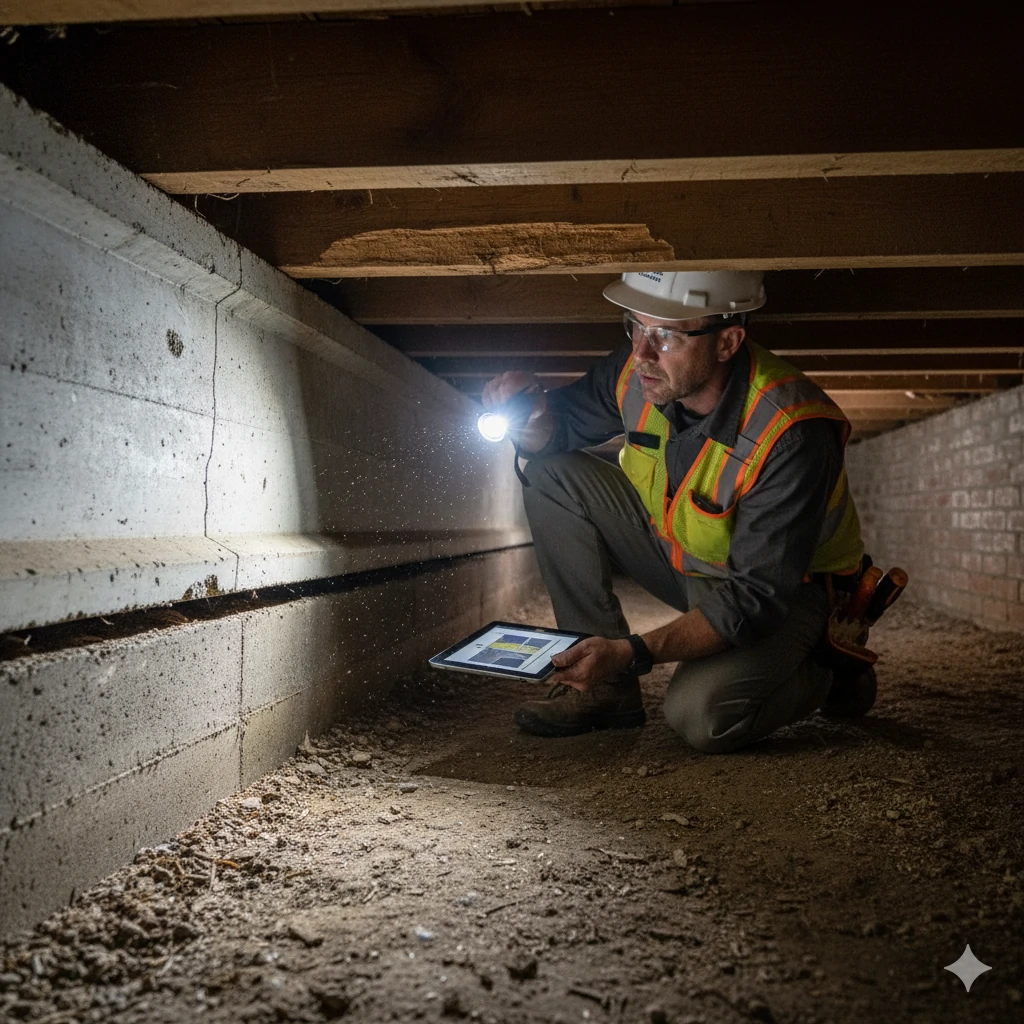
- Start in the basement or crawl space. This is where the story of a house really begins. The team checks the foundation walls, support columns, floor joists, and any signs of past water intrusion or settlement.
- Move to the main living areas. Load-bearing walls get identified. Cracks in drywall or plaster get measured. Floors get checked for slope or bounce, something older homes in the Clarkson Valley area show more often than you'd think.
- Inspect the attic and roof structure. Rafters, trusses, collar ties, ridge boards. The team looks for sagging, splits, improper modifications, or signs that previous work was done without engineering.
- Check the exterior. Foundation grade, drainage patterns, retaining walls, visible cracks in brick or block. Soil conditions around Chesterfield can shift quite a bit from one lot to the next.
- Document everything with photos and measurements. Not just problems. The team records what's in good shape too, because that matters when you're making a buying decision.
The biggest concerns are rarely visible from the main floor. They're hiding below it or above it. That cracked drywall in the hallway could be cosmetic, or it could be a floor system deflecting more than it should. The inspection tells you which one it is.
The whole visit usually takes a couple of hours for a typical single-family home. Larger properties or homes with finished basements take longer, there's just more to access and evaluate. A licensed structural engineer is reviewing every element, not a generalist with a checklist.
The team isn't flagging cosmetic issues or testing appliances. Every observation ties back to one question: is this house structurally sound enough for you to buy it with confidence?
Using Your Structural Report to Negotiate Before Closing
The report isn't just for your peace of mind. It's a tool that changes the conversation between you and the seller.
Most buyers in Chesterfield don't realize how much leverage a structural engineer's findings carry at the negotiation table. A home inspector's report might note "cracks in foundation, recommend further evaluation." That's vague. A structural engineering report puts numbers and specifics behind it. It names the problem, explains the cause, and outlines what the fix actually involves. Sellers and their agents take that seriously because it's hard to argue with a licensed engineer's documented findings.
Here's what the team sees buyers do with the report:
- Request a repair credit based on the actual scope of structural work needed
- Ask the seller to complete specific repairs before closing, with the engineer verifying the work after
- Renegotiate the purchase price to reflect the true condition of the home
- Walk away from the deal entirely if the structural issues are too costly or too risky
Any of those options puts you in a stronger position than guessing. Your real estate agent can present the report directly to the seller's side as objective, third-party documentation. It's not you saying "I think there's a problem." It's an engineer saying "here's what's wrong, here's why, and here's what it takes to fix it."
Sellers respond to that. In the Clarkson Valley area, the team inspected a 1990s two-story where the rear wall had shifted enough to affect the second-floor framing. The buyer used that report to negotiate a $14,000 credit at closing. Without the report, that issue would've been a vague line item on a home inspection and probably ignored.
One thing to keep in mind: timing matters. Get the structural inspection done early in your due diligence period so there's room to negotiate before your contingency deadline passes. If you're already under contract on a home in Chesterfield, give the team a call sooner rather than later so the report is in your hands while you still have options.
When to Schedule and What to Do If Issues Are Found
The time to schedule a pre-purchase structural inspection is right after your offer gets accepted. Don't wait until the last week of your inspection period. In Chesterfield, most purchase contracts give you ten to fifteen days for due diligence, and structural findings sometimes need a second look or follow-up calculations. Burning five of those days before you even call is a mistake the team sees constantly.
Schedule the inspection before you commit to other trades. There's no point hiring a general contractor to quote a kitchen remodel if the foundation has a problem that changes everything. Get the structure evaluated first.
So what happens if the team finds something wrong? It depends on what "wrong" actually means. Here's how most findings break down:
- Minor cracks or settling: Common in homes throughout the Clarkson Valley area and most of Chesterfield. Cosmetic cracks in drywall or hairline foundation cracks under 1/8 inch usually don't change the deal.
- Active water intrusion or drainage issues: Not a dealbreaker, but it needs a real fix with a real cost attached before you close.
- Structural deficiencies: A sagging beam, a removed load-bearing wall with no header, or foundation movement beyond normal tolerances. These need engineering solutions and sometimes structural repair design before the home is safe to occupy as-is.
Most findings fall into that first category. But when they don't, you want to know before closing day.
If the inspection report flags a real structural concern, the team can provide repair recommendations and scope documents you can hand directly to your real estate agent. That gives you negotiating power. You're not guessing at repair costs or relying on the seller's contractor to tell you "it's fine." You've got a licensed engineer's assessment in writing.
A structural inspection report with clear findings can actually speed up your negotiation. Sellers respond faster to documented engineering concerns than to vague worries. It turns "I think there might be a problem" into "here's exactly what needs to happen." That clarity helps everyone move forward, whether you renegotiate the price or walk away with confidence.
Frequently Asked Questions
What does a pre-purchase structural inspection cover that a regular home inspection doesn't?
A structural inspection goes beyond surfaces to evaluate what's actually holding the house up. A general home inspector notes cracks and visible damage but can't tell you if a crack means active foundation settlement or just cosmetic shrinkage. In Chesterfield, the team checks load-bearing walls, foundation bearing capacity, floor system deflection, and framing connections — including changes previous owners made without permits. That's a completely different scope than a standard inspection.
What are the most common structural problems found in older Chesterfield homes?
The most common issues in Chesterfield homes from the 1970s through the 1990s are horizontal cracks in basement walls, stair-step cracks in brick veneer, and sagging main-level floors. Missouri clay soil movement puts real pressure on foundations over forty or fifty years. The team also regularly finds load-bearing walls removed during basement renovations with no engineering behind the change. These problems hide behind drywall and won't show up on a standard home inspection report.
How long does a structural inspection take, and when will I get the report?
Most on-site structural inspections in Chesterfield take two to three hours depending on the size and age of the home. The team works through the basement, main living areas, attic, and exterior in a set sequence so nothing gets skipped. Reports are typically delivered within a few business days. Since you're usually working against a contract deadline, it's smart to schedule as early in the inspection period as possible.
Do I need a structural inspection if my home inspector didn't find anything major?
Yes, because a home inspector isn't trained to evaluate structural adequacy. The American Society of Home Inspectors doesn't require general inspectors to determine if a structure is sound — that's outside their scope. If your inspection report says "recommend further evaluation by a structural engineer," that's the inspector telling you they've reached their limit. In neighborhoods like Wildhorse or Chesterfield Village, finished basements often hide foundation walls that need a trained eye to assess properly.
What should I do if the structural inspection finds a serious problem?
A serious finding gives you real options before you close. You can negotiate a price reduction, ask the seller to make repairs, or walk away if the numbers don't work. The written report from a licensed structural engineer carries weight in those conversations. In Chesterfield, the team documents both problems and what's in good shape, so you're making decisions based on the full picture — not just the worst-case item on the list.
Can a structural inspection be done on a home with a finished basement?
Yes, but a finished basement does limit direct access to foundation walls. The team uses what's visible — exposed sections, utility areas, window wells, and exterior grade — combined with interior signs like floor slope, drywall cracks, and door alignment to build a clear picture. In Chesterfield, many homes had basements finished by previous owners without permits, which is exactly why a structural engineer needs to trace load paths rather than just look at surfaces.