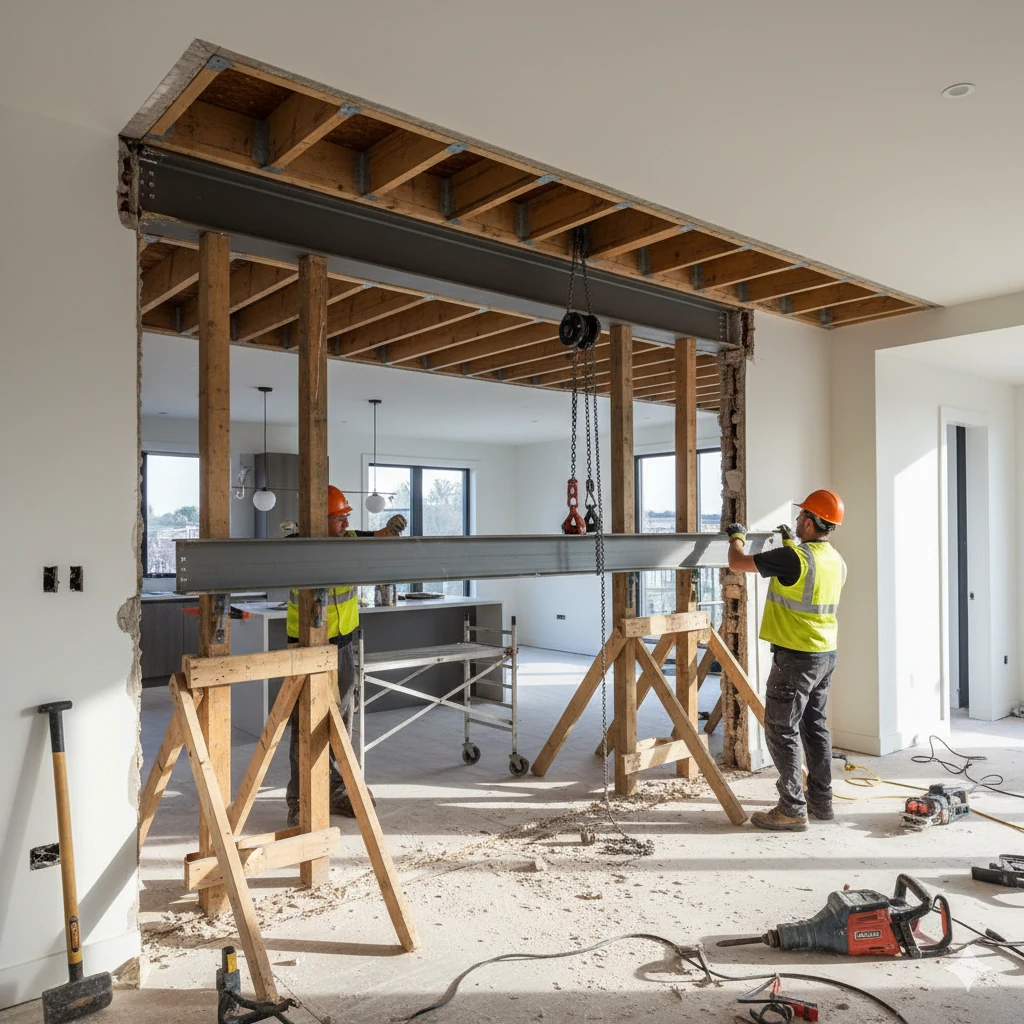
How to Tell If Your Wall Is Actually Load Bearing
Every contractor you talk to will have a different opinion. One says the wall can come right out. Another says it's holding up the whole second floor. That's the number one reason Chesterfield homeowners call Open Concept Engineering a local structural engineer who settles the question before anyone picks up a sledgehammer.
There's no single trick that tells you for sure. But there are strong clues, and the team looks at all of them together during a structural evaluation.
Signs That Point to a Load Bearing Wall
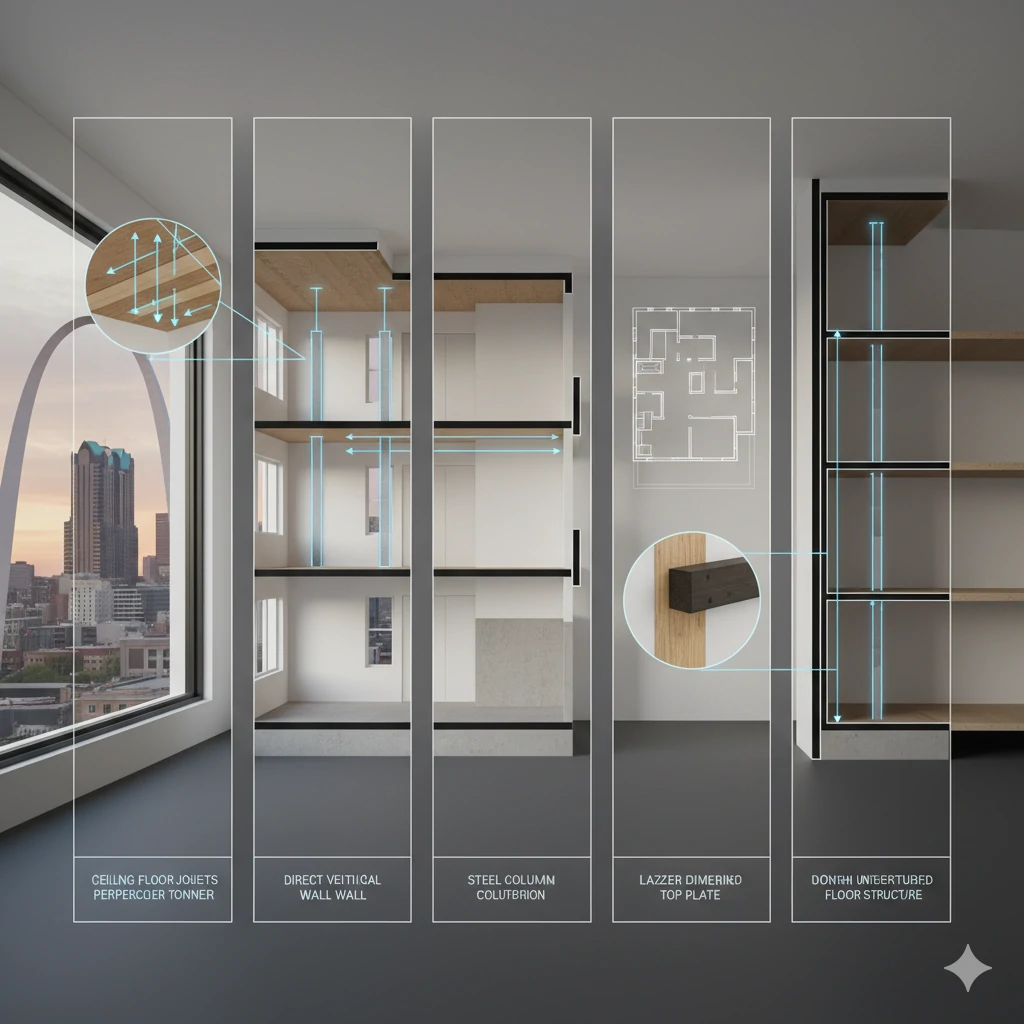
- The wall runs perpendicular to your floor joists, not parallel
- It sits directly above a beam, a column, or a foundation wall in the basement
- It's located near the center of the house rather than along the perimeter
- Removing drywall reveals a double top plate or larger framing lumber
- The wall continues straight down through multiple floors to the foundation
The wall between your kitchen and living room in a two-story home is almost always load bearing, especially in neighborhoods around Chesterfield Valley where homes built in the 1990s follow similar floor plan layouts. That center wall is doing real work.
But clues aren't confirmation. A wall can look non-structural and still carry roof loads through a truss system you can't see from inside. Or a wall that seems important might just be a partition framed heavier than it needed to be. Proper structural analysis requires reviewing the full load path from roof to foundation. Guessing gets people into trouble.
The process starts with your home's original drawings if they exist, then a site visit to check framing, measure spans, and trace the load path. Sometimes that means opening a small section of ceiling to confirm joist direction. Sometimes the answer is clear from the basement. It depends on the house.
Not sure what you're looking at? That's the most common starting point. Most people who call aren't engineers, they just know something doesn't feel right about the advice they got.
The Chesterfield Permit Process and Why It Sets Your Timeline
Most homeowners don't realize the permit is what controls their project schedule. Not the contractor's availability, not the material lead time. The permit.
Chesterfield falls under St. Louis County's building department for permit review. Turnaround runs about two to three weeks for residential structural permits, sometimes faster, sometimes not. But here's what catches people off guard: if your plans get kicked back for revisions, you go to the back of the line. The team sees this happen when drawings aren't detailed enough or when the beam sizing doesn't include the full load path down to the foundation. One missing calculation and you're looking at another two-week wait.
For load bearing wall removal, the county wants to see specific things in your submission:
- Stamped structural drawings from a licensed engineer showing the new beam, posts, and connections
- A clear load path from roof to foundation, not just the beam in isolation
- Details on how the new header ties into existing framing
- Foundation verification if new point loads are being introduced
That last one trips up a lot of projects in the Wildhorse and Clarkson Valley areas of Chesterfield, where older homes sometimes sit on foundations that weren't designed for concentrated loads. If the team identifies that during the engineering phase, it gets addressed in the drawings before submission, not after a rejection.
This is where most permits get held up. A contractor submits a sketch or a generic detail sheet, the plan reviewer flags it, and now your kitchen remodel is sitting in limbo. The structural drawings the team produces are built around what that reviewer wants to see: every connection detailed, every calculation referenced to the International Residential Code. It's not about overengineering the package, it's about giving the reviewer zero reasons to push it back.
If you're planning a project in Chesterfield, start the engineering before you book your contractor. Get the permit in motion first. Everything else follows from there.
What the Removal Process Looks Like From First Visit to Final Inspection
Most homeowners in Chesterfield have never been through this before. That's normal. Here's how load bearing wall removal actually works from start to finish, so nothing catches you off guard.
- On-site assessment. The team visits your home and looks at the wall you want removed, floor joists, ceiling framing, the foundation below. This visit usually takes about an hour, sometimes less in a single-story ranch near Chesterfield Valley.
- Structural engineering design. A licensed engineer designs the beam and header system that will carry the load once that wall is gone. This includes stamped structural calculations and permit drawings your municipality requires.
- Permit submission. The drawings go to the city for review. Chesterfield's building department wants to see a stamped engineer's letter, a framing plan, and the load path all the way down to the foundation. Missing any one of those is where most permits get held up.
- Construction support. Once the permit is approved, your contractor handles demolition and framing. The team stays available for questions during construction, because things come up, a joist runs the wrong direction, the existing header is undersized. Small issues, but they still need an engineer's answer.
- Final inspection. The city inspector checks the installed beam against the stamped drawings. If everything matches the plans, you pass.
The whole timeline depends on permit turnaround and your contractor's schedule. The engineering side, from first visit to stamped drawings, usually takes one to two weeks.
One thing people don't expect: the on-site visit often reveals more than just the wall in question. Maybe the floor system needs reinforcement. Maybe there's a post landing on a crawl space without a proper footing. The team flags all of it upfront so your contractor isn't surprised mid-project.
If you've already gotten a permit rejection, bring those comments to the first meeting. The team can usually address reviewer notes in the same set of drawings.
Need help figuring out where your project stands? Give us a call.
Beam Selection and the Load Path Below Your Floor
Here's the part most contractors gloss over. Picking a beam isn't just about spanning the opening. It's about tracing where that load goes after it hits the beam, down through your floor system and into the foundation.
The team sees this constantly in Chesterfield homes, especially in the Clarkson Valley area. A homeowner gets a quote for a steel beam, the contractor picks a size that 'should work,' and nobody checks what's underneath. That beam could be right for the span. But if the floor joists below can't handle the new point loads, or the foundation wasn't designed for concentrated weight at those locations, the inspector will catch it.
What Goes Into Beam Selection
Every beam calculation starts with the loads above it: dead load from the roof, ceiling, and floor materials; live load from people and furniture; snow load depending on your roof geometry. The team runs structural calculations to size the beam so it doesn't deflect beyond code limits. For most residential work in Chesterfield, that's L/360 for floors and L/240 for roofs under the International Residential Code.
Steel, engineered lumber, and LVL beams each behave differently. Steel handles longer spans in a shallower profile, which matters when ceiling height is tight. LVL beams work well for shorter spans and cost less to install. The right choice depends on your specific opening, your ceiling clearance, and what's sitting above that wall.
The Load Path Most People Miss
A beam transfers weight to its bearing points. Those points sit on posts or columns, which push down onto your floor framing, then onto your foundation walls or footings. Every link in that chain has to be checked.
- Floor joists may need reinforcement or a new carrying beam in the basement
- Existing footings might be too small for the concentrated load
- A new concrete pad footing is sometimes required below each post
The basement or crawl space work is what surprises people. The beam upstairs gets all the attention, but a lot of the real engineering happens below. The team documents the full load path in every set of structural drawings, from beam to footing, which is what the Chesterfield building department wants to see before approving your permit.
What Your Room Looks Like After the Wall Is Gone
Most homeowners in Chesterfield picture the 'after' long before they call. An open kitchen flowing into the living room. A clear sightline from the front door to the back windows. That vision is usually what starts the whole project.
Here's what actually changes once a load-bearing wall comes out. The beam that replaces it sits up in the ceiling plane, tucked inside the joist cavity or wrapped in drywall. Done right, you don't notice it at all. The posts or columns that support each end of that beam can land inside adjacent walls or sit exposed as architectural details. The team designs the beam size and post locations so your contractor has real options for finishing.
What surprises people most is how much bigger the space feels. A wall between a kitchen and dining room in a typical Chesterfield ranch might only be ten or twelve feet long, but removing it can make the whole main floor feel twice as open. Light moves differently. Furniture layouts that never worked suddenly make sense.
A few things to expect in the finished room:
- A flat, continuous ceiling where the wall used to stand, with no visible sag or unevenness
- Flooring that needs a strip or patch where the old wall plate sat
- Electrical and HVAC adjustments where switches, outlets, or duct runs were routed through the removed wall
- Fresh drywall and paint blending on the ceiling and adjacent walls
That flooring seam is the detail most people forget about. If your home has hardwood, matching the species and stain across a three-and-a-half-inch gap takes some planning. The team flags this during the design phase so your contractor can source materials early.
Visitors to your Chesterfield home won't know the beam is there. They'll just see one big room where two smaller ones used to be.
Frequently Asked Questions
How do I know if my wall is actually load bearing before I call anyone?
Look for a few strong clues: the wall runs perpendicular to your floor joists, sits above a beam or foundation wall in the basement, or runs through the center of the house. In many Chesterfield homes built in the 1990s, that center wall between the kitchen and living room is almost always load bearing. But clues are not confirmation. A wall can look non-structural and still carry roof loads through a truss system you cannot see. A proper site visit is the only way to know for sure. For a deeper look at all the visual signs to check before you call, see our full guide on how to know if your wall is actually load bearing before you call anyone.
Does load bearing wall removal in Chesterfield require a permit?
Yes, load bearing wall removal in Chesterfield requires a structural permit through St. Louis County's building department. Turnaround typically runs two to three weeks for residential structural permits. The county wants stamped structural drawings from a licensed engineer, a full load path from roof to foundation, and connection details. If your submission is missing any of those, it gets kicked back and you restart the clock. Starting the engineering before you book your contractor saves you weeks of delay. For a full breakdown of what the permit process involves, see our article on whether load bearing wall removal in Chesterfield requires a permit.
What happens if my foundation cannot handle the new load after the wall comes out?
This comes up more than most people expect, especially in older homes in the Wildhorse and Clarkson Valley areas of Chesterfield. When a wall is removed, the load shifts to posts and beams, which creates concentrated point loads. If your foundation was not designed for that, it needs to be addressed before construction starts. The engineering phase is when this gets caught and added to the drawings, not after a permit rejection or mid-construction surprise.
How long does the whole process take from first call to final inspection?
The engineering side, from the first site visit to stamped drawings, usually takes one to two weeks. Then permit review adds another two to three weeks in Chesterfield. Construction time depends on your contractor's schedule. The biggest variable is the permit. If drawings are complete and detailed when submitted, review goes smoothly. If the plan reviewer flags something missing, you go back in line. Starting with engineering first keeps the whole timeline moving.
What should I expect during the on-site structural assessment?
The visit usually takes about an hour, sometimes less in a single-story ranch. The engineer looks at the wall you want removed, checks joist direction, reviews framing in the ceiling, and traces the load path down to the foundation or basement. Sometimes a small section of ceiling gets opened to confirm joist direction. The visit often reveals more than just the wall in question, like an undersized existing header or a post without a proper footing, so those get flagged upfront before they become construction surprises.
Can my contractor handle the structural engineering, or do I need to hire an engineer separately?
Chesterfield requires stamped structural drawings from a licensed engineer for load bearing wall removal permits. Your contractor cannot stamp those drawings. Some contractors work with an engineer on their end, but you should confirm that before signing anything. Getting the engineering done first, before construction is booked, means your permit is in review while your contractor is still getting scheduled. That overlap saves real time on your project.