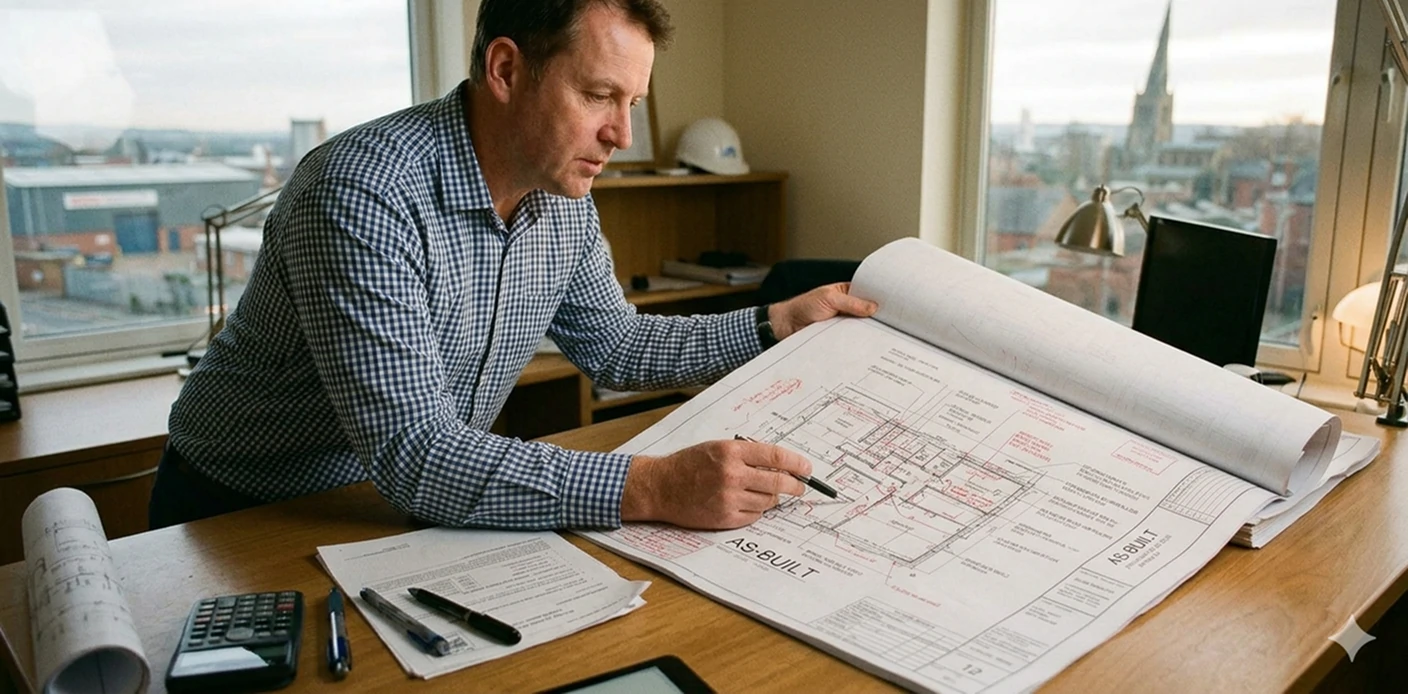
What As-Built Drawings Actually Show
Most people hear "as-built drawings" and picture a basic floor plan. That's not what you're getting. As-built drawings document your home or building exactly as it stands right now, not how it was designed twenty years ago, by an architecture firm, not how the original builder planned it, but how it actually is today, with every change, addition, and modification recorded on paper.
The team measures and documents everything that matters structurally. Here's what a typical set of as-built drawings includes:
- Existing wall locations, dimensions, and which ones are load-bearing
- Floor-to-ceiling heights and floor system framing details
- Window and door openings with rough opening sizes
- Foundation type and visible conditions
- Roof framing layout and bearing points
The original plans for a Chesterfield home often don't match what's actually there. Somebody finished a basement in the Clarkson Valley area fifteen years ago without pulling a permit. Or a previous owner moved a wall and never told anyone. Those changes matter when your contractor needs to know what's behind the drywall before starting a kitchen remodel or a room addition.
Here's a scenario the team sees constantly. A homeowner in Chesterfield wants to remove a wall between the kitchen and living room. The contractor says it should be fine. But nobody has drawings showing what's holding up the floor above. That's where as-built drawings become the foundation for every decision that follows. They give the structural engineer a real starting point, not a guess.
And these aren't just sketches. As-built drawings are scaled, dimensioned documents that a permit office can actually use. Your Chesterfield municipality expects to see existing conditions before they'll approve any structural permit drawings for your project.
Think of as-built drawings as your building's honest medical record. Everything else, the structural calculations, the new design, the permit application, builds on top of them.
When a Property Owner Needs As-Built Drawings
Most people don't wake up thinking about as-built drawings. Something else triggers it. A contractor says the permit office needs existing conditions documented before they'll review your renovation plans. Or you bought a home in Chesterfield that's had two additions over the years and nobody can find the original blueprints.
That's the situation the team sees almost every week.
Here are the most common reasons property owners in Chesterfield reach out for as-built drawings:
- You're planning a kitchen remodel or room addition and the city needs a baseline of what's already there before approving new structural permit drawings
- A previous owner made changes without permits, and now those undocumented modifications are holding up your project
- You're converting a basement or finishing an attic and need accurate measurements for your contractor to bid from
- An insurance claim or building condition assessment requires documentation of the structure as it stands today
- You're buying or selling a property near Clarkson Valley and the inspection turned up questions about what's original versus what was added
It's usually the same story. Someone starts a renovation, the contractor pulls together a scope, and then the permit reviewer asks for existing floor plans. Nobody has them. The original builder closed up shop fifteen years ago. The county doesn't have a copy on file.
That's where the project stalls.
As-built drawings solve that problem. The team comes out, takes field measurements of every room, documents wall locations, ceiling heights, window placements, and structural elements. Those measurements get turned into clean, accurate drawings that your contractor and the Chesterfield permit office can actually use.
Getting as-built drawings done early saves time on the back end. Your engineer doesn't have to guess. Your contractor bids off real numbers. And the permit reviewer sees a complete submission instead of sending it back for more information.
How the Field Measurement Process Works
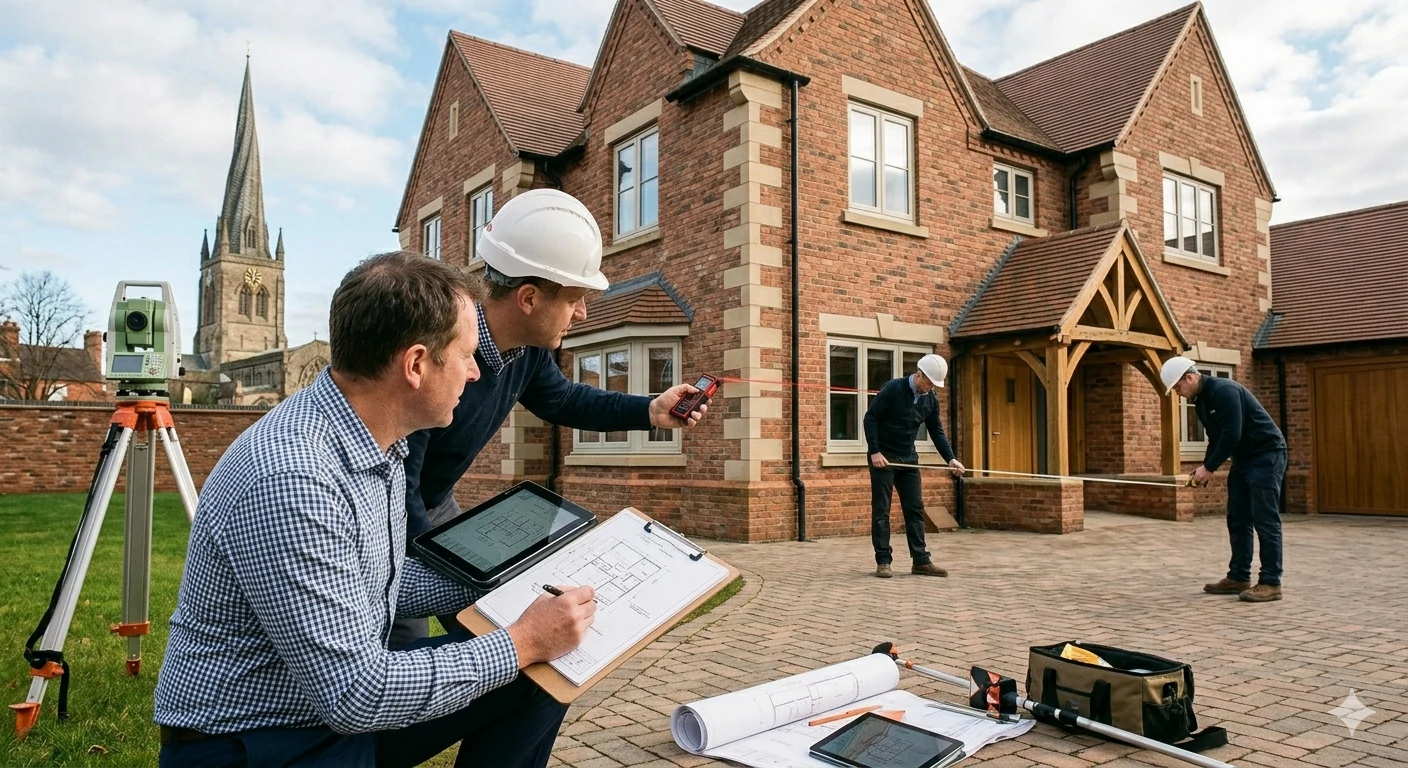
Every set of as-built drawings starts with a site visit. Not a quick walkthrough, a full, room-by-room measurement of your property as it stands right now.
The team shows up with laser distance meters, digital levels, and a camera. Most visits in Chesterfield take between two and four hours depending on the size of the home. The goal is always the same: capture every wall location, ceiling height, window placement, and structural detail so the drawings match reality down to the inch.
Here's what a typical field measurement visit looks like:
- The team walks the full exterior first, noting foundation offsets, roof lines, and any additions that don't match county records.
- Interior measurements happen room by room. Wall thicknesses get checked at doorways because that's where you find framing surprises.
- Ceiling heights, beam locations, and column positions are logged. If there's attic or crawlspace access, the team documents framing conditions there too.
- Mechanical elements like HVAC chases, plumbing stacks, and electrical panels get noted. These affect renovation layouts more than most homeowners expect.
- Photos are taken of every room and every structural detail worth recording.
Something almost always doesn't match the original plans. A wall moved six inches during a past remodel. A header got swapped for a smaller beam. An addition was framed differently than what the permit drawings show. That's the whole point of field measurements, finding what's actually there instead of guessing.
This is also where most permit delays start. Contractors submit renovation plans based on old drawings that don't reflect current conditions. The inspector sees a conflict and the project stalls. Field measurements prevent that problem before it happens.
Your home doesn't need to be "ready" for the visit. Normal furniture and belongings are fine. The team works around your daily life. All the raw data goes back to the office where it gets turned into accurate, scaled drawings you can hand to your contractor or the Chesterfield permit office.
Meeting Chesterfield's Permit Submission Standards
Most permit rejections in Chesterfield come down to the same thing. The drawings don't match what's actually built.
Your contractor submits plans for a renovation or addition, the plan reviewer pulls up the original construction documents, and something doesn't line up. Maybe the foundation wall is 2 inches off from what the 1990s blueprints show. Maybe a previous owner finished the basement and moved a bearing point without updating anything. The reviewer flags it, your permit stalls, your project sits.
The team handles Chesterfield permit submissions regularly. St. Louis County municipalities each have their own review quirks, but Chesterfield's planning department tends to be specific about what they want to see. A few things that trip people up:
- Existing floor plans that don't reflect actual room layouts or wall locations
- Missing structural details for load paths that were modified in past work
- Drawings that show "as-designed" conditions instead of "as-built" conditions
- No documentation of previous unpermitted work that's now visible
Most of the time, the homeowner had no idea any of this was an issue until the permit got kicked back. That's not their fault. But it does cost time.
Accurate as-built drawings solve this before it starts. The team measures your home's current conditions and documents every wall location, ceiling height, beam span, and structural connection as they exist right now. Those measurements get drafted into permit-ready documents that line up with what the Chesterfield plan reviewer expects to see.
In areas like Clarkson Valley or Wildwood bordering Chesterfield, older homes have often seen multiple rounds of remodeling. The gap between original plans and current conditions can be significant. Getting this right up front keeps your project timeline intact, no resubmissions, no back-and-forth with the reviewer over dimensions that don't add up.
Building Types and Projects That Commonly Require Documentation
Most people don't think about as-built drawings until someone asks for them. That someone is usually a building inspector, a contractor mid-project, or a permit reviewer who won't move forward without accurate existing conditions on paper. The team gets these calls constantly in Chesterfield, and the project types follow a pretty clear pattern.
Residential renovations top the list. If you're opening up a kitchen wall, adding a room over the garage, or finishing a basement, the municipality wants to see what's already there before approving what you want to change. The original builder's plans either don't match what was actually built or they've been lost entirely. That gap is exactly what as-built drawings fill.
Beyond single-family homes, here are the project types the team documents most often:
- Home additions where the existing structure needs to be verified before new framing ties in
- Load-bearing wall removals where the inspector needs proof of current framing layout and beam paths
- Light commercial spaces like retail buildouts in Chesterfield Valley where tenant improvements require a baseline drawing set
- Multi-family properties going through renovation or code compliance review
- Older homes near Chesterfield Parkway built before digital records were standard
Commercial projects have their own wrinkle. Lease agreements often require the tenant to provide accurate floor plans before any interior work starts. But the landlord's drawings might be from 1998 and show a layout that's been changed three times since then.
And then there's the scenario nobody plans for. A storm damages part of your roof structure. The insurance adjuster wants documentation. Your contractor needs to know what's behind the drywall before starting repairs. Without accurate drawings, the whole process stalls and timelines stretch.
The common thread across all of these is simple. Somebody needs to know what actually exists in your building right now, not what the original plans say, not what someone remembers, but what's physically there, measured and drawn to scale. That's the job.
Frequently Asked Questions
Do I need as-built drawings before the Chesterfield permit office will approve my renovation?
Yes, Chesterfield's permit office typically requires existing conditions to be documented before they'll review new structural permit drawings. If your home has had additions, basement finishes, or wall changes over the years, the reviewer needs to see what's already there. Submitting without that baseline is one of the most common reasons renovation permits get sent back. Getting as-built drawings done first keeps your project moving instead of stalling at the review stage.
What happens when nobody can find the original blueprints for a Chesterfield home?
Field measurements replace the original blueprints entirely. This situation comes up almost every week, especially with older Chesterfield homes that have had two or three owners. The county may not have a copy on file, and the original builder may be long gone. The team comes out, measures every room, documents wall locations, ceiling heights, and structural details, and produces clean drawings your contractor and permit office can actually use.
How long does the field measurement visit take for a typical Chesterfield home?
Most field measurement visits in Chesterfield take between two and four hours depending on the size of the home. Larger homes with finished basements, attic access, or multiple additions take longer. Your home doesn't need to be cleared out or staged. Normal furniture and belongings are fine. The team works room by room with laser meters and a camera, documenting everything that matters structurally before producing the final drawings.
Can as-built drawings catch problems before a contractor starts demo work?
Yes, and that's one of the biggest reasons to get them done early. A common scenario is a homeowner wanting to remove a wall between a kitchen and living room with no drawings showing what's holding up the floor above. As-built drawings give the structural engineer a real starting point instead of a guess. They reveal moved walls, swapped beams, or additions framed differently than the permit drawings show, before demo exposes a surprise mid-project.
What if a previous owner finished a basement or added a room without pulling a permit?
Unpermitted work shows up constantly in Chesterfield homes, especially in areas like Clarkson Valley where older homes have changed hands multiple times. As-built drawings document those modifications as they exist today, giving your contractor and engineer an accurate picture of what was done. From there, the permit office can review the actual conditions rather than outdated records. Documenting what's there is usually the first step toward getting unpermitted work properly resolved.
Do I need to do anything to prepare my home before the measurement visit?
No special preparation is needed before the team arrives. Normal furniture, boxes, and everyday clutter are fine to leave in place. Access to the attic and crawlspace helps if those areas are part of your project scope. The team will let you know ahead of time if any specific access points need to be clear. The visit is straightforward, and most Chesterfield homeowners are surprised by how little disruption it causes to their day.