
What a Bathroom Renovation Design Package Actually Includes
Most homeowners in Chesterfield call because they've got a vision but no idea how to turn it into something a contractor can actually build from. That's the gap a bathroom renovation design package fills. Not inspiration boards. Not Pinterest screenshots. Real drawings that show exactly what goes where, how it's supported, and what your permit office needs to see before work starts.
The team, including a licensed architectural designer, puts together a package that covers every layer of the project. Here's what's typically in it:
- An on-site assessment of your existing bathroom, including wall locations, plumbing access points, and any structural concerns like load-bearing walls or undersized floor joists.
- A floor plan design showing the new layout with fixture placement, door swings, and clearance dimensions that meet current building code.
- Structural calculations if the project calls for moving walls, adding a freestanding tub on a second floor, or opening up space between rooms.
- Structural permit drawings stamped by a licensed engineer, ready to submit to Chesterfield's building department without revisions.
The biggest holdup isn't the tile selection. It's missing or incomplete drawings that get kicked back at plan review.
A common scenario the team sees in Chesterfield Valley: someone wants to combine a small hall bath with an adjacent closet. Sounds simple enough. But that shared wall often carries load from the roof or second floor above. Without proper beam and header design, the contractor's stuck waiting, the permit's in limbo, and the timeline slides by weeks.
The design package also accounts for things most people don't think about. Subfloor deflection under heavy stone tile. Drain relocation that affects the joist layout below. Vent stack routing that runs through a wall you wanted gone. These details don't show up on a mood board, but they show up fast during inspection.
Every drawing in the package is built around what the local inspector wants to see. Not generic templates. Permit-ready plans specific to your home and your project scope.
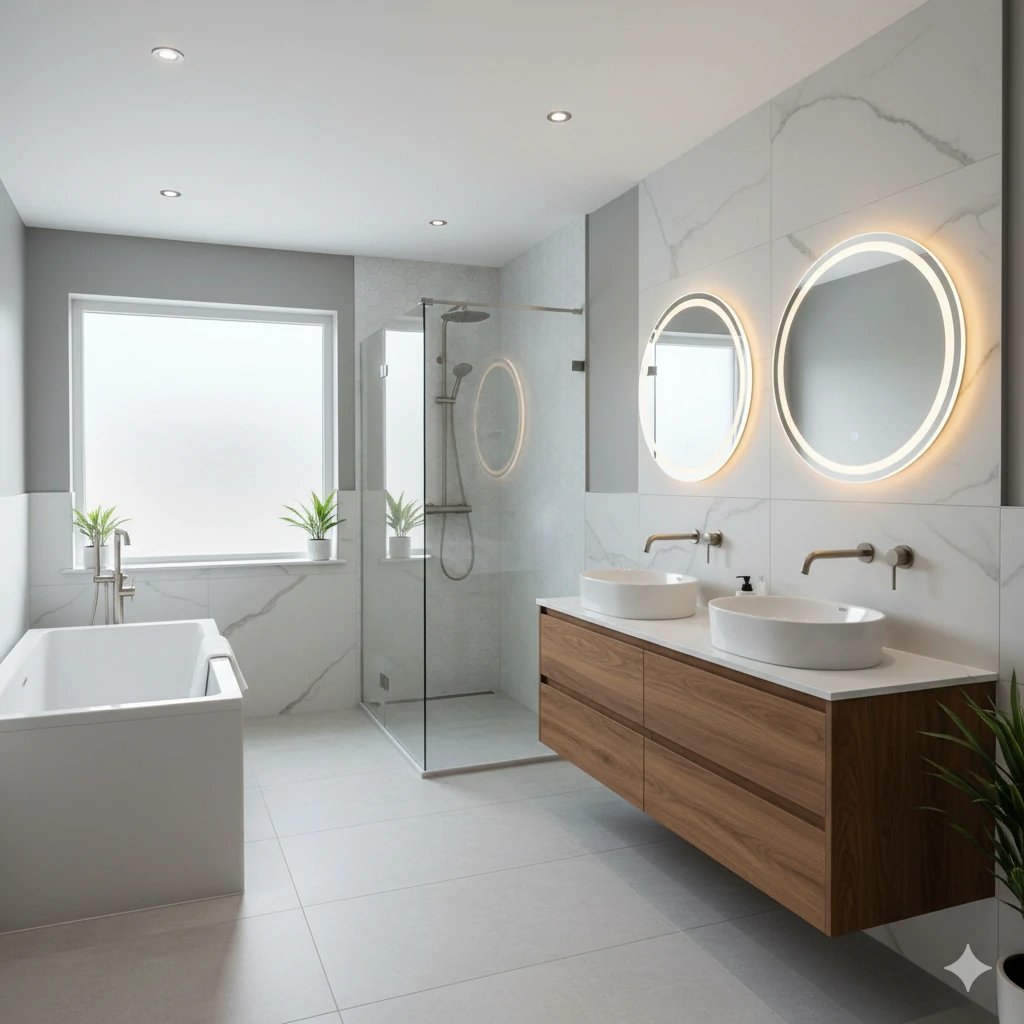
Reading Your Existing Bathroom Before a Single Line Gets Drawn
Most bathroom renovation design projects stall because nobody looked hard enough at what was already there. Not because of taste. Because of what's hiding inside the walls.
Before the team opens any design software, there's real detective work happening inside your bathroom. The existing conditions tell us almost everything about what's possible, what's risky, and what's going to cost more than you expect. Many Chesterfield homes, especially those built in the late '80s and '90s, were framed with specific plumbing runs that dictate where fixtures can go. Ignoring that is how you end up with a beautiful plan that fails at the permit counter.
Here's what the team evaluates before any design work starts:
- Floor structure and load path. Can your floor joists handle a freestanding soaking tub filled with water? That's roughly 1,200 pounds in one spot. The answer depends on joist size, spacing, and span.
- Existing plumbing locations. Moving a toilet drain even 18 inches can mean cutting into structural framing below. Sometimes it's fine, sometimes it changes the whole scope.
- Ventilation and moisture pathways. Older bathrooms in Chesterfield often have undersized exhaust fans or none at all. That affects wall material choices and long-term durability.
- Wall composition. Is that wall between the bathroom and the hallway load-bearing? The homeowner's contractor has a different answer than the engineer. The framing doesn't lie.
The team sees this every week. A homeowner brings in a layout full of ideas, but nobody's checked whether the second-floor bathroom sits over a beam that limits drain relocation. That's not a design problem. That's a structural reality.
So the first step isn't picking tile or choosing a vanity. It's documenting what your home actually gives you to work with, accurate measurements, photos of accessible framing, notes on existing mechanical systems. According to the National Association of Home Builders, poor pre-construction assessment is one of the top causes of renovation budget overruns. That tracks with what the team sees on every project.
Getting this step right saves weeks later. It also means your contractor gets drawings that match reality, not a layout that falls apart during demo.
Layout Decisions That Shape Every Other Choice in the Project
Most homeowners think layout is about where the vanity goes. It's not. Layout determines your plumbing runs, your structural loads, your vent stack routing, and whether the whole project needs a permit revision halfway through. The team sees this play out in Chesterfield homes constantly, especially in neighborhoods where the original floor plans were tight to begin with.
Here's what actually drives a bathroom layout:
- Drain location. Moving a toilet even 18 inches can mean cutting into your floor system. That's not a cosmetic change, it's a structural one.
- Load paths above and below. If your bathroom sits over a basement beam or next to a load-bearing wall, your options for expanding the footprint shrink fast.
- Window and vent placement. Code requires specific ventilation. Your existing window location often dictates where the shower can realistically go.
- Door swing clearance. A pocket door frees up six square feet of usable space. But the wall it slides into can't carry loads.
The layout question that trips people up is almost always the same one. "Can I move the shower to the other wall?" Sometimes yes. But that answer depends on what's underneath your floor and what's running through that wall cavity.
This is exactly where bathroom renovation design gets real. A good layout drawing accounts for all of these constraints before your contractor orders a single tile. The team produces drawings that show fixture placement, clearance dimensions, and structural notes so the permit reviewer doesn't send it back with questions.
And if you're thinking about bumping out a wall or combining two small bathrooms into one, that crosses into room addition design territory. The structural calculations need to happen before the layout gets locked. Not after framing starts.
Getting the layout right on paper saves thousands during construction. It also keeps your Chesterfield permit on track, which matters more than most people realize until they're staring at a stop-work order.
From First Sketch to Permit-Ready Documents in Chesterfield
Drawings that aren't ready for permit review are what hold up most bathroom renovation design projects. Not the ideas. The paperwork.
The team walks every Chesterfield project through a clear sequence, whether your bathroom is in a 1990s colonial off Wild Horse Creek or a newer build near the Clarkson Valley border. Here's how the process actually works:
- Initial site measurements and photos. The team documents your existing bathroom down to framing depths, pipe locations, and ceiling heights. If the home has never had as-built drawings, those get created first.
- Layout and design development. Your new floor plan takes shape based on what you want and what the structure allows. Fixture placement, door swings, clearance dimensions. Everything gets checked against current building code requirements.
- Structural review. If the design calls for moving a wall, relocating plumbing through joists, or adding load from a freestanding tub, the team runs structural calculations. This is where most permit applications from other firms get kicked back.
- Permit drawing package. The final set includes structural drawings, a finished floor plan, and any details the Chesterfield building department needs to approve the work. Stamped by a licensed engineer.
Usually the homeowner who calls already has a contractor lined up. But the contractor can't pull a permit without proper drawings. That gap between "I know what I want" and "the city approved it" is exactly where bathroom renovation design lives.
Chesterfield's plan review process can flag incomplete submissions fast. The team has seen applications bounce back in under a week when plumbing details or load paths are missing. So every drawing set goes out with the notes and sections an examiner expects to see. Not generic templates. Actual project-specific documents.
And because the team handles structural permit drawings and architectural drafting under one roof, your contractor doesn't end up chasing two different offices for revisions.
Material Selection, Lead Times, and How Sequencing Protects Your Timeline
Most bathroom renovations in Chesterfield run into trouble when somebody orders tile six weeks too late. Not because of the contractor. Because of the calendar.
The team sees this constantly. A homeowner picks out a porcelain slab for the shower surround, the contractor starts demo, and then everyone finds out that tile ships from Italy with a 10-week lead time. Now your bathroom is gutted and unusable while you wait. That's a sequencing problem, and it's the exact thing bathroom renovation design is supposed to prevent.
Here's how the team handles material selection so your project stays on track:
- During the design phase, every finish gets identified early. Tile, vanity, fixtures, shower glass. All of it.
- The team checks current lead times for each item before your plans are finalized. Some vanities ship in five days. Some take twelve weeks.
- Your construction schedule gets built around the longest lead-time item. Not the other way around.
- Backup options get flagged for anything with uncertain availability. You'll know your Plan B before you need it.
The item that holds up a project is usually something that could've been ordered weeks earlier. Shower doors are a big one. Custom glass panels for a walk-in shower can take four to six weeks. If that order doesn't go in until framing is done, you've just added a month of dead time.
According to the National Association of Home Builders, material delays are among the top three causes of residential project overruns. That tracks with what the team sees locally.
And it's not just about ordering early. Sequencing matters because your plumber needs rough-in dimensions before tile goes up. Your electrician needs to know where the vanity mirror lands before running wire. The design drawings spell all of this out so every trade shows up knowing exactly what's happening and when.
Good design doesn't just make your Chesterfield bathroom look right. It makes sure materials arrive when they're actually needed.
Frequently Asked Questions
Do I need a permit for a bathroom renovation in Chesterfield?
Yes, most bathroom renovations in Chesterfield require a permit, especially if you're moving plumbing, removing walls, or adding a freestanding tub. Chesterfield's building department wants to see stamped structural drawings before work starts. Skipping the permit step is the fastest way to stall your project. Incomplete drawings get kicked back at plan review, which can delay your timeline by weeks. We build every design package to meet what the local inspector needs to see.
What does a bathroom renovation design package actually include?
A design package includes a lot more than a pretty floor plan. You get an on-site assessment, a layout showing fixture placement and clearance dimensions, and structural drawings stamped by a licensed engineer if walls are moving. It covers drain relocation, subfloor load, and vent stack routing. These are the details that show up during inspection if nobody planned for them. The goal is drawings your contractor can actually build from without surprises.
Can I move my shower to the opposite wall during a renovation?
Sometimes yes, but the answer depends on what's under your floor and inside that wall. Moving a shower means relocating the drain, which often means cutting into your floor system. If there's a beam or load-bearing wall involved, your options get smaller fast. This is one of the most common questions we hear from Chesterfield homeowners. We check the framing and plumbing layout before drawing anything, so you know what's actually possible in your home.
How do Chesterfield homes built in the late '80s and '90s affect bathroom renovation design?
Homes from that era in Chesterfield were framed with specific plumbing runs that limit where fixtures can go. Many also have undersized exhaust fans or none at all, which affects what wall materials you can use long-term. Ignoring these details leads to a plan that fails at the permit counter. We document existing conditions first, including framing, mechanical systems, and plumbing access, before any design work starts. That's how you avoid budget overruns mid-project.
What happens if I want to combine a small bathroom with an adjacent closet?
It's a popular idea in Chesterfield, but that shared wall often carries load from the roof or floor above. Without proper beam and header design, the contractor can't move forward and the permit sits in limbo. We see this scenario regularly, especially in Chesterfield Valley. The fix isn't complicated, but it has to be engineered correctly and drawn before demo day. Getting that structural detail right up front keeps your timeline on track.
Can my floor handle a freestanding soaking tub?
A freestanding tub filled with water weighs roughly 1,200 pounds in one spot. Whether your floor can handle that depends on joist size, spacing, and span. Many Chesterfield homes, especially two-story builds, need a structural review before a heavy tub goes in. This is one of the first things we check during the on-site assessment. If the floor needs reinforcement, we design for it before your contractor starts framing, not after the tub is already on order.