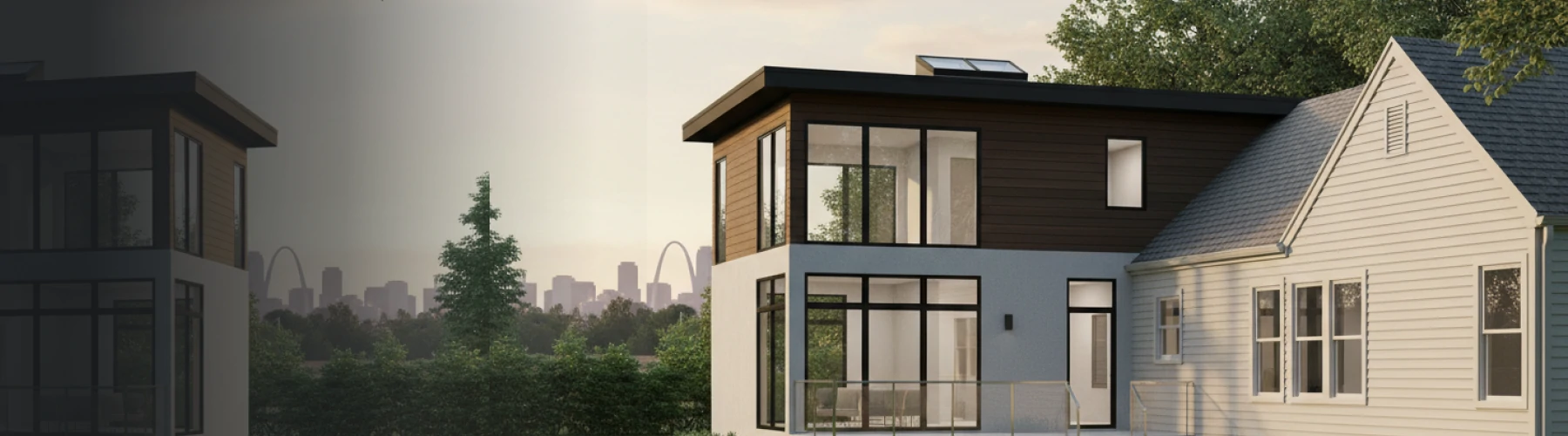
What Room Addition Design Actually Includes
Most homeowners in Chesterfield picture a room addition as just "more space." But the design phase is where every structural question gets answered before a single footer is dug. Room addition design isn't picking paint colors. It's the engineering and architectural work from a trusted architectural designer that turns your idea into a set of drawings your contractor can build from and your building department will approve.
The team sees this every week. Someone calls and says, "My contractor told me I need stamped plans." That's true, but it's only part of it. Here's what a full room addition design package actually covers:
- A site evaluation to figure out how the new space ties into your existing foundation, roof lines, and load paths
- Structural calculations for new footings, beams, headers, and connections to the current framing
- Floor plan layout showing dimensions, door swings, window placement, and how traffic flows between old and new spaces
- Structural permit drawings stamped by a licensed engineer, ready for submittal to St. Louis County
- Building code compliance review so nothing gets flagged during plan review or inspection
That last one matters more than people realize. Chesterfield falls under St. Louis County's permitting jurisdiction, and the plan reviewers there are thorough. They want to see that your new addition's roof loads transfer cleanly into the existing structure. They want connection details. They want to know the existing foundation can handle what you're adding. Vague drawings get sent back.
Room addition design is the bridge between "I want a bigger house" and "here's exactly how it gets built safely." It covers the structural side, the architectural drafting, and the code homework. Without it, your project stalls at the permit counter or, worse, gets built wrong.
The design phase is also where the team catches problems that would cost you real money later. That exterior wall you want to open up? Almost always load-bearing. The crawlspace under your family room near Chesterfield Valley? Might need a different foundation approach than a slab. These aren't surprises you want during construction.
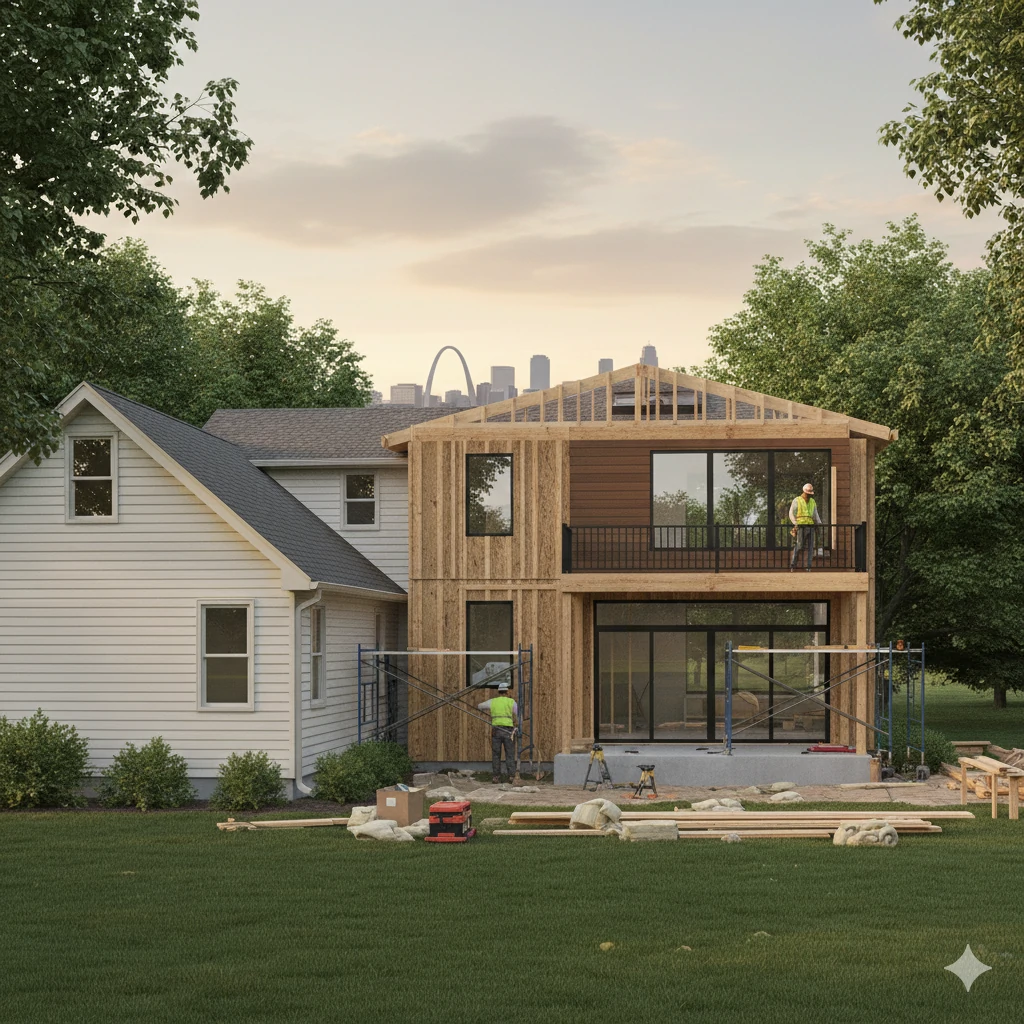
How Chesterfield's Housing Stock Shapes Every Design Decision
Most homes in Chesterfield were built between the late 1970s and early 2000s. That matters more than people think when it comes to room addition design. The framing methods, foundation types, and roof pitch styles from those decades create specific constraints. The team sees it on almost every project.
A two-story colonial in Wildhorse doesn't respond to an addition the same way a ranch-style home near Chesterfield Valley does. The colonial likely has a full basement with poured concrete walls and a steeper roof pitch. The ranch might sit on a slab with a low-slope hip roof. Both can support a room addition, but the structural approach is completely different.
Here's what the housing stock typically tells us before the team even visits your property:
- Homes built before 1985 often have 2x8 floor joists that can't span far enough for today's open layouts without added beam support
- Slab-on-grade foundations need careful tie-in work so the new addition doesn't settle independently from the existing structure
- Roof trusses on 1990s builds are almost always engineered, you can't cut into them without a new structural calculation
- Brick veneer exteriors require specific ledger and flashing details at the connection point
The biggest surprise for homeowners is usually the roof connection. Your contractor might say "we'll just tie into the existing roofline." But that truss system wasn't designed for additional load. The team runs structural calculations to figure out what the existing framing can actually handle before any design goes on paper.
The lot itself plays a role too. Chesterfield has setback requirements that vary by subdivision. Some areas along Clarkson Road have easements that eat into your buildable area more than you'd expect. The room addition design has to account for all of that before it ever reaches the permit office. The International Residential Code requires that structural connections between new and existing construction transfer loads without creating weak points. That's not just a code box to check. It's the difference between a solid addition and one that cracks at the seam in three years.
The Design Process from First Call to Permit-Ready Drawings
Most homeowners who call about room addition design in Chesterfield already have a rough idea of what they want. Maybe it's a master suite over the garage. Maybe it's a family room off the back of the house. The idea isn't the hard part. Getting it into a set of drawings that the building department will actually approve, that's where things stall.
The team follows the same process on every project because it keeps things from falling apart later.
- Initial site review. Someone from the team visits your home to look at the existing structure. Roof lines, foundation type, floor framing direction, where the mechanicals run. This visit usually takes about an hour.
- Feasibility check. Before any drafting starts, the team confirms your addition can work with your lot setbacks and your home's current structural system. There's almost always at least one surprise here. A bearing wall nobody mentioned. A crawlspace that's shallower than expected.
- Concept layout. A preliminary floor plan gets drawn up showing the new space and how it ties into the existing house. You review it, mark it up, ask questions.
- Structural engineering and design development. The team sizes beams, headers, footings, and connections. This is where your room addition design turns from an idea into something a contractor can build and an inspector can approve.
- Permit-ready drawing set. The final package includes structural drawings, a floor plan, and structural calculations. Stamped by a licensed engineer. Ready to submit to Chesterfield's building department.
The whole process usually runs three to four weeks from that first visit. Could be faster if the scope is simple. Could take longer if you're near the Wildhorse Creek area and your lot has grading issues that need foundation design adjustments.
The drawings the team produces aren't generic templates with your address dropped in. Every detail reflects what's actually holding your house up right now and what needs to change to support the new space. That's the difference between a permit application that sails through and one that comes back with a list of corrections.
Give the team a call to set up that first site visit.
Permits, HOA Review, and the Three Approval Tracks
Most room addition projects in Chesterfield don't stall because of bad contractors. They stall because nobody mapped out the approval process before breaking ground. Your project has to clear up to three separate gates, and missing any one of them can set you back weeks.
Here's what the team sees on almost every project:
- St. Louis County building permits. Chesterfield falls under county jurisdiction for structural permits. The permit office wants stamped structural drawings, a site plan showing setbacks, and foundation details that match current IRC code. Incomplete submissions are the number one reason for rejection. The team prepares structural permit drawings built around what the plan reviewer actually checks, so your first submission is your last.
- HOA architectural review. Neighborhoods like Clarkson Valley Estates and Wildhorse Creek have architectural review committees with their own rules on materials, roof pitch, exterior finishes, even window placement. These aren't optional. Submit your room addition design to the HOA before you file for permits. If the HOA rejects something after the county already approved it, you're redrawing plans on your own dime.
- Utility and easement clearance. A surprising number of Chesterfield lots have utility easements running along rear or side property lines. Build into an easement and the utility company can require you to remove the structure. The team checks plat maps early so your addition footprint stays clear.
The homeowner who calls frustrated has usually started down one of these tracks without knowing the other two existed. That's a fixable problem, but cheaper to fix before construction starts.
The county plan review process typically runs two to three weeks for residential additions. A rejected submission resets that clock entirely. The International Code Council notes that most residential plan rejections stem from missing or incomplete structural calculations. That's exactly why the team includes full structural calculations with every permit package.
Give us a call before your next HOA meeting or permit filing.
Making an Addition Look Like It Was Always Part of the Home
This is the part most homeowners don't think about until it's too late. The addition gets built, the drywall goes up, and suddenly the new room feels like it belongs to a different house. Mismatched rooflines. A hallway that dead-ends. Floor levels that don't quite meet. The team sees this constantly in Chesterfield, especially on homes built in the 1980s and 1990s where the original floor plans had very specific proportions.
Good room addition design starts with your existing structure, not a blank page. The team studies your current roof pitch, ceiling heights, window placement, and how hallways flow before drawing a single line. That's how you avoid the "tacked-on" look that kills resale value.
A few things that make or break a natural-looking addition:
- Matching the existing roof slope and fascia details so the new section reads as one continuous structure from the street
- Aligning floor elevations between old and new, which sometimes means adjusting foundation depth by a few inches
- Continuing interior trim profiles, door heights, and baseboard styles so the between rooms disappears
- Placing the connection point at a logical spot in your floor plan, not just wherever the exterior wall happens to be
In the Clarkson Valley area, the team worked on a two-story colonial where the homeowner wanted a main-floor family room. The contractor's original sketch had the addition stepping down six inches from the kitchen. Six inches doesn't sound like much, but you'd feel it every time you walked through that doorway, and an inspector would flag it for code compliance. The structural drawings the team produced kept everything at one level by specifying a deeper footing on the addition side.
According to the National Association of Home Builders, additions that match the architectural character of the original home recover a higher percentage of project cost at resale.
Your contractor handles the siding match and paint color. But the bones of the design, the roof tie-in, the foundation depth, the load path from new walls down to footings, that's where room addition design determines whether your home looks whole or bolted together.
Frequently Asked Questions
Do I really need stamped engineering drawings for a room addition in Chesterfield?
Yes, St. Louis County requires stamped structural drawings before they'll issue a permit for a room addition. The plan reviewers in Chesterfield are thorough. They want to see how roof loads transfer into your existing structure, connection details, and proof your foundation can handle the added weight. Vague or incomplete drawings get sent back, which delays your project. Stamped plans from a licensed engineer are what move your permit application forward.
How does the age of my Chesterfield home affect the room addition design?
It affects almost everything. Most Chesterfield homes were built between the late 1970s and early 2000s, and the framing methods from that era create specific constraints. Homes built before 1985 often have 2x8 floor joists that can't span far enough for open layouts without added beam support. Roof trusses on 1990s builds can't be cut without new structural calculations. The design has to work around what's already there, not just add on top of it.
What happens during the first site visit for a room addition design?
The team spends about an hour at your home looking at the existing structure. They check roof lines, foundation type, floor framing direction, and where mechanicals run. This visit is where surprises usually surface — a load-bearing wall nobody mentioned, a crawlspace that's shallower than expected, or a setback easement that limits your buildable area. Finding these things before drafting starts saves you time and money later in the project.
Can I open up an exterior wall to connect my new addition to the existing house?
You can, but that wall is almost always load-bearing. Opening it up without proper structural support is one of the most common mistakes in room addition projects. The design process includes sizing the right beam and header to carry the load that wall was handling. This gets engineered and drawn before your contractor touches anything. Skipping this step leads to cracked drywall, sagging floors, or worse after construction is done.
How long does the room addition design process take from first call to permit-ready drawings?
Most projects move from initial site visit to a permit-ready drawing set in a few weeks, depending on the complexity of your addition and how quickly you review the concept layout. The steps are: site visit, feasibility check, concept floor plan, structural engineering, and final stamped drawings. Projects with unexpected structural conditions — like a slab foundation or engineered roof trusses — can take a little longer to work through before anything goes to the permit office.
Do Chesterfield's setback rules affect where I can build my addition?
Yes, and it varies by subdivision. Some areas along Clarkson Road have easements that reduce your buildable area more than you'd expect. The room addition design has to account for your specific lot's setbacks before any drawings are finalized. This is part of the feasibility check the team runs early in the process. Finding out your addition doesn't fit your lot after drafting has started is a costly mistake that a proper site review prevents.