What a Feasibility Consultation Actually Includes
Most homeowners in Chesterfield call because they've got a vision but no clear path from idea to permit. Maybe you want to knock out a wall between the kitchen and living room. Or add a second story. Or convert that unfinished basement into livable space. The question isn't whether you want it done. It's whether your house can handle it.
That's what home remodel feasibility consulting, a form of building consulting services, answers. Not "do you like this layout?" but "can this structure support what you're asking it to do?"
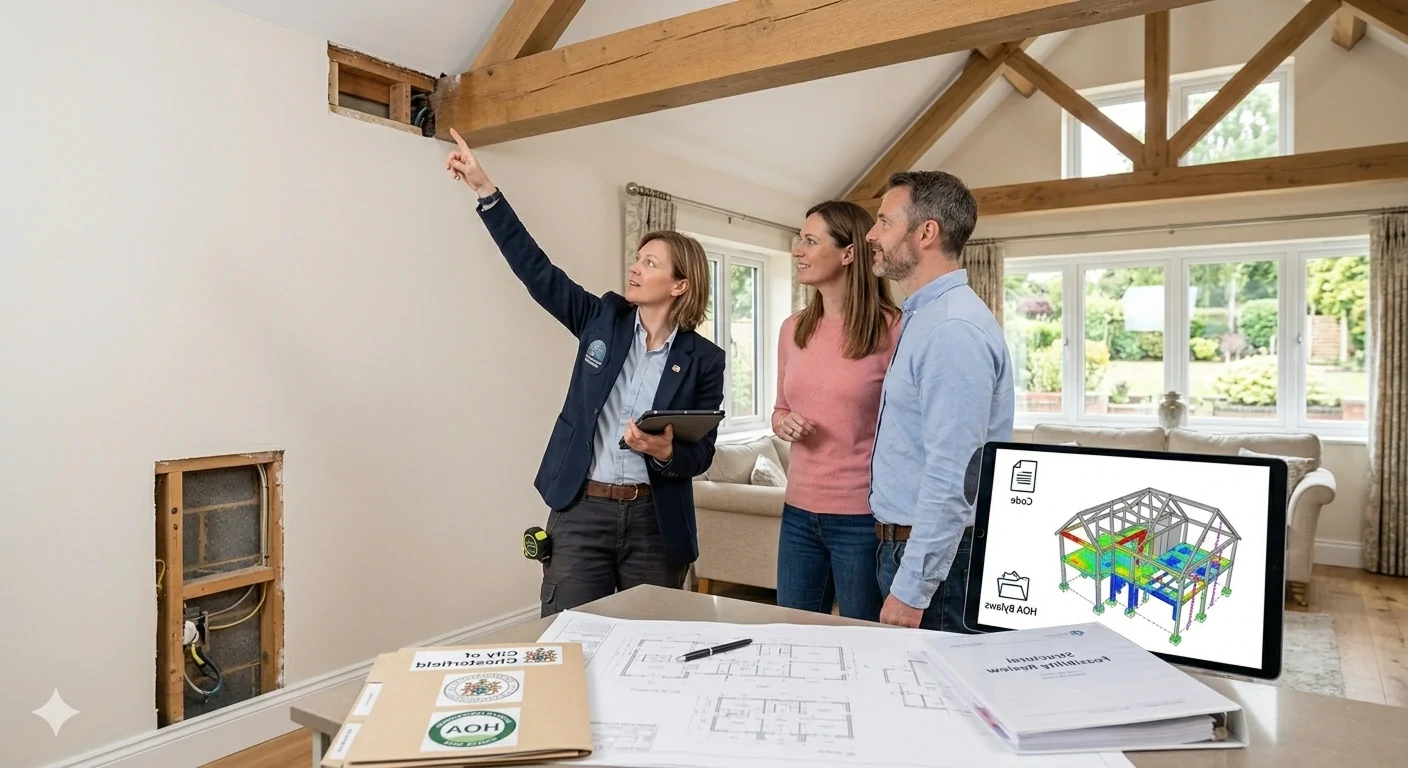
Here's what the team actually does during a consultation:
- Walk your home and visually assess the existing structure, looking at framing, foundation condition, floor systems, and load paths.
- Review any drawings or plans you already have, even rough sketches from a contractor or designer.
- Identify which walls are load-bearing and what structural changes would be needed to open things up safely.
- Flag potential code issues specific to your municipality, because Chesterfield's requirements don't always match what St. Louis County asks for.
- Give you a clear answer on what's realistic, what needs engineering, and what might not be worth pursuing.
Most of the time, the homeowner's idea is doable. It just needs the right structural approach. But sometimes a project that looks simple on paper turns into a permit nightmare because nobody checked the foundation or the floor joists first. That's the stuff the team catches early.
A common scenario in the Wildhorse neighborhood: someone buys a 1990s colonial and wants to remove the wall between the dining room and kitchen. Their contractor says it's "probably not load-bearing." Probably isn't good enough when you're pulling a permit. The team checks the framing, traces the load path to the foundation, and tells you exactly what's there. Sometimes it's a simple beam and header swap. Sometimes it's more involved.
This isn't a design consultation. The team won't pick your countertops or draw up a floor plan layout for aesthetics. This is about structure, code, and whether your project can move forward without surprises. If you need structural permit drawings or structural calculations for your contractor later, those come after feasibility is confirmed.
Structural Realities in Older Ranch and Split-Level Homes
Most of Chesterfield was built out in waves. The ranch homes from the 1960s and 70s have a very different structural story than the split-levels that went up closer to the 1980s. Both styles come with quirks that matter the moment you start talking about knocking out walls or adding square footage.
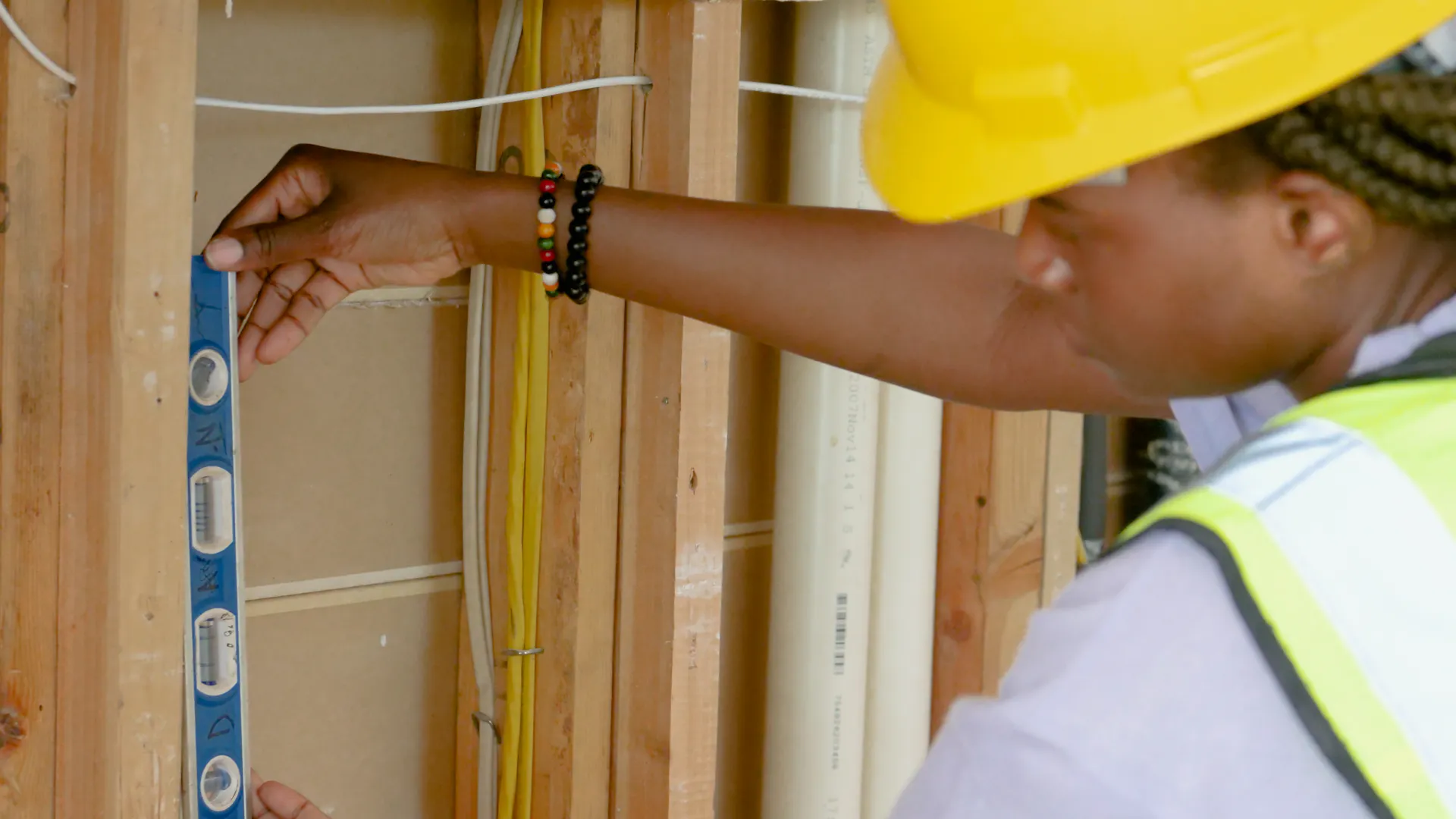
Ranch homes look simple from the outside. One story, long footprint, easy to work with. But the team sees the same surprise over and over: that center hallway wall is almost always load-bearing. It's carrying roof loads down to the foundation, and the homeowner's contractor has already said "we can just take that out." Maybe. But not without a beam, not without posts, and not without checking what's happening underneath the slab or crawlspace.
Split-levels add another layer of complexity. The staggered floor elevations mean load paths don't run straight down the way they do in a simple two-story. Here's what the team typically finds in older split-levels around the Clarkson Valley area:
- Floor joists spanning different directions on each level, making it hard to predict which walls carry weight
- Foundation step-downs that limit where new openings or additions can tie in
- Original framing lumber that's undersized by current code standards
- Concrete block foundation walls with no reinforcement
None of that means your project can't happen. It means someone needs to look before anyone swings a hammer.
Roughly 30 percent of residential renovation projects run into unforeseen structural issues once demolition starts. A feasibility review catches those issues on paper first. The team measures existing framing, checks foundation conditions, and maps the load paths through your home so the plan accounts for reality, not assumptions.
When structural problems show up mid-construction, your contractor stops work. You're paying for idle crews, change orders, emergency engineering. A feasibility study done before permits are pulled costs a fraction of that. Your home in Chesterfield might look straightforward from the curb, but what's inside the walls tells the real story.
Chesterfield Permits, Zoning, and HOA Requirements Explained
Most remodel projects in Chesterfield don't stall because of bad contractors. They stall because nobody checked the permit and zoning requirements before demo started.
Chesterfield operates under St. Louis County's building code framework, but the city has its own planning and zoning commission with specific overlay districts. That matters more than most homeowners realize. A room addition in the Clarkson Valley border area might face different setback rules than one near Wildwood. The team sees this trip people up constantly. You think your lot has 30 feet of rear setback to work with, then the survey comes back and you've got 22. That changes everything about your addition's footprint.
Here's what typically needs to be sorted before any remodel moves forward in Chesterfield:
- Building permits for any structural changes, including load bearing wall removal, new openings, or foundation work
- Zoning verification to confirm your project fits lot coverage limits, height restrictions, and required setbacks
- HOA architectural review, which in many Chesterfield subdivisions requires approval before the city will even accept your permit application
- Floodplain review if your property sits in or near a mapped flood zone along the Chesterfield Valley
The HOA piece catches people off guard. Neighborhoods like Wildhorse Creek Estates and many of the communities along Long Road have architectural review boards with real authority. They can reject exterior changes, restrict addition heights, even dictate materials. Their timeline doesn't match the city's timeline. So if you need both approvals, the team builds that into your project schedule from day one.
Nearly 25 percent of residential remodel delays trace back to permitting or code issues that could have been caught earlier. That tracks with what the team sees locally.
A feasibility study flags all of this before you've spent money on architectural drawings that won't get approved. The team reviews your property's zoning classification, pulls the relevant code sections, checks for deed restrictions, and gives you a clear answer. Not a guess. Your project either works within the rules or it doesn't, and you'll know that before writing any checks.
When to Schedule Your Assessment for a Spring Construction Start
Most homeowners in Chesterfield call about a remodel in February or March, expecting to break ground by April. That timeline is already tight. By the time the team completes a feasibility assessment, structural drawings get produced, and your permit application works through the review process, you're looking at eight to twelve weeks minimum before anyone picks up a hammer.
The smart move is backing up from your target start date.
If you want construction underway by April or May, the feasibility consulting needs to happen in January at the latest. December is better. Here's what eats up that calendar time between your first call and your first day of demolition:
- The team visits your home and evaluates the structure, usually within a week of scheduling.
- The feasibility report comes back identifying what's possible, what needs engineering, and what might cause permit issues.
- If structural permit drawings or beam and header design work is needed, that adds two to four weeks.
- Chesterfield's permit review process takes its own time, and resubmittals aren't uncommon if something gets flagged.
- Your contractor needs the approved plans in hand before ordering materials or lining up subs.
Every one of those steps depends on the one before it. Skip the feasibility step and you risk finding out mid-project that a wall is load-bearing or that your floor system can't support the addition you planned. The team sees this play out every spring in neighborhoods like Clarkson Valley and Chesterfield Valley, where older homes carry surprises behind the drywall.
Contractors, engineers, and permit offices all get slammed in early spring. Wait until everyone else is calling and you're competing for spots on every calendar in the chain.
One scenario the team runs into constantly: a homeowner gets three contractor bids in March, picks one in April, then finds out an engineer is needed for the load-bearing wall removal. Now it's May, the permit hasn't been submitted, and that summer completion date is gone.
Starting with a feasibility assessment early doesn't just save time. It gives you a realistic construction schedule built on facts instead of guesses, and that's the difference between a project that stays on track and one that stalls before it starts.
How a Feasibility Report Protects Your Equity and Resale Position
Most homeowners in Chesterfield think about remodeling what they want. Open kitchen. Bigger master bath. Finished lower level. But the question that matters just as much is what happens to your home's value if the project goes sideways.
A feasibility report does something no contractor can do. It tells you whether the money you're about to spend will actually come back to you, not in vague terms, but in structural terms that affect appraisals, inspections, and buyer confidence down the road.
Here's what the team looks at when evaluating your equity position:
- Whether the proposed work creates structural issues that a future buyer's inspector will flag
- If the project requires changes that could push your home out of character for the Clarkson Valley or Wildhorse neighborhoods
- Whether unpermitted modifications from previous owners complicate your remodel plan
- If the scope of work triggers code upgrades that cost more than the added value
The team sees this pattern constantly. A homeowner spends $80,000 on a renovation, then lists the house three years later. The buyer's inspector catches an unpermitted load bearing wall removal or a foundation concern that wasn't addressed before the remodel started. That kills deals. Or it turns into a $15,000 price reduction at closing.
Remodeling projects that don't align with local market expectations recover less at resale. That's not just about finishes and countertops. It's about whether your floor system can handle the new layout, whether your foundation was evaluated before adding weight, whether the structural permit drawings match what was actually built.
A feasibility report catches those gaps before you write the first check. It documents what's there now, what needs to change, and whether the change makes financial sense for your specific property in Chesterfield. Think of it as a second opinion before the point of no return.
And if the numbers don't work? Better to know that now than after demo day.
Frequently Asked Questions
What does a home remodel feasibility consultation actually cover?
A feasibility consultation tells you whether your home can structurally support the remodel you have in mind. The team walks your home, checks framing and foundation conditions, identifies load-bearing walls, and flags code issues specific to Chesterfield. You get a clear answer on what's realistic before anyone pulls a permit or swings a hammer. This is not a design session — it's about structure, code compliance, and avoiding costly surprises mid-construction.
Do I need a feasibility study if my contractor already said the wall is probably not load-bearing?
Probably is not good enough when you're pulling a permit in Chesterfield. Contractors make educated guesses, but load paths need to be traced from the framing all the way down to the foundation. The team has seen this exact situation in neighborhoods like Wildhorse — a wall that looks simple turns out to be carrying roof loads. A feasibility review gives you a definitive answer, not a guess, before demo starts.
How do Chesterfield's permit and zoning rules affect my remodel plans?
Chesterfield follows St. Louis County's building code but has its own zoning commission with specific setback rules, lot coverage limits, and overlay districts. Many projects also require HOA architectural review before the city accepts a permit application. Neighborhoods along Long Road and Wildhorse Creek Estates have active review boards. A feasibility consultation checks all of these layers so your project doesn't stall after demo has already started.
Are older ranch and split-level homes in Chesterfield harder to remodel?
Yes, both styles have structural quirks that catch homeowners off guard. Ranch homes from the 1960s and 70s almost always have a load-bearing center hallway wall. Split-levels around the Clarkson Valley area often have floor joists running in different directions on each level, making load paths unpredictable. Original framing lumber in these homes is frequently undersized by current code. A feasibility review maps all of this before your contractor makes assumptions.
What happens if structural problems are found during the feasibility consultation?
Finding a problem during feasibility is the best-case scenario — it means you catch it on paper, not mid-construction. The team tells you exactly what the issue is, whether it needs a licensed structural engineer, and what it means for your project timeline. Roughly 30 percent of renovation projects hit unforeseen structural issues once demo starts. Catching those early saves you from idle crews, emergency engineering calls, and expensive change orders.
How long does a feasibility consultation take, and what should I have ready?
Most consultations are completed in a single visit, typically one to two hours depending on your home's size and complexity. If you have any existing drawings, contractor sketches, or rough plans, bring those — the team will review them during the walkthrough. You do not need finished architectural drawings. The more information you can share about what you want to change, the more specific and useful the feedback will be for your Chesterfield project.