
What a Commercial Building Inspection Actually Covers
Most people think a commercial building inspection is just a walkthrough with a clipboard. It's not. The team is looking at how the entire structure performs as a system, from the foundation slab up through the roof deck.
A commercial building inspection in Chesterfield covers a lot of ground. Here's what the team evaluates on a typical inspection:
- Foundation condition, including visible cracking, settlement patterns, and moisture intrusion at slab-on-grade or basement levels
- Structural framing, steel connections, and load paths through columns, beams, and bearing walls
- Roof structure and deck condition, not just the membrane but the framing underneath it
- Exterior envelope, looking at masonry, cladding, flashing, and joint sealants for water management failures
- Floor systems, checking for deflection, vibration, or signs of overloading from tenant buildouts
That last one comes up constantly. A retail space in Chesterfield Valley gets converted to a restaurant, somebody adds a walk-in cooler on a floor that was never designed for it, and the joists start deflecting. The team sees this every week.
The real value is understanding what the building was designed to do versus what it's actually doing right now. A 20-year-old strip center handles loads differently than a newer Class A office building. The team reads the original structural drawings when they're available, compares them to current conditions, and flags anything that doesn't line up.
Roughly 40 percent of commercial buildings in the U.S. have at least one structural deficiency that goes undetected without a professional assessment. That number doesn't surprise anyone who does this work regularly.
The inspection report isn't a pass-fail document. It's a clear picture of what needs attention now, what can wait, and what's performing fine. You get photos, measurements, and plain-language explanations, no jargon buried in a 50-page binder nobody reads. The goal is a document you can hand to your contractor, your lender, or your insurance adjuster and have everyone on the same page within ten minutes.
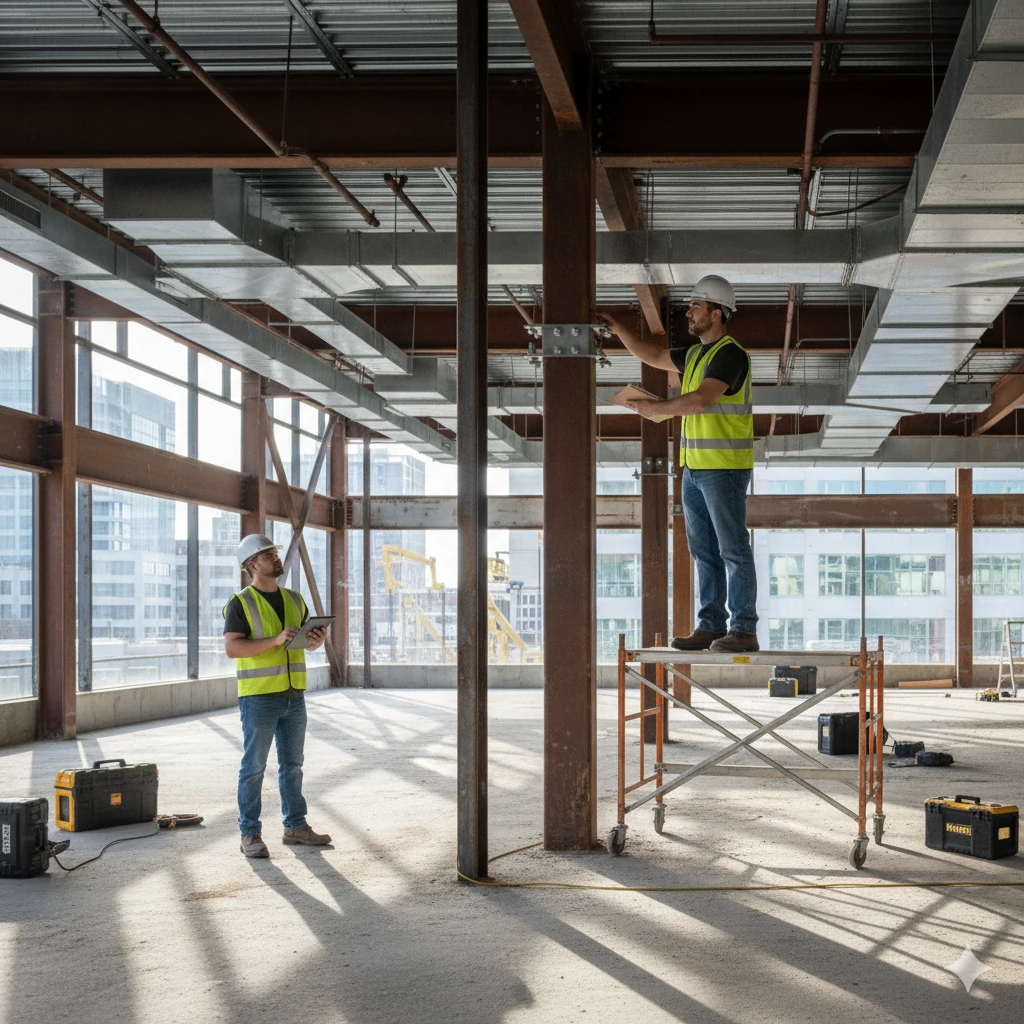
Why Chesterfield Buildings Require a Closer Look
Most commercial buildings in Chesterfield look fine from the parking lot. That's the problem.
The team inspects commercial properties across this area every month, and the pattern is consistent. Buildings constructed during the rapid growth periods of the 1980s and 1990s along Chesterfield Airport Road and the Highway 40 corridor are hitting that 30-to-40-year mark. That's when roofing systems start failing quietly, when foundation settlement shows up as cracked CMU walls in the back stairwell nobody looks at, when original HVAC penetrations through the roof deck have been leaking just enough to rot the decking underneath.
The soil here doesn't help. Chesterfield sits on expansive clay that moves with moisture changes. A commercial slab that was level at construction can shift enough over two decades to crack interior partition walls and bind door frames. The team sees this regularly in strip retail and office buildings near Chesterfield Valley.
Here's what makes it worse. A lot of these properties have changed hands multiple times. Each owner made modifications, some permitted, some not. You end up with:
- Tenant buildouts that moved or removed structural elements without engineering
- Rooftop mechanical units added without verifying the structure could handle the load
- Parking lot drainage changes that redirect water toward the foundation
- Electrical and plumbing upgrades that punched through fire-rated assemblies
None of that shows up in a casual walkthrough. It takes a trained eye and a systematic process to find it.
So if you're buying, leasing, or planning capital improvements on a commercial property in Chesterfield, a surface-level look won't cut it. The building's age, the soil conditions, and the history of past modifications all create layers of risk that only a proper commercial building inspection can uncover. Better to know now than to find out when a tenant calls about water coming through the ceiling.
Tenants Need Inspections Too, Not Just Buyers
Most people assume a commercial building inspection only matters when you're buying a property. That's not even close to true.
If you're signing a lease on a retail space, an office suite, or a warehouse in Chesterfield, the condition of that building affects your business every day. The team sees this constantly. A tenant moves into a space near Chesterfield Valley, signs a five-year lease, then discovers the roof leaks every time it rains hard. Or the HVAC can't keep up in July. Or there's a crack pattern in the foundation that nobody mentioned. By then you're locked in, and the landlord's motivation to fix things drops fast.
A commercial building inspection before you sign gives you real leverage. Here's what tenants should be looking at:
- Structural cracks in walls, floors, or the foundation that could signal ongoing settlement
- Roof drainage issues and signs of past water intrusion at ceiling lines
- HVAC age and condition, especially if the lease makes you responsible for repairs
- Fire egress, ADA access, and code compliance for your specific use
The tenant who skips the inspection is the one calling six months later with a problem that was already there on day one. Proving it existed before your lease started gets much harder at that point.
There's a practical side too. Say you're planning to open a restaurant or a medical office. Your buildout needs permits. The municipality is going to look at the existing structure before approving anything. If there are code violations already present in the building, that's going to delay your project before you even start demo. A pre-lease inspection catches those issues early so you can negotiate repairs or walk away.
A good inspection report also tells you what's solid. It confirms the building can handle your intended use, your equipment loads, your foot traffic. That's the kind of confidence that lets you sign a lease without second-guessing it three weeks later.
Need help figuring this out? Give us a call.
What Happens During and After the Inspection
The team shows up with cameras, moisture meters, and a clear plan for your building. Every commercial building inspection follows a set sequence so nothing gets missed, and the report holds up when a lender or municipality asks questions.
Here's what the process looks like from start to finish:
- The team walks the exterior first. Foundation walls, grading, parking areas, loading docks, roof access points. Cracks in masonry get measured and photographed.
- Interior structural systems come next. Columns, beams, floor slabs, stairwells. The team checks for deflection, cracking patterns, and signs of water intrusion at every level.
- Mechanical and electrical rooms get a visual review. Not a full systems audit, but enough to flag obvious problems like corroded panels or undersized equipment for the space.
- Roof condition gets documented. Ponding water, membrane damage, flashing failures. In Chesterfield, flat commercial roofs take a beating from freeze-thaw cycles every winter.
- The team compiles findings into a written report with photos, descriptions, and priority ratings for each issue.
The building looks fine from the street. The problems are in the places nobody checks until money is on the line.
After the walkthrough, you'll get a report that's built for decision-making. Not a 90-page document full of filler. Each finding gets a clear description, a photo, and a note on whether it needs immediate attention or monitoring over time. ASTM International's E2018 standard covers property condition assessments for commercial real estate transactions. That's the framework the team uses.
If you're buying, the report becomes your negotiation tool. If you're a current owner near Chesterfield Valley, it becomes your maintenance roadmap. Either way, it gives you real numbers and real conditions instead of opinions. And if something in the report needs engineering follow-up, a foundation crack or a suspect beam, the team can move straight into structural repair design without bringing in a separate firm.
Credentials and Questions to Ask Before You Hire
Not every inspector has the background to evaluate a commercial structure. That's just the reality.
A commercial building inspection in Chesterfield requires someone who understands steel connections, concrete degradation, fire-rated assemblies, and how local code enforcement actually works. The team doing this work should hold a professional engineering license in Missouri. A PE stamp on your report means the findings carry legal weight with lenders, insurers, and municipal reviewers. Without it, you're paying for an opinion that might not hold up when it matters.
Before you sign anything, ask these questions:
- Are you a licensed structural engineer in Missouri, and will the report carry a PE stamp?
- How many commercial properties have you inspected in the Chesterfield area?
- Do you inspect mechanical and electrical systems, or just the structure?
- What's your turnaround time for the written report?
- Can you provide structural calculations if the inspection uncovers a problem?
That last one trips people up. Most inspection firms hand you a report and say "good luck." But if the team doing your inspection also handles structural repair design and structural calculations for contractors, you don't have to start over with a new engineer when something needs fixing. The handoff stays clean, the context stays intact.
The team should also know the difference between Chesterfield's municipal process and what St. Louis County requires. Properties near Chesterfield Valley, for example, sit in a floodplain area with specific foundation concerns that a general home inspector won't catch. The inspector who flags a problem but can't explain the fix isn't the right fit for commercial work.
Ask for a sample report before you commit. A good one reads like a clear set of facts with photos, not a vague summary full of disclaimers. Nearly 40% of commercial buildings in the U.S. are over 50 years old. The person reviewing your property needs to recognize aging systems fast and know what's urgent versus what's routine. Experience shows up in the details.
Frequently Asked Questions
How long does a commercial building inspection take in Chesterfield?
Most commercial building inspections in Chesterfield take between two and four hours on-site, depending on the building's size and complexity. A smaller retail strip space might wrap up faster. A larger office building or warehouse with multiple mechanical systems takes longer. After the walkthrough, expect the written report within 24 to 48 hours. You get photos, measurements, and plain-language findings you can hand directly to your contractor or lender.
Do I need a commercial inspection if I'm leasing, not buying?
Yes, tenants need inspections just as much as buyers do. Once you sign a five-year lease in Chesterfield, you're locked in. If the roof leaks every hard rain or the HVAC can't keep up in July, proving those problems existed before your lease started gets very difficult. A pre-lease inspection gives you real leverage to negotiate repairs before you sign, or to walk away if the problems are serious enough.
What makes older commercial buildings in Chesterfield higher risk?
Buildings along Chesterfield Airport Road and the Highway 40 corridor that went up in the 1980s and 1990s are now hitting that 30-to-40-year mark. That's when roofing systems fail quietly, foundation slabs shift on the expansive clay soil here, and past tenant buildouts start showing structural problems. Many of these properties have changed hands multiple times, with modifications that were never permitted or engineered properly.
What happens when a tenant adds equipment a building wasn't designed for?
This comes up constantly in Chesterfield. A retail space gets converted to a restaurant, someone adds a walk-in cooler on a floor that was never built to handle that load, and the joists start deflecting. The inspection team compares the building's original structural design to what's actually happening now. Anything that doesn't line up gets flagged clearly in the report so you know exactly what needs engineering attention before you move forward.
Will a commercial building inspection catch code violations before I pull permits?
Yes, and catching them early matters a lot. If you're planning a restaurant or medical office buildout, the municipality reviews the existing structure before approving your permits. Code violations already present in the building can delay your entire project before demo even starts. A pre-lease or pre-purchase inspection in Chesterfield surfaces those issues so you can negotiate repairs with the landlord or seller instead of discovering them mid-project.
Is a commercial building inspection report a pass-or-fail document?
No, and that's an important distinction. The report gives you a clear picture of what needs attention now, what can wait, and what's performing fine. You get photos, measurements, and plain-language explanations. It's designed so you can hand it to your contractor, lender, or insurance adjuster and everyone understands the building's condition within minutes. There's no jargon buried in a 50-page binder nobody reads.