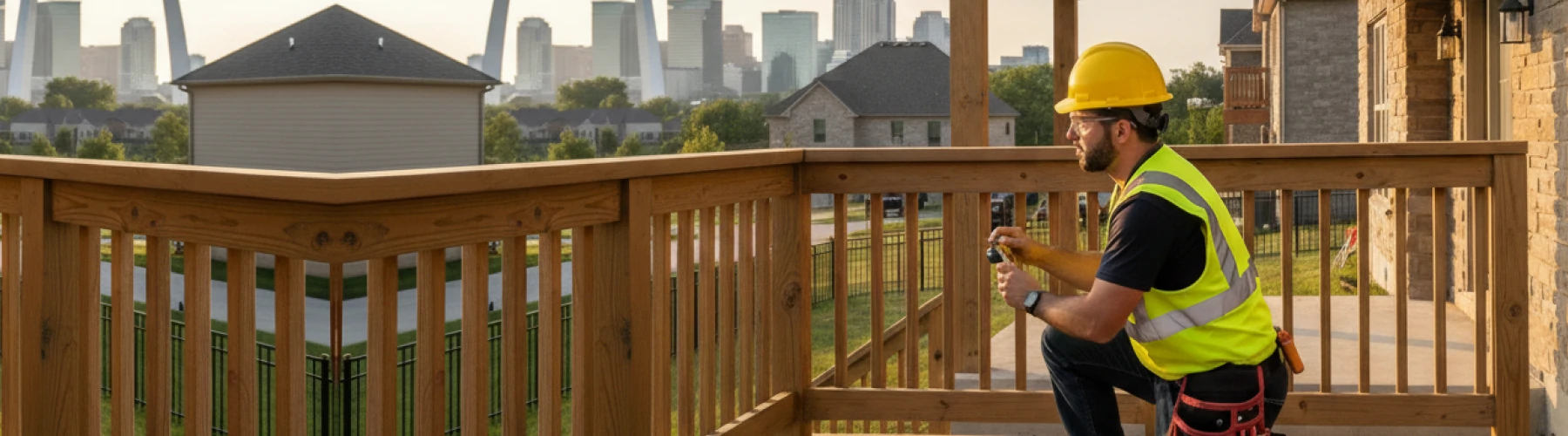
Why Chesterfield Homeowners Are Booking Deck Inspections Now
Most calls don't start with "I think my deck is failing." They start with "I'm selling my house" or "my insurance company asked for documentation" or "the contractor who built this thing didn't pull a permit and now I need to know what I'm dealing with." This is where our comprehensive building inspection services come in.
Chesterfield has a lot of decks built in the late 1990s and early 2000s. That puts them right at the 20 to 25 year mark, which is when the structural problems stop hiding. Ledger boards start pulling away from the house. Joist hangers rust through. Posts that were set on top of concrete pads instead of properly embedded footings begin to shift. The deck still looks fine from the top. Underneath is a different story.
Here's what's driving the urgency right now:
- Real estate transactions in Chesterfield are requiring more documentation than they did five years ago, and buyers' inspectors are flagging older decks
- Insurance carriers are tightening coverage on elevated structures that don't have engineering records on file
- Missouri adopted the 2018 IRC, which raised the bar on deck attachment and railing requirements compared to what was code when many of these decks were originally built
- Homeowners in neighborhoods like Clarkson Valley and Wildhorse Creek are planning additions or remodels and need to know if the existing deck ties into the project or needs to come down
The team sees this pattern every week. A homeowner calls because something feels bouncy, or a railing wobbles, or they noticed a gap between the deck ledger and the house band board. There's more going on below the surface than what triggered the call.
And the cost of not knowing is real. According to the North American Deck and Railing Association, deck collapses injure thousands of people annually in the U.S. That's not a scare tactic. It's just the math on what happens when aging lumber meets corroded fasteners and nobody checks.
Booking a deck and balcony inspection before you list your home, before you start a renovation, or before next summer's cookout season gives you a clear picture. Not a guess. A licensed structural engineer's assessment of what's sound and what needs attention.
What a Professional Deck and Balcony Inspection Covers
Most homeowners think a deck inspection is someone walking around and pushing on the railing. That's not even close.
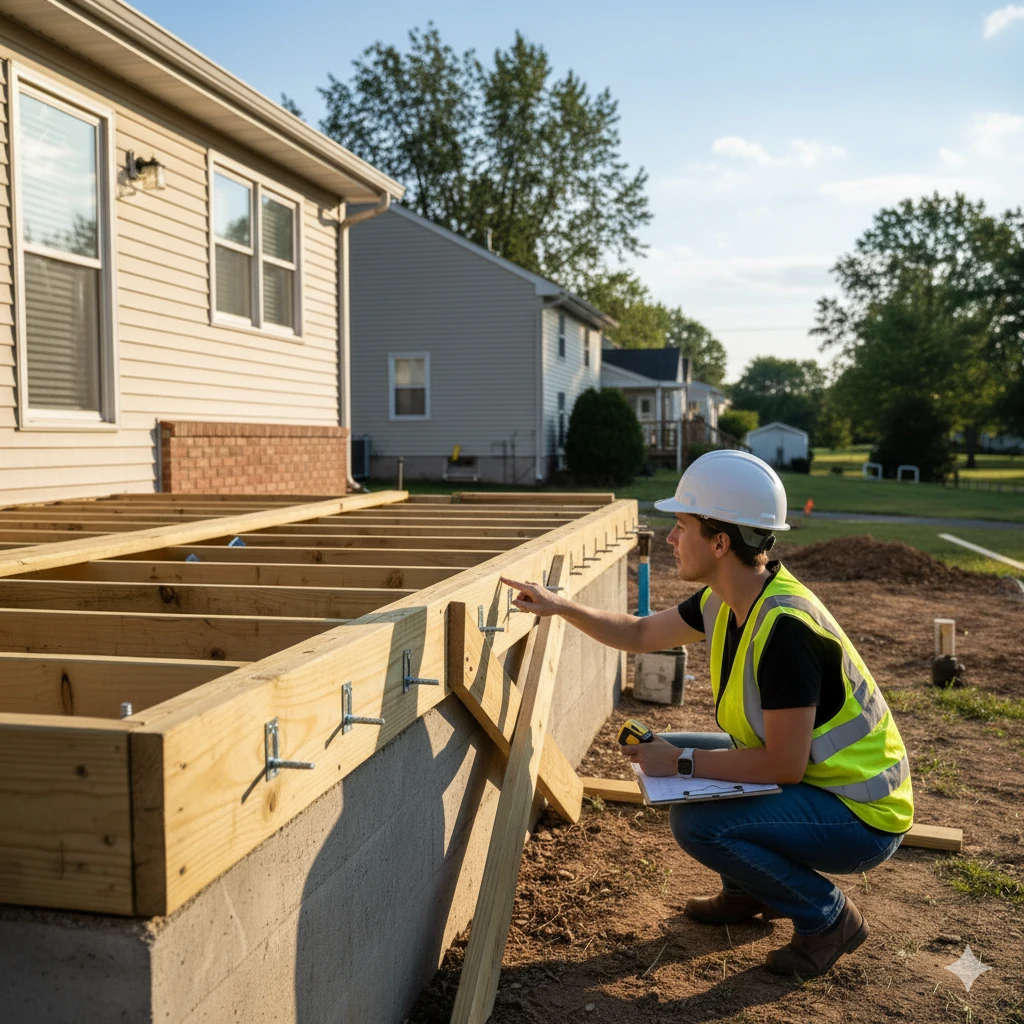
The team checks every part of your deck or balcony structure, starting where you can't see. The ledger board connection is the first thing that gets attention, that's the piece of lumber bolted to your house where the deck frame attaches. In Chesterfield, the team sees failed ledger connections on homes built in the late '80s and '90s more than any other era. Lag bolts corrode, flashing fails, water gets behind the siding. Once moisture sits against that ledger for a few seasons, rot takes hold fast.
Here's what a full inspection covers:
- Ledger board attachment, flashing condition, and signs of water intrusion at the house connection
- Post bases, footings, and bearing points for settlement or shifting
- Joist hangers, beam connections, and all structural fasteners
- Railing post anchorage and guard rail height per current code
- Decking surface condition, including soft spots that suggest rot underneath
The real problems are underneath. A deck can look great from the top while the joists below are splitting or the beam has pulled away from a notched post. The team uses a moisture meter and a probe to check wood density at every critical connection. If something feels off, it gets documented with photos and measurements.
Balconies get extra scrutiny. Cantilevered balconies in the Wildhorse and Clarkson Valley areas often have waterproofing failures at the threshold where the cantilever passes through the exterior wall, a spot where damage stays hidden for years. According to the International Code Council, guardrail and connection failures are the leading cause of deck collapses. The team doesn't skip anything.
You get a written report that spells out what's sound, what needs repair, and what needs immediate attention.
Warning Signs Your Deck or Balcony Needs Immediate Attention
Most people don't call about a deck inspection until something feels wrong. Maybe the railing wobbles when you lean on it. Maybe you noticed a soft spot near the stairs last summer and just avoided stepping there. That's how it usually starts.
The team sees this constantly in Chesterfield. A homeowner walks out onto their deck one morning and something just doesn't feel right. The boards give a little more than they used to. The ledger board where the deck meets the house has a dark stain running down the siding. These aren't cosmetic problems.
Here are the signs that should move you from "I'll deal with it later" to "I need someone out here this week":
- Soft or spongy decking boards, especially near the house connection
- Visible rot at post bases or where wood contacts concrete
- Loose or wobbly railings that shift when you push against them
- Rusted, corroded, or missing hardware at joist hangers and lag bolts
- Separation between the ledger board and your home's exterior wall
That last one is the big one. According to the International Association of Certified Home Inspectors, ledger board failure is the leading cause of deck collapses. And it's not always obvious from the surface. Water gets behind the connection, the wood deteriorates from the inside out, the fasteners lose their grip. By the time you see daylight between the ledger and the wall, the structure has already lost a serious amount of its load capacity.
Homeowners in the Wildhorse neighborhood and along the older subdivisions near Clarkson Road are dealing with decks built 15 to 20 years ago. The original fasteners weren't designed to last forever.
But here's what matters. None of these signs automatically mean your deck needs to be torn down. They mean it needs a proper structural evaluation before anyone decides the next step. A soft board could be surface rot. It could also be a failed joist underneath. You can't know without looking at the right things in the right order.
How Missouri's Climate Compounds Structural Risk on Aging Decks
Chesterfield sits right in the middle of a brutal freeze-thaw cycle zone. That matters more for your deck than most people realize.
Wood and metal fasteners expand when it's hot and contract when it drops below freezing. In a single Chesterfield winter, that cycle can repeat dozens of times. Every expansion loosens a connection just slightly. Every contraction pulls it a fraction further apart. After ten or fifteen years, the cumulative damage is real. The team sees joist hangers in the Wildhorse neighborhood that have worked themselves halfway out of the ledger board, not from any single event, just from years of seasonal movement nobody thought to check.
Summer humidity is the other half of the problem. Missouri's muggy months keep moisture trapped in wood framing for weeks at a stretch. That creates ideal conditions for fungal decay, especially in spots where airflow is limited:
- Where the ledger board meets your home's rim joist
- Underneath stair stringers that sit close to grade
- Around posts that are partially buried or touching concrete without proper standoffs
- Any beam pocket or notch that holds water after rain
According to the International Association of Certified Home Inspectors, wood rot at the ledger connection is the single most common structural failure point on residential decks. In this climate, it happens faster than most homeowners expect.
Ice is sneaky too. Water pools on flat surfaces, freezes overnight, then melts the next afternoon. That repeated saturation works its way into end grain cuts and around lag bolts. By the time you see soft spots or discoloration on the surface, the damage underneath is usually well ahead of what's visible.
The team inspects decks in Chesterfield that look fine from the top, stain looks good, boards feel solid underfoot. But check from below and the story changes. The worst damage is often in a spot the homeowner has never looked at. Missouri's weather doesn't announce the problems it causes. A deck and balcony inspection catches what the seasons leave behind before it turns into something dangerous.
What to Expect During and After Your Inspection
The team shows up with a moisture meter, a probe, a level, and a camera. Not a clipboard with checkboxes. Every deck and balcony inspection in Chesterfield starts underneath the structure, because that's where the real story is.
Here's the typical process from start to finish:
- The team checks the ledger board connection where your deck meets the house. This single attachment point is the number one failure location on elevated decks.
- Every post base, footing, and beam gets examined for rot, corrosion, and movement.
- Joists are probed for soft spots, especially near fastener holes where moisture collects.
- Railings and guards get a load test. If they flex more than they should, that goes in the report.
- The decking surface is checked for structural integrity, not just cosmetic wear.
- Flashing, drainage paths, and any waterproofing details are documented.
Most inspections take about an hour for a standard residential deck. Larger structures or multi-level balconies near Chesterfield Valley take longer, sometimes closer to two hours.
More often than not, the homeowner is surprised by what's happening underneath a deck that looks fine on top. That's the whole point.
After the site visit, you'll get a written report with photos. Not a vague summary. The report spells out what's damaged, what's still functional, and what needs repair or replacement. If structural repair design is needed, the team can handle that too. If your deck passes, you'll have documentation that says so.
One thing people ask about is timeline. The report usually lands in your inbox within a few business days. And if there's something urgent, a connection that's already failed or a joist that's lost half its cross-section, the team flags it on-site before leaving.
You don't need to prepare anything special. Just make sure the area under the deck is accessible. Move stored items, clear the lattice panel if there is one. That alone saves time and lets the team do a more thorough job.
Frequently Asked Questions
How do I know if my Chesterfield deck needs an inspection now or if it can wait?
If your deck is 15 years or older, it should not wait. Chesterfield has many decks built in the late 1990s and early 2000s, and that age range is when structural problems stop hiding. Soft boards, a wobbly railing, or a dark stain near the ledger board are signs to call this week. Even if nothing feels wrong, decks at that age often have corroded fasteners and hidden rot underneath that look fine from the surface.
What does a deck and balcony inspection actually check?
A professional inspection goes well beyond pushing on the railing. The inspector checks the ledger board connection, post bases, joist hangers, beam connections, railing post anchorage, and the decking surface for soft spots. A moisture meter and probe test wood density at every critical connection. You get a written report that spells out what is sound, what needs repair, and what needs immediate attention.
Does Missouri code affect older decks in Chesterfield?
Yes, it can. Missouri adopted the 2018 IRC, which raised the bar on deck attachment and railing requirements. Many decks in Chesterfield were built under older code standards. That matters when you are selling, adding on, or when an insurance carrier asks for documentation. An inspection tells you exactly where your deck stands against current requirements so there are no surprises.
My deck looks fine from the top. Do I still need an inspection?
Yes, because the real problems are underneath. A deck can look great on the surface while joists are splitting or a beam has pulled away from a notched post below. Ledger board rot is a common example — water gets behind the connection, the wood deteriorates from the inside out, and by the time you see a gap at the wall, the structure has already lost significant load capacity. Looking fine from the top is not the same as being structurally sound.
Do I need a deck inspection before listing my home in Chesterfield?
It is a smart move before you list. Buyers' inspectors in Chesterfield are flagging older decks more often than they did five years ago, and a flagged deck mid-transaction can delay or kill a sale. Having a professional inspection report on file gives buyers confidence and gives you time to address anything before it becomes a negotiating problem. It puts you in control of the conversation instead of reacting to someone else's findings.
What happens if the inspector finds a serious problem with my deck?
Finding a problem does not automatically mean your deck gets torn down. The written report will spell out what is sound, what needs repair, and what needs immediate attention. Some issues, like corroded joist hangers or a loose railing post, are straightforward repairs. Others, like significant ledger board rot or failed footings, require more work. Knowing exactly what you are dealing with lets you make a real plan instead of guessing.