
What Foundation Crack Inspection in Chesterfield Actually Covers
Most homeowners call because they spotted something in the basement that wasn't there last year. A line running diagonally from a window corner. A gap along the floor where the wall meets the slab. Maybe the drywall upstairs started cracking too, and now nothing feels like a coincidence.
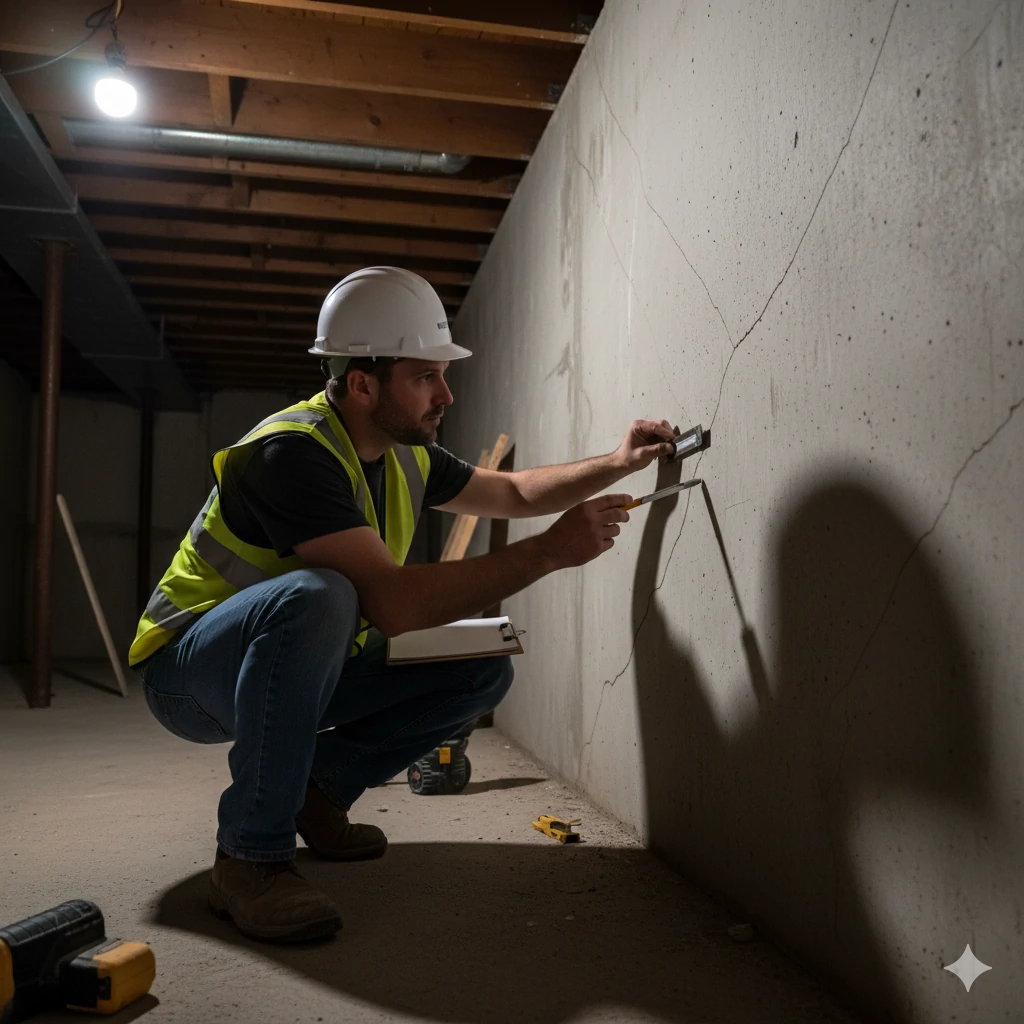
A foundation crack inspection from a professional building inspector isn't a quick glance at your basement walls. The team documents every crack, measures its width at multiple points, and classifies it by type and direction. That classification matters more than most people realize.
Here's what the inspection actually covers:
- Crack mapping: Every visible crack gets measured, photographed, and logged by location, width, and orientation
- Pattern analysis: Horizontal cracks mean something very different than vertical ones, stair-step patterns in block walls tell their own story
- Movement indicators: Signs of active shifting versus old settlement that stopped years ago
- Water intrusion evidence: Staining, efflorescence, or moisture trails that point to drainage problems pushing against your foundation
- Structural impact assessment: Whether the cracking has affected floors, door frames, or load paths above
Homeowners are often worried about the wrong crack. That big ugly one in the poured concrete? Often just shrinkage from curing. The thin horizontal line halfway up a block wall in your Chesterfield basement? That's the one that needs attention, it can mean lateral soil pressure is bowing the wall inward.
The team checks both interior and exterior surfaces. Exterior grading, downspout placement, and soil conditions all play a role in what's happening below grade, so the inspection goes beyond the basement itself.
Here's what separates a licensed structural engineer's inspection from a contractor's opinion. The team produces a written report with crack classifications based on actual engineering standards. Civil engineering standards identify crack width and orientation as the two primary indicators for determining structural versus cosmetic damage. That report becomes your roadmap, whether you're planning repairs, listing your home, or just making sure things are stable.
You walk away knowing exactly what you're dealing with. Not guessing.
Crack Types That Signal Structural Risk vs. Normal Settling
Not every crack in your foundation means something bad. That's the first thing the team tells homeowners in Chesterfield who call worried about a line they spotted in the basement. Some cracks are just concrete doing what concrete does. Others need attention right away.
Hairline cracks that run vertically are common in poured concrete walls. They usually show up within the first year or two after construction. The concrete cures, it shrinks a little, and a thin crack appears. Most of these are cosmetic. They don't move, they don't grow, and they don't affect the structure of your home.
But here's what the team watches for during a foundation crack inspection. These are the patterns that point to real structural problems:
- Horizontal cracks along the middle of a basement wall, especially in block foundations. This usually means lateral soil pressure is pushing inward.
- Stair-step cracks in mortar joints. Common in older homes with block foundations built in the 1970s and 1980s. They follow the mortar lines in a zigzag pattern.
- Diagonal cracks that start at a corner of a window or door and angle toward the floor. These often indicate differential settlement.
- Any crack wider than 1/4 inch. Engineering standards are clear that cracks at that width or beyond typically warrant a professional evaluation.
- Cracks that are wider at the top than the bottom, or the reverse. Uneven width tells you the wall is rotating or shifting.
Sometimes a homeowner calls because they noticed a crack that "wasn't there before." That's actually useful information. A crack that changes over weeks or months is telling you something is still moving. A crack that's been the same size for five years is a different story entirely.
The team sees a lot of homes in Chesterfield with block foundations from the 1970s and 1980s. Those are the ones where stair-step cracking shows up most often. The clay soils here put real pressure on those walls during wet seasons, and knowing what type of crack you're looking at is the first step toward knowing what to do about it.
How Chesterfield's Soil and Seasons Drive Foundation Movement
Most homeowners in Chesterfield don't think about what's under their slab until a crack shows up. But the ground beneath your home is never still.
Chesterfield sits on expansive clay soils. When it rains hard in spring, that clay absorbs water and swells. During a dry August stretch, it shrinks back down. Your foundation moves with it, not a lot each time, maybe fractions of an inch, but those small shifts add up over years, and that's when cracks start forming in poured concrete walls, block foundations, and slabs.
The team sees this pattern play out the same way almost every season:
- Late spring brings heavy saturation, pushing hydrostatic pressure against basement walls
- Summer drought pulls moisture away from footings, causing settlement
- Winter freeze-thaw cycles widen existing hairline cracks that were easy to ignore in October
- Homes near the Chesterfield Valley floodplain deal with extra groundwater pressure year-round
Properties on higher ground with better drainage still get the same clay expansion problem. When someone calls about a new crack after a wet spring, the soil did exactly what you'd expect it to do.
A crack that appeared because of seasonal movement might be cosmetic. Or it might be the first visible sign of ongoing structural settlement. The soil conditions tell part of the story, the crack pattern tells the rest. You can't read one without the other.
Expansive soils cause more financial damage to structures in the U.S. each year than floods, hurricanes, and earthquakes combined. Chesterfield's clay is exactly that type of soil. That's not meant to alarm you. It just means a foundation crack here deserves a closer look than it might somewhere with sandy or rocky ground.
Independent Inspection vs. a Contractor
A contractor looks at your foundation crack and tells you what they'd do to fix it. That's not the same thing as telling you what's actually wrong.
The team sees this play out constantly across Chesterfield. A homeowner gets a quote from a waterproofing or repair company. The quote says the crack needs carbon fiber straps, epoxy injection, or a full wall rebuild. Maybe all three. But nobody measured the crack width, checked if it's still moving, or looked at the soil grading outside. The quote skips straight to a solution because the person writing it makes money on the solution.
That's not a knock on contractors. They do good work. But a foundation crack inspection from a licensed structural engineer starts from a different place. The goal isn't to sell a repair. It's to figure out three things:
- What caused the crack to form
- Whether the crack is active or dormant
- What level of repair, if any, your home actually needs
Often the answer is less dramatic than what showed up on a contractor's quote. A hairline shrinkage crack in a poured concrete wall doesn't need the same response as a stair-step crack running through a block foundation in the Chesterfield Valley area. But on a contractor's quote, both might get the same line item.
An independent inspection gives you a documented opinion with no financial interest in the outcome. Licensed structural engineers follow established standards for evaluating building safety and integrity. That matters when you're deciding whether to spend a few hundred dollars on monitoring or tens of thousands on excavation.
And here's the practical side. If you do need a repair, a structural engineer's report tells the contractor exactly what to do. No guessing, no upselling. The repair scope is already defined before anyone gives you a number.
A contractor quote answers "what would we charge you?" The inspection answers "what does your home actually need?" Those are very different questions.
Scheduling a Foundation Crack Inspection Before Buying or Selling
Real estate transactions in Chesterfield move fast. A foundation crack inspection before closing protects both sides of the deal, and it's one of the most common reasons people call the team.
Buyers want to know what they're walking into. Sellers want to avoid surprises that kill a deal at the last minute. Either way, a licensed structural engineer's report carries more weight than a general home inspector's notes. General inspectors flag cracks. The team tells you what those cracks actually mean for the structure.
For Buyers
You've found a house that checks every box. Then you notice a crack running down the basement wall during your walkthrough. Is it a dealbreaker? Maybe not. But you won't know until someone qualified looks at it. A buyer might panic over a hairline shrinkage crack that's been stable for fifteen years, or nearly ignore a stair-step crack in the block that's actually moving. Both situations need a real answer, not a guess.
A foundation crack inspection gives you a written report you can hand to your agent, your lender, or your attorney. It spells out what's cosmetic, what needs monitoring, and what needs repair before you sign.
For Sellers
Getting a foundation crack inspection before listing takes a potential objection off the table. If the team finds something minor, you can address it on your terms instead of scrambling during a buyer's inspection period. And if everything checks out, that report becomes a selling point.
Roughly one in four homes in the U.S. has some form of foundation distress. That stat alone tells you why buyers are cautious. Having documentation ready shows you've done your homework.
Timing matters here. The team can usually get out to your property within a few days, and the report follows shortly after. If you're under contract with a tight closing window, let the team know upfront so scheduling doesn't become the bottleneck. Give us a call to get started.
Frequently Asked Questions
How do I know if a crack in my Chesterfield basement is serious or just normal settling?
The crack's direction and width tell you the most. Vertical hairline cracks in poured concrete are usually just shrinkage from curing — common and mostly cosmetic. The ones to watch are horizontal cracks along block walls, stair-step patterns in mortar joints, or any crack wider than 1/4 inch. Chesterfield's clay soils put real pressure on older block foundations, especially after a wet spring. If a crack is changing size over weeks, that's a sign something is still moving and needs a professional look.
What happens during a foundation crack inspection — what will the inspector actually do?
The inspector measures and photographs every crack, noting its width, direction, and location. They check both inside the basement and outside along the foundation. Grading, downspouts, and soil conditions all factor into what's happening below grade. You get a written report that classifies each crack by type — structural versus cosmetic — based on engineering standards. That report gives you a clear answer, not just a contractor's opinion, so you know exactly what needs attention and what can wait.
Can Chesterfield's seasonal weather actually cause new foundation cracks to appear?
Yes, and it happens on a predictable cycle here. The clay soils in Chesterfield swell when spring rains hit and shrink during dry summers. That repeated movement puts stress on your foundation walls and slab. Homes near the Chesterfield Valley floodplain deal with extra groundwater pressure year-round. Winter freeze-thaw cycles can widen hairline cracks that seemed minor in October. A crack that appeared after a wet season might be seasonal movement — or it might signal ongoing settlement. An inspection tells you which one you're dealing with.
Do I need a foundation crack inspection before selling my home in Chesterfield?
Getting an inspection before listing puts you in a much stronger position. Buyers and their inspectors will find cracks anyway — having a written report with professional crack classifications shows you know what's there and have addressed it honestly. It removes the guesswork for buyers and can prevent deals from falling apart late in the process. If repairs are needed, knowing ahead of time gives you options. Waiting until a buyer's inspector flags it usually costs you more in negotiation than the inspection itself.
How long does a foundation crack inspection take, and when should I schedule one?
Most inspections take one to two hours depending on the size of your home and how many cracks need to be documented. Schedule one as soon as you notice something new — a crack that appeared after a wet spring, a door that suddenly sticks, or drywall cracking upstairs. Those are all signals worth checking quickly. Don't wait until the problem looks bigger. Catching active movement early gives you more repair options and usually means lower repair costs down the road.
What's the difference between a foundation crack inspection and a general home inspection?
A general home inspector looks at many systems and gives a broad overview. A foundation crack inspection goes much deeper on one specific thing. The inspector maps every crack, measures width at multiple points, identifies the pattern type, and checks for signs of active movement versus old settled cracks. You get a written report based on engineering standards — not just a checkbox on a general report. If a home inspector flags foundation concerns, a dedicated foundation inspection is the logical next step before making any decisions.