What a Renovation Inspection Actually Covers
Most homeowners in Chesterfield think a renovation inspection is just someone walking through the house and saying "looks good." It's not. A renovation inspection, building inspector you can count on, is a structural review of your project at a specific point in construction, before the next phase of work buries everything behind drywall and flooring.
The team looks at what's been opened up, what's been changed, and what still needs to happen. That's the short version. Here's what it actually involves:
- Checking whether load-bearing walls were properly supported or removed with the right beam and header design in place
- Reviewing floor system framing for deflection, span limits, and connection details
- Confirming that foundation work or new footings match the structural drawings
- Identifying framing modifications your contractor made on the fly that don't match the approved plans
- Flagging anything a municipal inspector is likely to call out before they even show up
The issue isn't always that the contractor did bad work. It's that a change was made on-site without updating the engineering. That gap between what's on paper and what's actually built is where permits stall and inspections fail.
A renovation inspection catches those gaps early. The team documents everything with photos and notes, then produces a clear report you can hand to your contractor or the building department.
In the older neighborhoods near Baxter Road and Chesterfield Valley, the team finds a lot of mid-renovation surprises, homes from the 1980s and 1990s with framing details that don't match current code. Structural requirements in residential construction have changed multiple times since those homes were built, so what passed inspection thirty years ago won't necessarily pass today.
That's exactly what a renovation inspection is designed to sort out before it becomes your problem at the permit counter.
How a Renovation Inspection Differs From a Standard Home Inspection
A standard home inspection checks what's visible. Outlets, HVAC, roof condition, plumbing fixtures. It's a snapshot of how a house works right now. A renovation inspection asks a different question: can this house handle what you're about to do to it?
That distinction matters more than most people realize. It comes up in Chesterfield constantly. A homeowner buys a place near Chesterfield Valley, hires a contractor, and starts talking about opening up the kitchen or adding a second-story master suite. The contractor says "no problem." But nobody has looked at whether the existing floor joists can carry the new load, or whether that wall between the kitchen and dining room is holding up half the roof structure. That wall is almost always load-bearing.
Here's what a renovation inspection covers that a standard inspection won't touch:
- Structural capacity of existing framing, foundations, and bearing walls relative to your planned changes
- Code compliance gaps that will get flagged the moment you pull a permit
- Hidden conditions behind walls, under floors, or in crawlspaces that affect your renovation scope
- Whether your contractor's proposed approach matches what the building department needs to see on paper
A standard inspector isn't evaluating your renovation plans against the International Residential Code. They're not calculating whether a beam can span 18 feet after you remove a wall. They don't produce structural drawings or stamped calculations. And your permit office in Chesterfield won't accept a general home inspection report as engineering documentation.
The homeowner who skips this step ends up paying for it later. Either the permit gets rejected, the contractor has to redo framing mid-project, or the final inspection catches something that should've been addressed before demo day. A renovation inspection catches those problems when they're still easy to fix, before the drywall goes up, before the plumber roughs in new lines, before you've committed tens of thousands of dollars to a plan that doesn't account for what's actually holding your house together.
So if your contractor says you don't need an engineer involved, that's worth a second opinion. Reviewing a home repair inspection guide for residential projects can help you understand what a thorough structural review should include before work begins.
The Pre-Drywall Window: Why Timing Is Everything
Once drywall goes up, the structure behind it disappears. That's the reality. And it's the single biggest reason renovation inspection timing matters so much in Chesterfield.
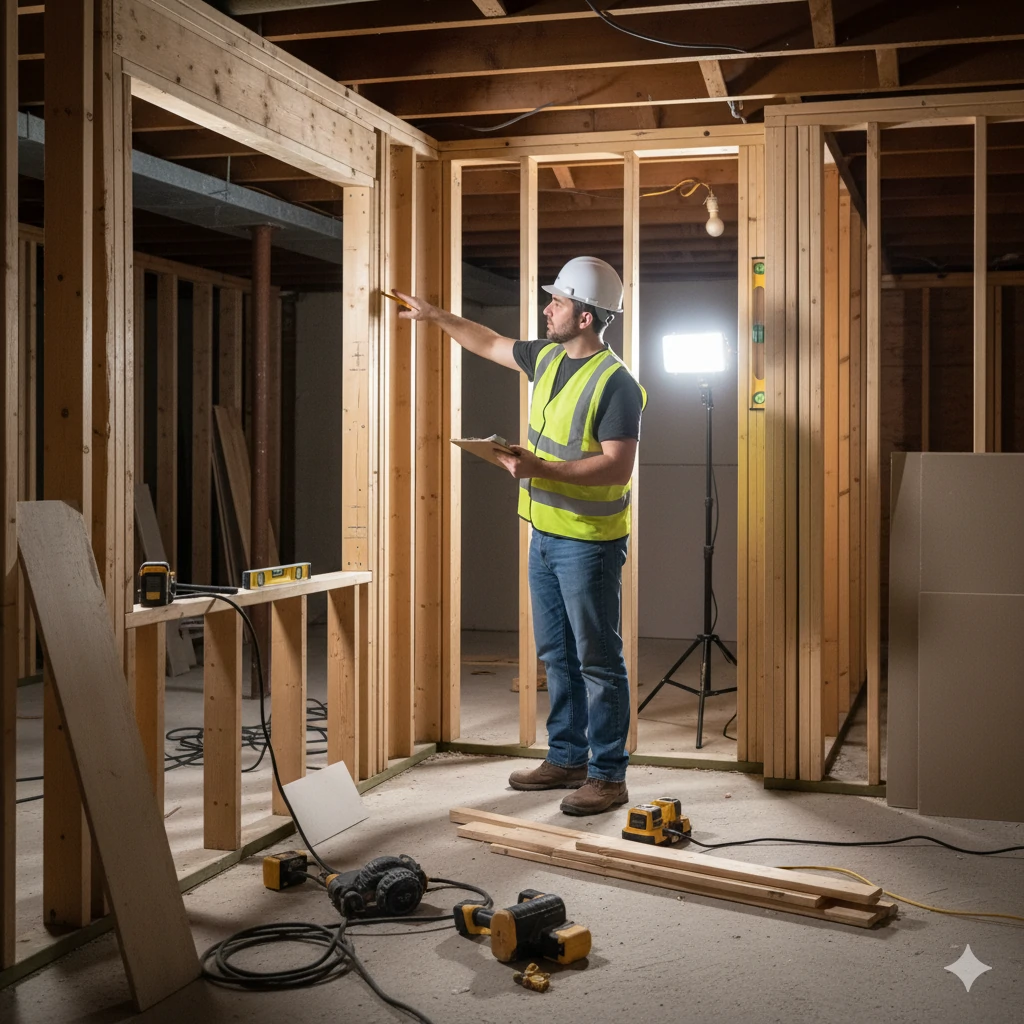
The team hears this story almost every week. A homeowner hires a contractor, demo wraps up fast, framing gets done, and then someone asks, "Should we have an engineer look at this?" The answer is yes, you should have called before the drywall crew showed up. That window between framing completion and drywall installation is short. Sometimes just a few days. Miss it, and you're either tearing finished walls back open or hoping nothing was done wrong behind them.
Here's what the team checks during that pre-drywall window:
- Whether new or modified beams and headers match the stamped structural drawings
- Whether load paths transfer properly from roof to foundation
- Whether any load-bearing walls were altered without proper support
- Whether fastener patterns and connection hardware meet code requirements
These aren't things you can verify once everything's covered up. A joist hanger installed with the wrong nails looks fine from the outside but won't carry the load it's supposed to carry. The team catches details like that because they know what the building inspector in Chesterfield is going to flag, and more importantly, what an inspector might miss on a quick walkthrough.
So when's the right time to schedule? As soon as your contractor finishes rough framing and before insulation goes in. Some projects near Chesterfield Valley move fast, especially kitchen remodels and room additions where the contractor wants to keep momentum. The team can usually get out within a day or two of your call. Waiting until the last minute makes everything harder.
A renovation inspection at the right time costs you a phone call. After drywall, it costs you demo, patching, repainting, and lost time.
Using Your Inspection Report Before Final Contractor Payment
The inspection report isn't a formality. It's your leverage.
Most homeowners in Chesterfield get to the end of a renovation and feel pressure to write that final check. The contractor says the job is done. The kitchen looks great. But "looks great" and "built right" aren't the same thing. Calls come in almost every week from homeowners who've already paid in full and now have a sagging header or a floor that bounces. At that point, your options shrink fast.
Your renovation inspection report gives you something specific to point to. It's not about being difficult with your contractor. It's about having a clear, documented list of what passed and what didn't. Good contractors actually welcome this. It protects them too.
What to Do With the Report Before You Pay
- Read through every flagged item and match it to your original scope of work.
- Share the report directly with your contractor. Ask for a written response on each open item.
- Set a timeline for corrections. Two weeks is reasonable for most punch-list work.
- Schedule a follow-up walkthrough after repairs are done.
- Only release final payment once open items are resolved or you've agreed to a holdback amount.
Most of the time, the issues are minor. A joist hanger that's missing a nail. Flashing that wasn't lapped correctly. Small stuff that takes an afternoon to fix but becomes expensive in three years if left alone.
The team inspected a basement finish-out near Chesterfield Valley where the framing looked solid from the hallway. The report caught that two posts weren't bearing on the footing below, the concrete pad was six inches off center. That's not something you'd see standing in the room. It only shows up when someone checks the connection points against the structural drawings.
Structural deficiencies are among the most costly post-renovation discoveries. Having documentation before final payment gives you a paper trail if anything comes up later with your municipality or insurance.
Think of the report as your receipt that the work was done right. Not just finished.
Renovation Inspection for Chesterfield Home Purchases and Pre-Listing Prep
Buying a home that's already been renovated sounds great until you find out the previous owner's contractor never pulled a permit for that finished basement. This comes up constantly in Chesterfield, especially in neighborhoods like Wildhorse and Clarkson Valley where older homes get updated before going on the market. A renovation inspection tells you whether the work was done right or just done to look right.
There's a big difference.
If you're purchasing a home, a standard home inspection covers the basics but won't catch structural shortcuts buried inside walls. The team evaluates load paths, framing modifications, header sizing, and whether removed walls were actually load-bearing. The seller's agent might say "oh, that was just cosmetic." It usually wasn't.
For sellers, the logic works the other way. Getting a renovation inspection before listing means you can fix problems while they're still your problems, not deal-breakers during negotiation. Undisclosed structural modifications are among the top reasons real estate transactions fall through. A clean report from a licensed structural engineer gives buyers confidence and gives your agent leverage.
Here's what the team looks at during a pre-purchase or pre-listing renovation inspection:
- Framing changes behind finished walls, especially around kitchen remodels and open-concept conversions
- Foundation modifications tied to basement finishing or waterproofing work
- Deck and balcony connections that may not meet current code
- Floor system changes from bathroom additions or rerouted plumbing
Many Chesterfield homes built in the 1980s and 1990s have had multiple rounds of updates. Each round adds risk if the structural side wasn't engineered properly. And most of the time, it wasn't. The contractor did what made sense to them in the moment and moved on to the next job.
Your real estate agent can't catch this. Your home inspector might flag something vague. A renovation inspection gives you actual answers backed by structural analysis, not guesswork.
Frequently Asked Questions
When is the right time to schedule a renovation inspection in Chesterfield?
Schedule your renovation inspection after rough framing is done but before insulation or drywall goes in. That window can be just a few days, so call early. Once drywall goes up, the structure behind it is hidden. If you miss that window, you're either tearing walls open or hoping nothing was built wrong. Projects in Chesterfield Valley especially move fast, so locking in your inspection date before framing wraps up is the safest move.
How is a renovation inspection different from a standard home inspection?
A renovation inspection looks at whether your home can handle the changes you're planning. A standard home inspection only checks what's visible right now. A renovation inspection reviews structural capacity, load-bearing walls, and code compliance against your actual plans. Your Chesterfield permit office won't accept a general home inspection report as engineering documentation. They're two very different things, and mixing them up can stall your project at the permit counter.
Do older homes in Chesterfield need extra attention during a renovation inspection?
Yes, older homes in Chesterfield need closer review. Homes built in the 1980s and 1990s near Baxter Road and Chesterfield Valley often have framing details that don't meet current code. Structural requirements have changed several times since those homes were built. What passed inspection thirty years ago won't always pass today. A renovation inspection catches those gaps before they become your problem at the permit counter.
What happens if my contractor made changes on-site that don't match the approved plans?
That's one of the most common problems a renovation inspection catches. Contractors often make small framing changes on the fly without updating the engineering drawings. That gap between what's on paper and what's actually built is exactly where permits stall and inspections fail. The inspection documents those differences with photos and a written report. You can hand that report to your contractor or the building department to get things back on track.
Will a renovation inspection tell me if my contractor's work is up to code?
Yes, a renovation inspection checks whether the work matches code requirements and the approved structural drawings. The inspector looks at beam and header design, floor framing, fastener patterns, and connection hardware. Some details, like a joist hanger installed with the wrong nails, look fine from the outside but won't carry the load they're supposed to. Catching those issues before drywall goes up saves you from costly repairs or a failed final inspection in Chesterfield.