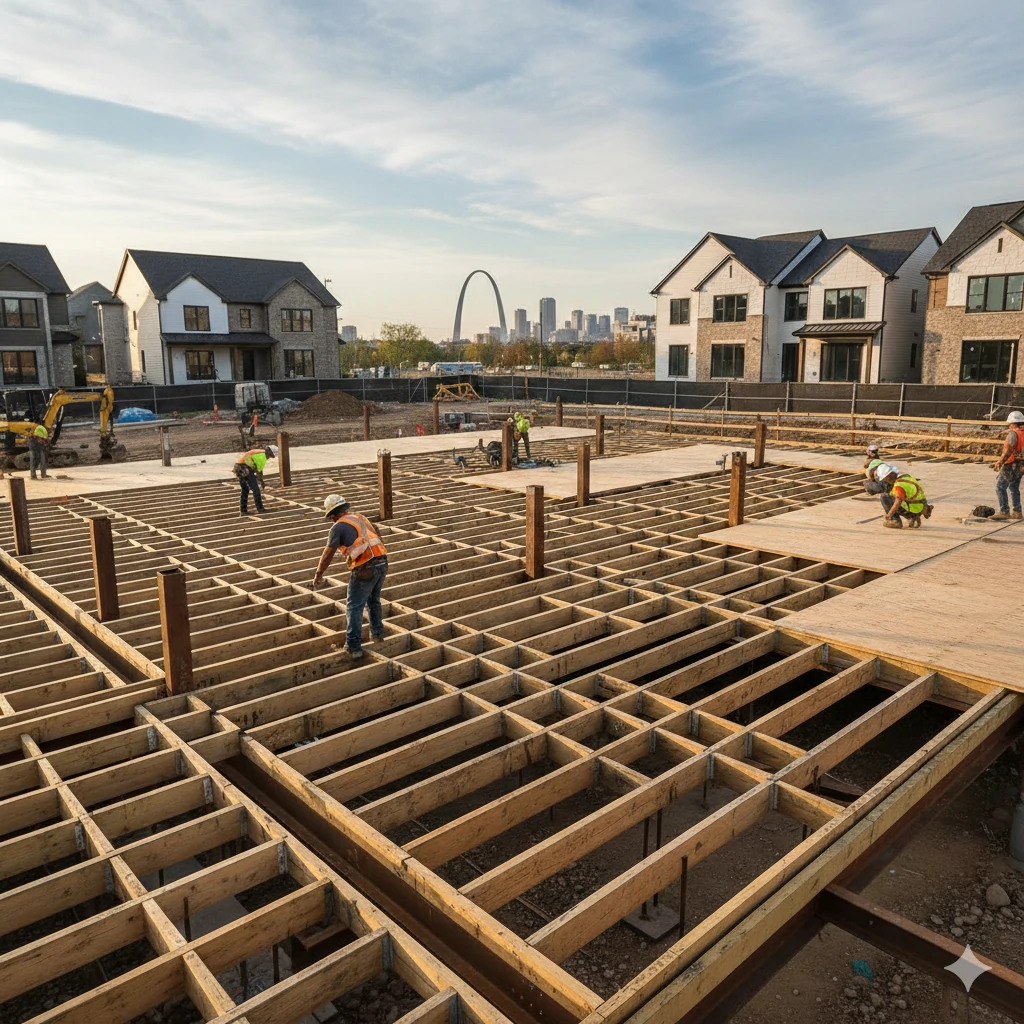
What Floor System Design Actually Covers
Most homeowners hear "floor system design" and think about flooring materials. Tile, hardwood, carpet. That's not what this is. Floor system design is the structural engineering underneath your finished floor, the joists, beams, spans, connections, and load paths that keep everything level and solid for decades. This is the crucial service provided by design engineering consultants.
The team handles this work across Chesterfield almost every week, and the projects that trigger it are pretty consistent:
- Removing a load-bearing wall and needing to reroute how loads travel down to the foundation
- Adding a room or second story where the existing floor framing can't handle the new weight
- Fixing bouncy or sagging floors in older homes around the Wildhorse neighborhood
- Converting a garage or unfinished space into livable square footage
- Supporting heavy items like a stone island, a large soaking tub, or a home gym
In every one of these cases, someone needs to calculate the actual loads and specify the right framing. That's floor system design. It produces stamped structural drawings that your contractor builds from and your permit inspector reviews.
The deliverable typically includes joist sizes and spacing, beam locations and dimensions, connection details at bearing points, span tables referenced to the International Residential Code, and specific callouts for any point loads that sit outside normal residential assumptions.
The homeowner who calls about this has usually already talked to a contractor who said something like "you'll need an engineer for that." The contractor is right. Chesterfield's building department wants to see calculations and stamped drawings before they'll issue a permit for anything that changes your floor structure. That's not red tape, it's how your home stays safe.
Floor system design isn't a product you buy off a shelf. It's a set of engineering decisions specific to your home, your soil conditions, your existing framing, and whatever new load you're asking that floor to carry. Every project is different because every house is different.

Warning Signs Your Floor System Needs Professional Attention
Bouncy floors get ignored more than almost anything else in a house. People live with them for years, assume it's normal, maybe toss a rug over the soft spot. But a floor that moves under your feet is telling you something specific about the structure underneath.
The team sees this constantly across Chesterfield. A homeowner in Wildhorse notices their dining room floor has a slight dip near the center of the room. Someone in Clarkson Valley feels a bounce every time they walk down the hallway. It's usually the same handful of issues.
Here's what to watch for:
- Visible sagging or a dip you can feel when you walk across the room
- Floors that bounce or vibrate when someone walks nearby
- Cracks forming in tile or grout lines for no obvious reason
- Doors that used to close fine but now stick or swing open on their own
- Gaps opening between the floor and baseboards
Any one of these can point to undersized joists, overspanned beams, or support posts that have shifted. Cracked tile is a big one, people replace the tile twice before realizing the floor system underneath is deflecting too much. The tile isn't the problem, it's a symptom.
A floor can meet the original building code from when the house was built but still not perform well enough for how the space is used today. Older homes in Chesterfield were often framed with 2x8 joists on 16-inch centers. That was fine for carpet and a bedroom. Add hardwood, a kitchen island full of granite, or a heavy soaking tub and those same joists start to flex.
Not sure if what you're seeing is cosmetic or structural? That's the most common reason people call. The team can look at your floor system and give you a straight answer, the math and the measurements to back it up, not a guess.
How the Floor System Design Process Works Step by Step
Most homeowners in Chesterfield don't call about floor system design out of curiosity. Something triggered it. A contractor said the existing joists can't handle the new layout. Or a permit reviewer kicked back plans because there's no engineering for that open-concept span. Either way, the process from here is straightforward.
- Initial review of your project scope. The team looks at what you're trying to do. Room addition over a basement? Removing a load-bearing wall that changes how loads reach the foundation? Converting a garage? Each one puts different demands on the floor system, so this step shapes everything that follows.
- Existing conditions assessment. For remodels and renovations, the team evaluates what's already there, joist size, spacing, span direction, bearing points, connection details. In homes around the Wildhorse neighborhood, a lot of the original framing is 2x8 lumber at 16 inches on center. That works fine until you add tile, a soaking tub, or a kitchen island on a second floor.
- Structural calculations. This is where the real engineering happens. The team runs deflection checks, determines load paths, and sizes every member. The International Residential Code sets floor deflection limits at L/360 for live loads, that number matters because it's what your inspector will check against. For a deeper look at how raised and structural floor systems are engineered and specified, the Raised Floor System Guide from ASCE covers the key components and design considerations in detail.
- Drawing production. The calculations get turned into permit-ready structural drawings: joist schedules, beam sizes, connection details, bearing point locations. Everything the contractor needs to build it and the inspector needs to approve it.
- Permit support. If the municipality has questions, the team handles them directly. Plans typically go through clean on the first pass.
A standard project usually takes a few business days. Timeline depends on complexity and how quickly existing conditions can be confirmed.
Need help figuring this out? Give us a call.
Why Chesterfield Homes Present Unique Floor System Challenges
Most of the calls the team gets from Chesterfield start the same way. A homeowner notices a soft spot in the floor, or a contractor flags something during a remodel. The question is always some version of "is this a big deal or not?"
Usually it's somewhere in between. But the answer depends a lot on when your home was built and what's underneath it.
Chesterfield has a wide mix of housing stock. The 1970s and 1980s builds in neighborhoods like Chesterfield Village were framed to code at the time, but those joist sizes wouldn't pass today's load requirements. Newer builds in Wildhorse and the areas off Long Road have longer spans and open floor plans that put more stress on fewer support points. Different eras, different problems.
Here's what the team runs into most often across Chesterfield properties:
- Undersized joists in older homes that were fine for carpet but can't handle tile or stone flooring
- Long unsupported spans in two-story homes where a center beam was either undersized or missing proper column support
- Bouncy floors in great rooms or kitchen additions where the original floor system wasn't designed for the new layout
- Crawl space moisture issues that have weakened joist connections over time
The floor itself usually isn't the real problem. It's what's holding it up, joist depth, spacing, span direction, the connection to the bearing walls below. That's what floor system design actually addresses.
Soil conditions matter here too. Parts of Chesterfield sit on expansive clay, which means foundation movement can shift support points and change how loads travel through the floor framing. According to the American Society of Civil Engineers, expansive soils cause more structural damage to homes annually than floods and earthquakes combined. That stat tracks with what the team sees locally.
So when your contractor says "the floor feels a little off," there's real engineering behind figuring out why. It's not guesswork, it's math. Getting it right the first time saves you from tearing things apart twice.
What to Expect During Installation and Inspection
Most homeowners in Chesterfield don't realize the floor system design is only half the job. The other half is making sure what gets built actually matches what's on the drawings.
Once your contractor has the stamped structural drawings, framing starts. But here's what the team sees go wrong on about three out of every ten projects: the framer makes a substitution. Different joist size. Different spacing. Maybe they couldn't get the specified hanger locally, so they grabbed something close. "Close" doesn't pass inspection.
Here's what a typical install-to-inspection sequence looks like:
- Your contractor reviews the floor system design drawings with the framing crew before any lumber gets cut.
- Joists, beams, and hangers go in per the plan. Bearing points line up with the foundation or support posts below.
- The framing inspector from Chesterfield's building department visits the site before subfloor sheathing covers everything up.
- If anything doesn't match the stamped drawings, the inspector flags it. Work stops until it's resolved.
- Once framing passes, sheathing and finish work can move forward.
That step where the inspector compares field conditions to your engineered plans is the moment the whole project either keeps moving or stalls. The team designs every floor system with the inspection in mind. Joist schedules are clear. Connection details are called out. Span tables are referenced right on the sheet so the inspector doesn't have to guess.
If something does get flagged, it's not the end of the world. Sometimes a field condition changes things, maybe an existing beam wasn't where the original survey showed it. The team can review the issue and provide a revised detail, usually within a day or two.
Inspectors in the Chesterfield area tend to look closely at cantilevers and notched joists. Those are common trouble spots. If your floor system design accounts for them upfront, you won't be scrambling for a fix while your contractor's crew sits idle.
Good drawings make good inspections. That's really what it comes down to.
Frequently Asked Questions
What's the difference between floor system design and just picking out flooring materials?
Floor system design is structural engineering, not surface materials. It covers the joists, beams, and load paths underneath your finished floor. When you remove a wall, add a room, or install something heavy like a stone island or soaking tub, someone has to calculate whether the existing framing can handle it. Chesterfield's building department requires stamped structural drawings before issuing permits for any work that changes your floor structure. That's what floor system design produces.
How do I know if my bouncy or sagging floor in Chesterfield actually needs an engineer?
If your floor bounces when someone walks nearby, dips in the center, or is cracking tile for no clear reason, those are structural signals worth taking seriously. Many older homes in Chesterfield were framed with 2x8 joists on 16-inch centers. That framing was fine for carpet and light use. Add hardwood, granite, or a heavy tub and those same joists start to flex. Doors that stick or gaps opening near baseboards are also common signs. A quick assessment gives you a real answer, not a guess.
Does Chesterfield require stamped engineering drawings for floor system changes?
Yes, Chesterfield's building department wants to see calculations and stamped structural drawings before approving permits for anything that changes your floor framing. This applies to open-concept remodels, room additions, garage conversions, and any project that reroutes how loads travel to the foundation. Plans that include proper engineering typically move through the permit process without getting kicked back. Skipping this step usually means delays and rework later.
How long does the floor system design process take from start to permit-ready drawings?
A standard floor system design project typically takes a few business days once the existing conditions are assessed. The timeline depends on project complexity and how quickly site information is available. The process moves from a scope review to an existing conditions assessment, then structural calculations, and finally drawing production. If the municipality has follow-up questions, those get handled directly. Most plans go through clean on the first submission.
Can my contractor handle floor system design, or do I really need a structural engineer?
Your contractor builds the floor system, but they can't legally stamp the structural drawings that Chesterfield's permit office requires. When a contractor tells you that you'll need an engineer, they're right. Engineering produces the joist sizes, beam dimensions, span calculations, and connection details your contractor actually builds from. It also gives your inspector something to review and approve. Skipping it puts the project at risk of failed inspections or structural problems down the road.
What happens if my existing floor framing doesn't meet current load requirements for my renovation?
If your existing framing can't handle the new loads, the structural drawings will specify exactly what needs to be upgraded. That might mean sistering joists, adding a beam, or installing a new support post down to the foundation. This is common in Chesterfield neighborhoods like Wildhorse where original framing was sized for lighter residential use. The engineering tells your contractor precisely what to change so the floor performs correctly for the new layout or added weight.