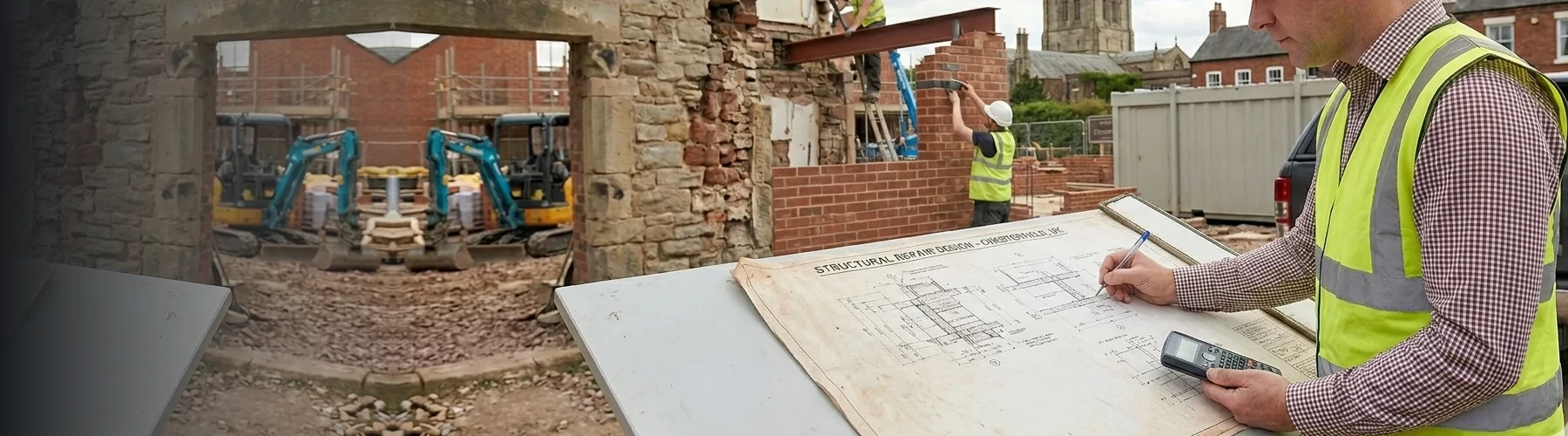
What Structural Repair Design Actually Delivers
Most homeowners who call about structural repair design have already noticed something wrong. A crack running along the basement wall. Floors that slope toward the center of the house. A door frame that's pulled away from the drywall. The contractor says it needs fixing, but the permit office wants drawings from an experienced engineer before any work starts.
That's the gap structural repair design fills.
The team looks at your existing damage, figures out what's actually failing, and produces stamped structural drawings that show exactly how to fix it. Not a guess. Not a sketch on the back of an envelope. A real set of plans that your contractor can build from and your Chesterfield building inspector can approve.
Here's what a typical structural repair design package includes:
- A site visit to document the damage, measure the affected area, and check load paths
- Structural calculations that size every beam, footer, or reinforcement to meet current code
- Permit-ready drawings stamped by a licensed structural engineer
- Notes and details your contractor actually needs to do the work right
The homeowner's biggest worry isn't the repair itself. It's whether the fix is going to hold. Structural repair design answers that question with math and code references, not opinions. The drawings specify materials, connection types, and bearing points so there's no guesswork left on the job site.
The International Code Council states that structural repairs which alter load paths require engineered plans in most jurisdictions. Chesterfield is no exception. Without stamped drawings, your permit application sits in limbo, your contractor can't start, and the whole project stalls.
The deliverable isn't just paper. It's the thing that gets your project moving again. The team has done this for cracked foundations in Wildhorse, sagging floor systems near Chesterfield Valley, and damaged headers in homes that took storm hits. Every situation is different, but the solution always comes back to the same process: assess the damage, run the numbers, draw the fix.
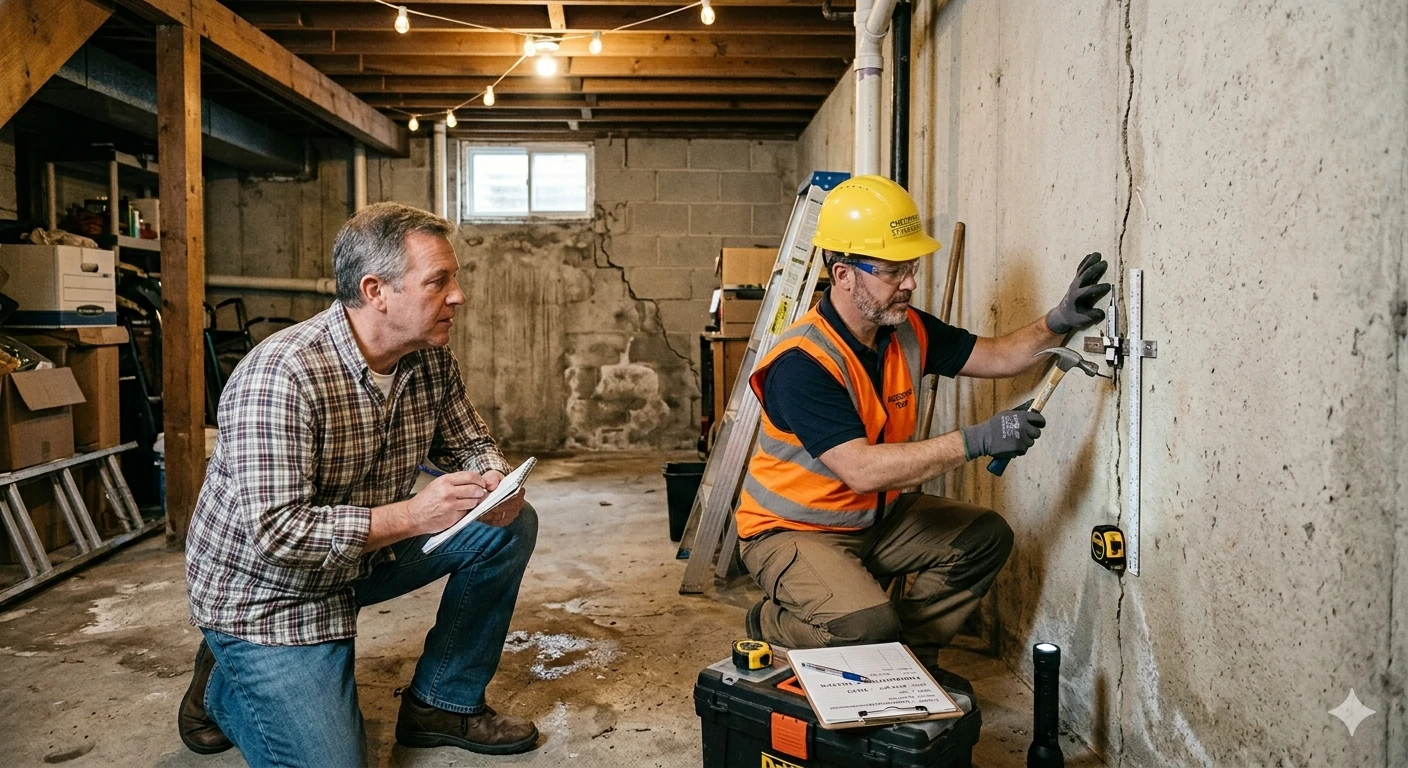
Signs Your Chesterfield Home Needs a Structural Repair Design
Most people don't call about structural repair design because they woke up worried. They call because something caught their eye, and it won't stop bugging them.
That's the right instinct. The signs are usually visual before they're dangerous. But knowing which ones matter can save you months of guessing. Here's what the team sees most often in Chesterfield homes:
- Cracks in drywall or plaster that keep coming back after patching, especially diagonal cracks near door frames or window corners
- Doors or windows that stick, jam, or won't latch when they used to work fine
- Visible sagging in a floor, ceiling, or roofline
- Cracks in the foundation wider than a quarter inch, or stair-step cracks in brick or block walls
- Gaps between walls and the ceiling or floor that weren't there before
Usually it's not just one of these. It's two or three showing up together. A sticky door by itself might be humidity. A sticky door plus a cracked foundation plus a sloping floor? That's a pattern, and patterns tell you something is moving that shouldn't be.
Older homes near Chesterfield Valley sit on soils that shift more than most people realize. Clay-heavy ground expands when it's wet and contracts when it dries. That seasonal movement puts real stress on foundations and framing over decades. The American Society of Civil Engineers has noted that foundation-related issues rank among the most common structural concerns in residential buildings across the Midwest.
A crack or a sag isn't the problem to solve. It's the symptom. Structural repair design figures out what's actually failing underneath, whether it's a footing that's settled, a beam that's undersized, or a load path that was never set up right in the first place. The team looks at your home's framing, foundation, and soil conditions to design a fix that addresses the cause.
Not sure if what you're seeing is cosmetic or structural? That's the most common question homeowners in Chesterfield ask. You don't need to diagnose it yourself. That's what the assessment is for.
How the Structural Repair Design Process Works
Most homeowners call after they've already noticed something wrong. A crack that keeps growing. A floor that bounces more than it should. A door frame that won't close right anymore. The team starts every structural repair design project the same way, by figuring out what's actually happening before putting anything on paper.
Here's how it typically goes in Chesterfield:
- Site visit and assessment. The team comes out, looks at the damage, and checks the surrounding structure. Cracks get measured. Deflection gets noted. Photos and field measurements go into the file. This usually takes about an hour for a typical home.
- Root cause analysis. A crack is a symptom, not a diagnosis. The team figures out whether you're dealing with settlement, water damage, overloaded framing, or something else entirely. Often it's not what the homeowner expected.
- Engineering calculations. Load paths get traced. Existing members get checked against current code. The team runs structural calculations to figure out exactly what the repair needs to handle. St. Louis County's Structural Design Requirements Guide outlines the baseline standards that stamped drawings must satisfy before permit approval.
- Repair drawings. Stamped structural drawings show your contractor exactly what to build. Connection details, member sizes, material specs. Everything the building department wants to see for permit approval.
- Permit support. If the inspector has questions, the team handles those directly. This is where most projects stall when homeowners try to skip the engineering step.
The whole process from first call to stamped drawings usually runs two to three weeks. Faster if the damage is straightforward.
One thing that surprises people in the Wildhorse neighborhood and across Chesterfield is how specific the drawings get. The team doesn't hand you a generic detail sheet. Your repair design accounts for your home's actual framing, your soil conditions, your specific damage pattern. That's what makes it hold up at plan review.
A good structural repair design doesn't just fix what broke, it addresses why it broke. That's the difference between a repair that lasts and one you're redoing in five years.
Why Chesterfield's Soil and Building Stock Drive Structural Repair Demand
Most of the calls the team gets from Chesterfield start the same way. A homeowner notices a crack that wasn't there last year, or a door that used to close fine now sticks every time. They assume it's cosmetic. Usually it's not.
The soil underneath Chesterfield homes is a big part of the story. Much of the area sits on expansive clay that swells when it's wet and shrinks when it dries out. That seasonal cycle puts constant pressure on foundations. Research from civil engineering organizations shows expansive soils cause more financial damage to structures in the U.S. each year than floods, hurricanes, and earthquakes combined. In the Chesterfield Valley area especially, fill soils from the old floodplain add another layer of unpredictability. Foundations built on that ground move differently than foundations on native clay up along the bluffs near the Wildwood border.
Then there's the building stock itself. A large number of homes here went up in the 1980s and 1990s, putting them right at the 30-to-40-year mark where structural issues tend to show up:
- Original floor joists drying out and losing capacity over decades
- Foundation walls developing horizontal cracks from years of lateral soil pressure
- Steel beams in basements showing corrosion at bearing points
- Concrete slabs settling unevenly as fill soil compresses beneath them
These aren't emergency situations that appear overnight. They're slow problems that reach a tipping point. By the time you notice them upstairs, the structural cause downstairs has usually been progressing for years.
Homes in neighborhoods like Clarkson Valley and around Chesterfield Mall see this pattern regularly. The team reviews structural damage in these areas on a regular basis, and the root cause almost always traces back to soil movement acting on aging materials. Your home doesn't need to be falling apart to need structural repair design. It just needs an honest look at what's actually happening below the surface.
Structural Repair Design for Real Estate Transactions and Renovation Projects
A home inspection report lands on the kitchen table with red flags. Cracked foundation. Sagging beam. Bowing basement wall. Now the deal is stalling, the buyer's agent is asking for an engineer's letter, and nobody knows what the actual fix costs until someone draws it up. The team handles this exact situation for Chesterfield homeowners and buyers probably three or four times a month.
Structural repair design gives everyone involved something concrete to work with. Not a guess from a contractor. Not a vague line item on an inspection report. A stamped set of drawings that shows exactly what needs to be repaired, how it gets done, and what materials the job requires. That's what lenders want to see. That's what closes deals.
Real estate transactions aren't the only reason people call. Renovation projects uncover problems all the time. You pull up old flooring in a Clarkson Valley home and find joists that are notched too deep or sistered with the wrong lumber. Or you're adding a second story and the existing structure can't carry the new load without reinforcement. These aren't hypotheticals. The team sees them regularly.
Here's what structural repair design typically covers in these situations:
- Foundation crack repair details with material specs and load paths
- Beam or joist reinforcement plans tied to current building code
- Retaining wall corrections for properties with grading issues
- Floor system repairs where sagging or bounce has been flagged
Industry data shows nearly 40 percent of residential structures over 30 years old have some form of structural deficiency. Chesterfield has plenty of homes in that age range. But a deficiency on paper doesn't always mean a massive project. Sometimes the fix is straightforward, it just needs to be documented properly so the permit office and the inspector sign off without pushback.
Having repair drawings done before you negotiate saves time on both sides of a transaction. The seller knows the scope. The buyer knows the cost. Nobody's guessing.
Need help figuring this out? Give us a call.
Frequently Asked Questions
Do I really need engineer-stamped drawings just to fix a crack in my foundation?
Yes, if the repair changes how loads move through your home, Chesterfield requires stamped drawings before issuing a permit. A simple crack patch may not trigger this. But if a contractor needs to add a beam, replace a footing, or reinforce a wall, the building department wants engineered plans first. Without them, your permit application stalls and work cannot legally start. Stamped drawings protect you and make sure the fix actually holds.
How long does the structural repair design process take in Chesterfield?
From first call to stamped drawings, most projects in Chesterfield take two to three weeks. The site visit usually takes about an hour. Root cause analysis and engineering calculations come next. Then the permit-ready drawings get produced. Simpler repairs move faster. Projects with multiple failing systems or unusual framing take a little longer. Starting the process early keeps your contractor from sitting idle while paperwork catches up.
What's the difference between a cosmetic crack and one that needs a structural repair design?
Cosmetic cracks are hairline, stay the same size, and appear in isolated spots. Structural cracks are different. Diagonal cracks near door frames, stair-step cracks in brick or block walls, or cracks wider than a quarter inch usually signal movement. When you see a crack plus a sloping floor plus a sticking door, that pattern means something is shifting. That combination needs an engineering assessment, not just patching and paint.
Does the clay soil common near Chesterfield Valley affect how structural repairs get designed?
It does, and it matters more than most homeowners expect. Clay-heavy soil expands when wet and shrinks when dry. That seasonal movement puts repeated stress on foundations and footings over decades. Homes near Chesterfield Valley often show settlement patterns tied directly to this soil behavior. A repair design has to account for that ground movement, not just the visible damage. Sizing footings and reinforcement correctly for local soil conditions is part of what the engineering calculations cover.
Can my general contractor just handle the structural repair without an engineer?
A contractor can do the physical repair work, but they cannot produce the stamped structural drawings that Chesterfield's building department requires for permit approval. Those drawings have to come from a licensed structural engineer. Some contractors try to skip this step on smaller jobs. That creates risk for you as the homeowner if the work is ever inspected or if you sell the home. Getting the engineering done upfront protects the project and your investment.
What should I have ready before the structural engineer visits my home?
Clear access to the problem areas helps the most. If the damage is in a crawl space or basement, make sure the team can get in safely. Any photos you've taken of the cracks or damage over time are useful, especially if they show the problem getting worse. If you have original blueprints or past inspection reports, bring those out. You don't need to diagnose anything yourself. Just show the team what you've noticed and let the assessment take it from there.