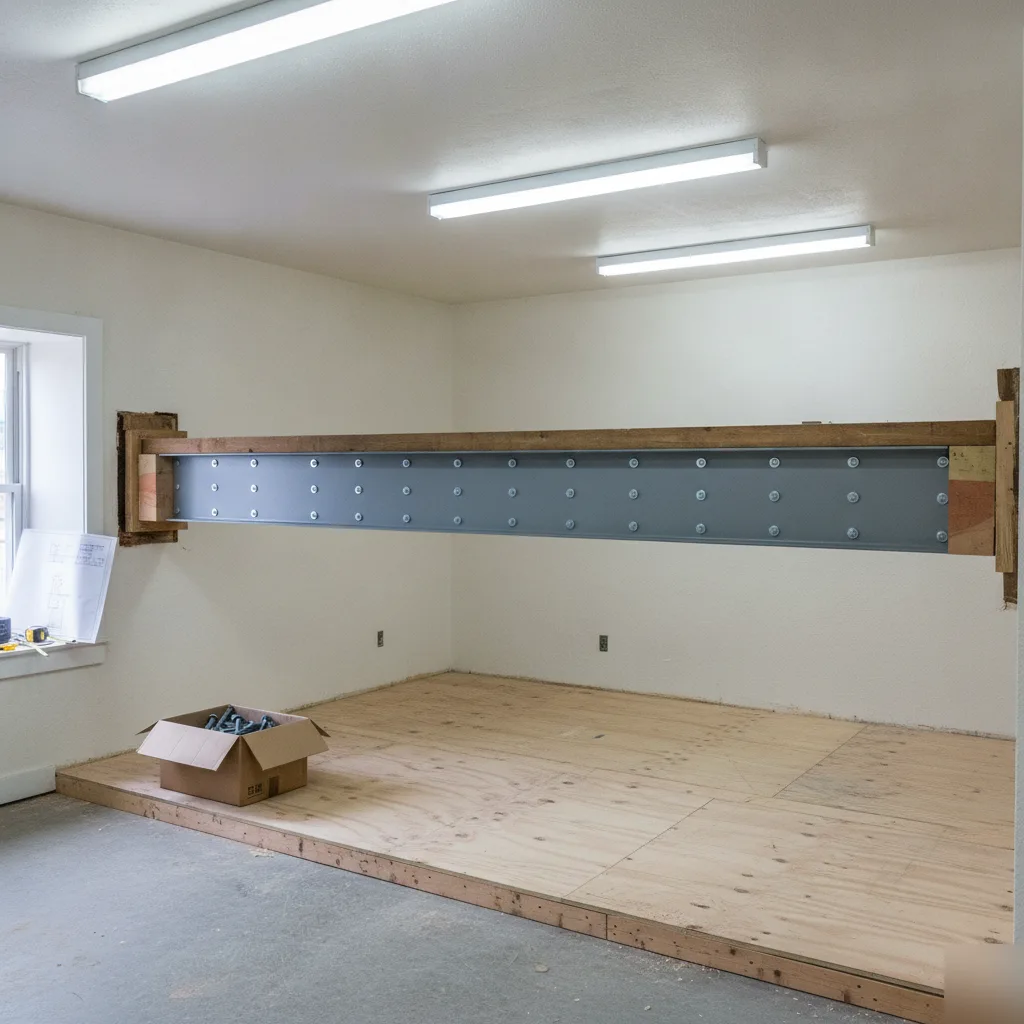
What Structural Repair Design Delivers
You have a crack in your foundation. Perhaps a sagging floor. Maybe a builder told you a beam needs replacing but couldn't specify the size or how to support the load above it. This is where structural repair design helps.
You receive engineered drawings and calculations showing precisely how to fix the problem. This isn't a guess. It's not a rule of thumb from a framing crew. A licensed P.E. stamps the design, St. Louis County accepts it, and the work moves forward without ambiguity.
A typical structural repair design package includes:
- A detailed assessment of the existing damage or deficiency.
- Engineered repair details with member sizes, connections, and load paths.
- Permit-ready drawings that meet St. Louis County code requirements.
- Structural calculations your builder and the building inspector can reference on site.
We see this every week in Clayton. Someone buys a 1940s brick home near Wydown or Shaw Park, starts a renovation, and the builder opens a wall to find cracked lintels or deteriorated floor joists. The project stops. No one moves forward without an engineer's sign-off.
That is the real value here. Structural repair design does not just describe the problem. It solves it on paper, so the fix happens correctly in the field. Your builder gets clear direction. Your permit reviewer gets exactly what they need. You get confidence that the repair will hold up for decades.
Scott has years of direct experience in St. Louis County plan review. This means your permit drawings are built around exactly what the examiner needs to see. That cuts back-and-forth time to almost nothing. Most Clayton homeowners tell us the permit process was the part they dreaded most. It does not have to be. The biggest thing structural repair design delivers is peace of mind. You are not wondering if the fix is right. You know it is. That certainty is what every trusted engineer in Clayton MO should provide and it is the only way we work.

Signs Your Property Needs a Repair Design, Not Just a Patch
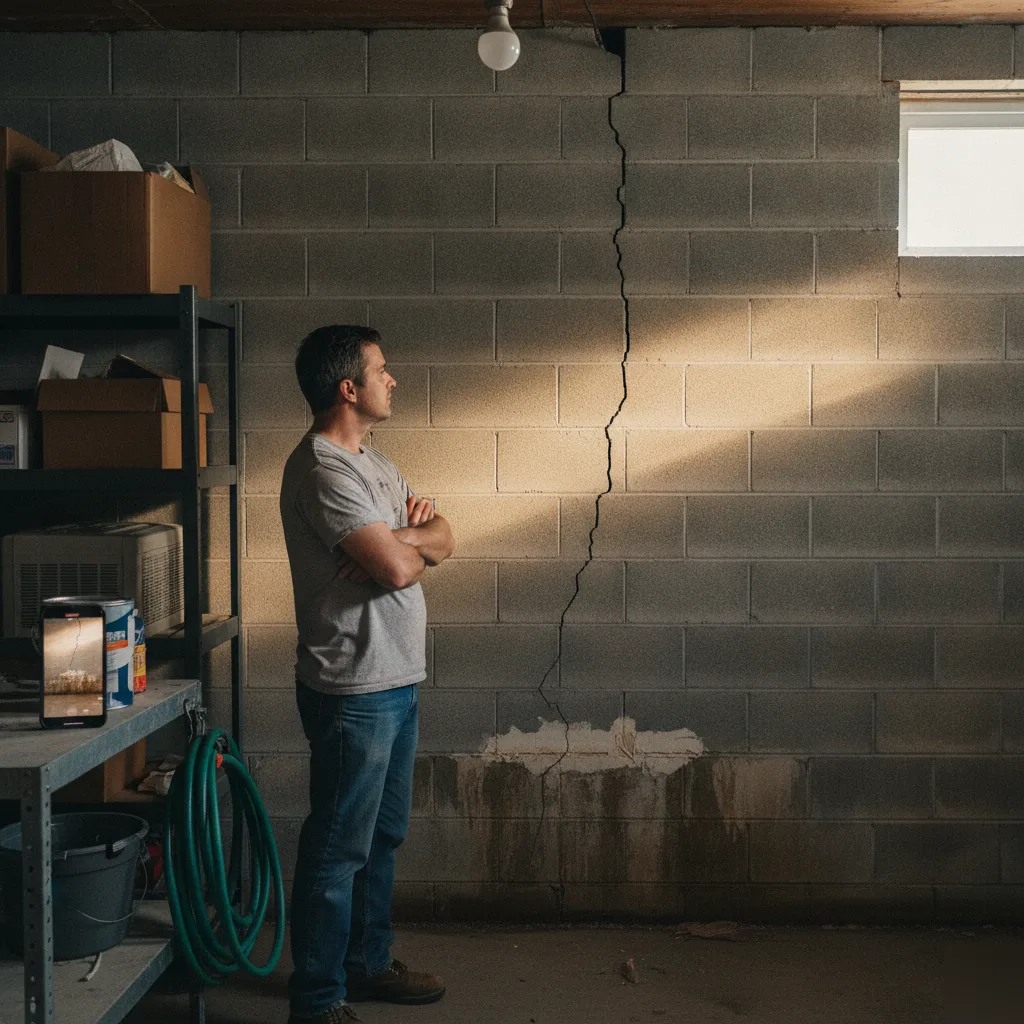
You patched the crack last year. Now it is back, wider this time.
That scenario occurs often in Clayton. A homeowner or builder tried a surface fix, perhaps some hydraulic cement or a coat of parging, and the problem returned within months. The repair did not fail because of bad materials. It failed because no one figured out why the crack formed in the first place. A proper structural repair design starts with the cause, not the symptom.
How do you know when a patch will not suffice? We constantly see a few red flags in older Clayton homes, especially those built in the 1930s and 1940s with stone or early poured concrete foundations:
- Stair-step cracks in brick mortar joints that grow over time.
- Doors or windows that suddenly stick or will not latch.
- Visible bowing or leaning in a basement wall.
- Floor slopes you can feel when walking across a room.
- Cracks that reappear after being sealed once already.
Any one of these can point to an active structural issue. Two or more together is a pattern. It indicates something is moving that should not be. Movement means the load path through your structure has been compromised somewhere.
Most people do not realize this. A builder can install steel beams, carbon fiber strips, or helical piers all day long. But without an engineered repair design telling them exactly where to place those elements, how to size them, and how they connect back into the existing structure, the fix is a guess. An educated guess, maybe. Still a guess.
We encounter this near Wydown and in neighborhoods along Brentwood Boulevard regularly. These homes have real character and real age. The bones are good, but decades of soil pressure and settlement take a toll. The homeowner just needs someone to look at the whole picture and put a plan on paper before any work starts.
Not sure if your situation calls for a full repair design? That is common. Most people start with a phone call describing what they see, and we can usually tell you right away whether engineering is needed.
The Repair Design Process From Site Visit to Permit-Ready Drawings
People often ask us what happens between the first phone call and the moment they can pull a permit. Fair question. Here is exactly how we move through a structural repair design project in Clayton.
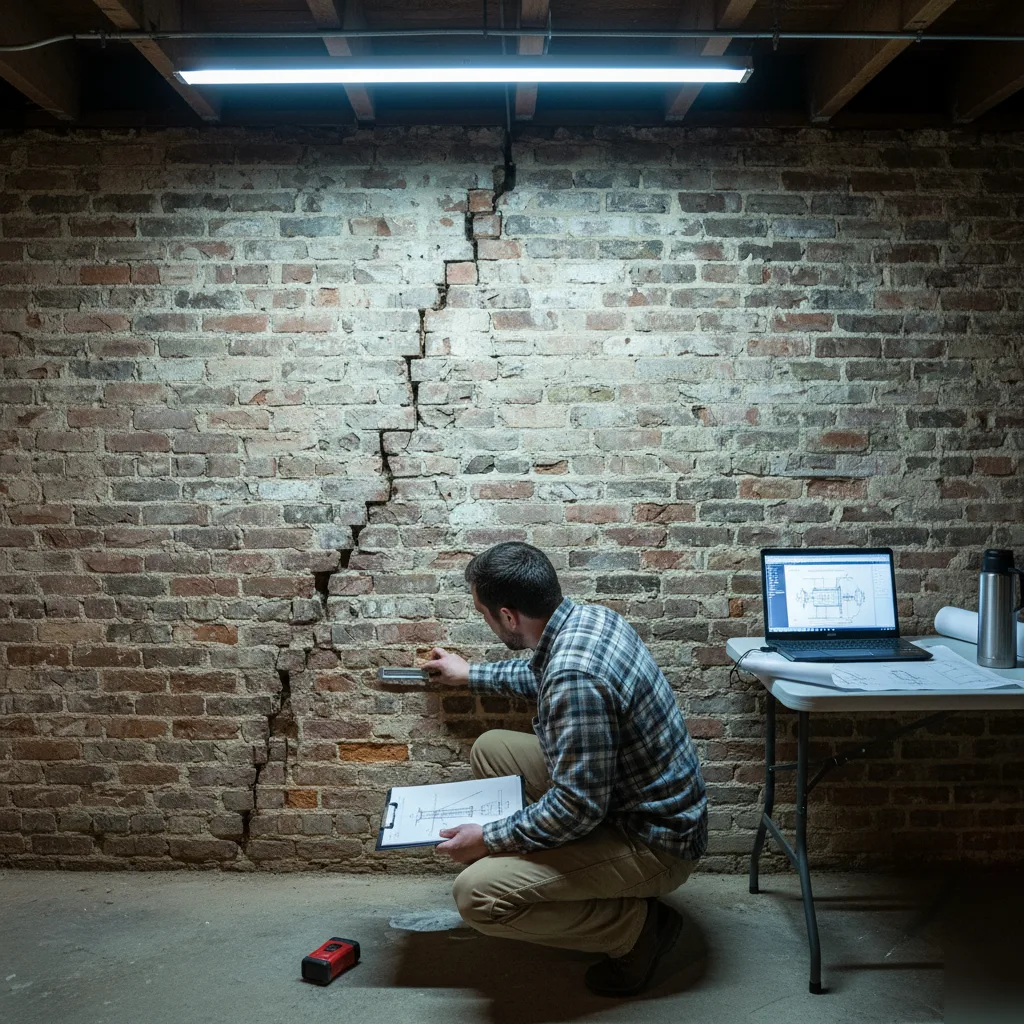
- Site visit and documentation. We visit your property, measure affected areas, and photograph everything. For older Clayton homes with stone foundations or original poured concrete, we examine crack patterns, deflection in beams, settlement evidence, and any previous repair attempts. We take notes your builder will appreciate.
- Analysis and load calculations. Back at the office, we run the structural calculations. We determine what loads the damaged members were carrying, what has shifted, and what the repaired system needs to handle. Every number ties back to current building code requirements.
- Design development. We draft the actual repair solution. This includes new steel beams, sister joists, foundation underpinning, or carbon fiber reinforcement. Whatever the structure needs. Each detail is drawn to scale with clear callouts so your builder knows exactly what to build.
- Permit drawing preparation. This is where Scott's hands-on familiarity with St. Louis County plan review pays off. Connection details, material specs, and load paths are all on the sheet. This prevents back-and-forth revisions that cost you weeks. Repair and replacement work on structural members must also align with structural repair and replacement standards that govern how engineered fixes are documented and executed safely.
- Builder coordination. Once drawings are done, we walk your builder through the scope. Questions get answered before work starts, not during framing.
The entire process typically takes days, not weeks. We have completed this for homes near Wydown and throughout the Demun area, where 1930s construction creates unique repair challenges.
Here is something most homeowners do not realize. A good structural repair design does not just fix what broke. It accounts for why it broke. The original failure often traces back to a load path issue or a material that has degraded past its useful life. We address both in the drawings so you are not calling an engineer again in five years.
Speed matters. You may have a builder waiting, a project timeline slipping, or a real estate closing on the line. That is why we maintain tight turnarounds without cutting corners on the engineering.
Repair Design for Clayton's Older Masonry and Mixed-Use Buildings
Clayton's building stock is unique. 1920s brick storefronts sit next to mid-century office buildings, all sharing blocks with residential homes built before World War II. Each property ages and breaks differently.
We work on masonry structures in Clayton almost every week. The patterns are familiar: stair-step cracking through mortar joints, bowing walls where steel lintels have corroded and expanded inside the brick, and settlement cracks running through stone foundations that were never reinforced. These are not cosmetic problems. They indicate the structure is moving, and a proper structural repair design is the only way to stop it from getting worse.
What Makes Masonry Repair Design Different
You cannot approach an old brick building the same way you would handle a modern wood-frame house. The load paths are different. Masonry walls often carry roof and floor loads directly, so any repair must account for how forces travel through the entire system. Cutting into the wrong spot without engineering creates a bigger problem than the one you started with.
Here is what we typically evaluate on older Clayton masonry buildings:
- Mortar joint condition and whether repointing alone will restore capacity.
- Lintel integrity above windows and doors.
- Foundation type, whether it is rubble stone, early poured concrete, or brick.
- Tie connections between floor framing and exterior walls.
Mixed-use buildings along Maryland Avenue and near the Demun neighborhood add another layer. Commercial spaces on the ground floor often had walls removed decades ago without permits. We see improvised steel beams with no engineering behind them. The "repair" someone did twenty years ago often becomes the source of the current problem.
Our repair drawings specify exactly what gets reinforced, what gets replaced, and how the new work ties into the existing structure. Scott's background working directly with St. Louis County plan reviewers means permit drawings are built around exactly what the examiner needs to see. That saves you revision cycles and weeks of waiting. It also means your builder gets clear direction from day one.
How Repair Design Documentation Protects Your Investment at Resale and Beyond
Every structural repair you complete on your Clayton home becomes part of its story. The question is whether that story is told with a stamped engineering document or a shrug and "the builder said it was fine."
We see this constantly. A homeowner on Brentwood Boulevard sells a 1940s brick colonial. The buyer's inspector flags a repaired foundation wall. Without documentation, that repair becomes a question mark. With a sealed structural repair design on file, it becomes a verified fix. That is the difference between a smooth closing and a renegotiation that costs you thousands.
Proper repair design documentation helps you long after the work is done:
- It proves the repair was engineered by a licensed P.E., not just patched by a builder.
- It shows the exact loads, materials, and methods specified for the fix.
- It gives future inspectors and buyers a clear paper trail tied to a permit.
- It removes ambiguity during pre-purchase structural inspections when your home hits the market.
Here is something most people do not consider. Insurance claims after storm damage or settlement issues go much smoother when you can show prior structural work was professionally designed. The adjuster wants to see engineering, not a receipt from a builder.
Clayton homes change hands in an active real estate market. Buyers here are informed, they hire good inspectors, and they ask hard questions. A structural repair design package answers those questions before they are even raised. It tells the next owner exactly what was wrong, exactly what was done, and exactly why it meets code.
That same documentation becomes your proof of quality years later. Scott's familiarity with St. Louis County plan review means the permit drawings hold up to scrutiny long after the project closes. Think of it as a receipt for your home's structural health. You paid for the repair. The design package proves it was done right.
Not sure if your past repairs have proper documentation? Give us a call.
Frequently Asked Questions
Do I need a licensed engineer for structural repairs in Clayton, or can my contractor handle it?
You need a licensed P.E. for any structural repair in Clayton that requires a permit. Your contractor can do the physical work, but St. Louis County requires stamped engineering drawings before a permit is issued. Without those drawings, your builder is guessing at beam sizes and load paths. That guess can fail an inspection or, worse, fail structurally. An engineer gives your contractor a clear plan and gives the permit reviewer exactly what they need to approve the job.
What are the warning signs that a crack in my Clayton home needs an engineer, not just a patch?
A crack that comes back after being sealed is the clearest sign you need an engineer. Other red flags include stair-step cracks in brick mortar joints, doors or windows that suddenly stick, visible bowing in a basement wall, and floors that slope when you walk across them. Clayton homes from the 1930s and 1940s show these patterns regularly. Two or more signs together usually means something is actively moving. That requires a repair design, not a tube of hydraulic cement.
How long does the structural repair design process take in Clayton?
The full process from site visit to permit-ready drawings typically takes days, not weeks. We visit your property, document the damage, run load calculations, draft the repair details, and prepare drawings built around St. Louis County plan review requirements. Because the drawings are formatted for what the examiner needs to see, back-and-forth revisions are rare. Most Clayton homeowners are surprised by how quickly they can move from a stalled project to an approved permit.
My contractor opened a wall during a renovation and found damaged joists. What happens next?
This happens often in Clayton, especially in older brick homes near Wydown and the Demun area. Your project stops until an engineer signs off. We come to the site, assess what was found, and produce a repair design your builder can work from right away. The design includes member sizes, connection details, and load paths drawn to scale. Your builder gets clear direction, your permit reviewer gets what they need, and the project moves forward correctly.
Will St. Louis County accept the repair drawings without a lot of revisions?
In most cases, yes. Our drawings are built around exactly what St. Louis County plan examiners need to see on the sheet. Connection details, material specs, and load path documentation are all included from the start. This cuts revision cycles down significantly. Scott has direct experience with St. Louis County plan review, so the drawings are formatted to match what the examiner expects. Most Clayton homeowners tell us the permit process went much faster than they anticipated.
Can a structural repair design help if a previous repair already failed on my Clayton property?
Yes, and this is one of the most common situations we see. A previous patch or repair failed because no one identified the root cause first. A structural repair design starts with why the damage happened, not just what it looks like. We assess the load path, identify where movement occurred, and design a fix that addresses the actual problem. If carbon fiber strips or helical piers were installed without engineering guidance before, we can evaluate whether they are placed correctly and design what is still needed.