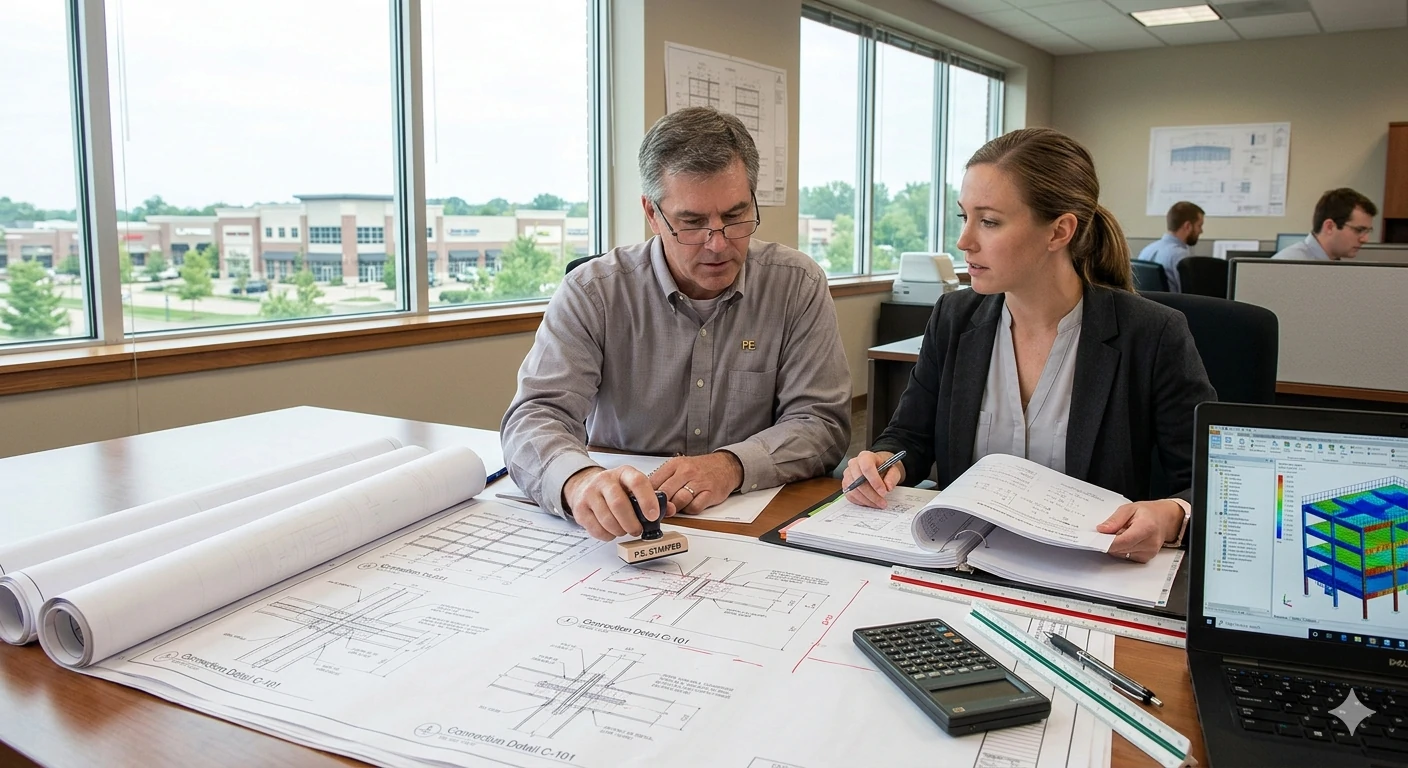
What a Structural Peer Review Actually Covers
Most people hear "peer review" and picture two engineers arguing over math. It's actually simpler than that. The team, acting as a structural engineering consultant, takes a set of structural plans prepared by another engineer and checks every piece of it against the building code and real-world conditions.
A structural peer review in Chesterfield covers the full scope of what's on the drawings. Not just a quick glance. The team goes line by line through the original engineer's calculations, the load paths, the connection details, and the material specs. The issues found aren't dramatic, they're small gaps that would cause a permit rejection or a field problem down the road.
What Gets Reviewed
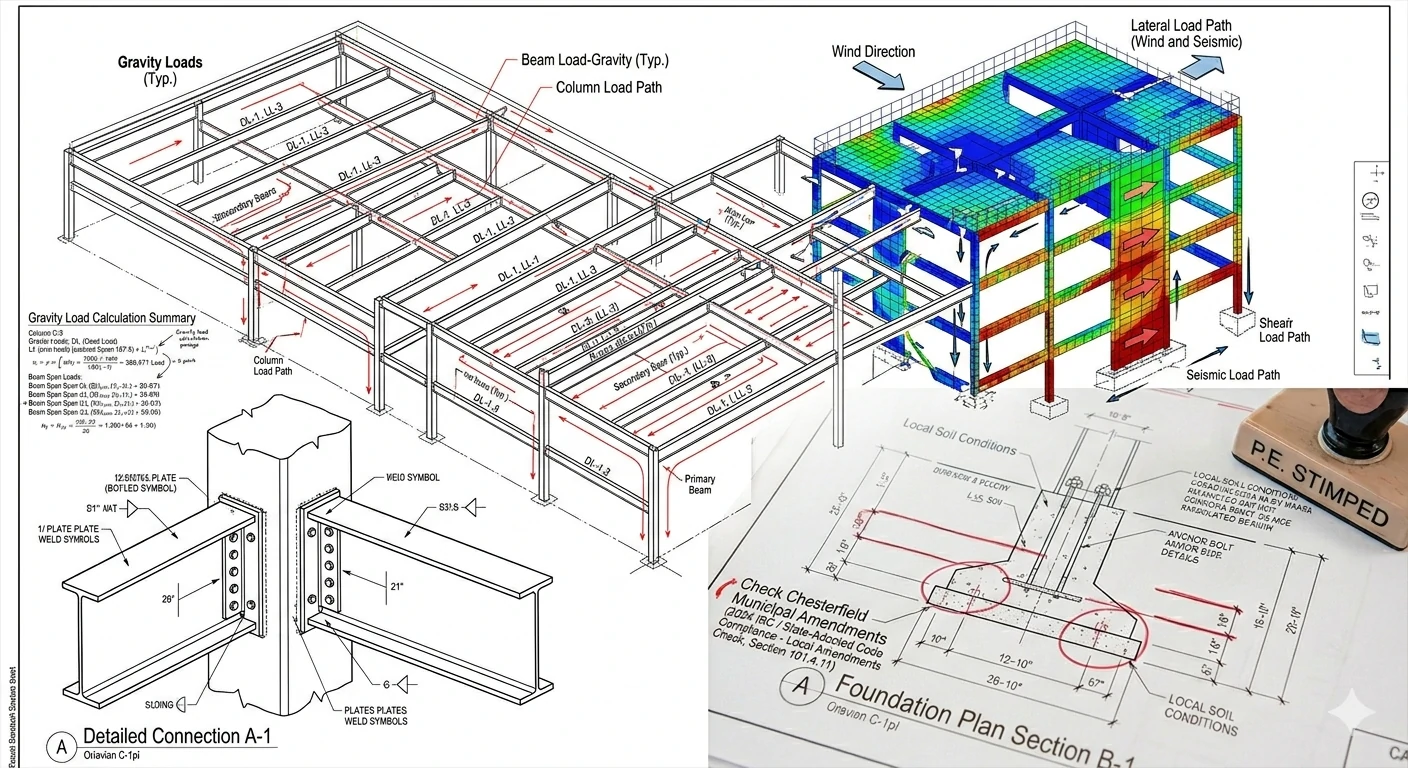
Here's what the team looks at during a typical structural peer review:
- Gravity load calculations for beams, columns, and foundations
- Lateral force design for wind and seismic loads per current IBC requirements
- Connection details between structural members
- Foundation design relative to local soil conditions
- Code compliance with both state-adopted and Chesterfield municipal amendments
So it's not just math. The review also checks whether the drawings are clear enough for a contractor to actually build from. Vague details on a plan set cause more field errors than bad engineering does.
For commercial projects near Chesterfield Valley, the team often sees plans designed for a different jurisdiction's requirements. That's a common flag. Each municipality in St. Louis County has its own review process, and what passes in one city can get kicked back in another. Local amendments to the IBC are one of the most frequent sources of plan review delays.
A structural peer review isn't adversarial. The original engineer keeps their stamp on the plans. The team's job is to confirm the work holds up, or to identify specific items that need correction before your project moves forward. It's a second set of licensed eyes catching what one person might miss after staring at the same drawings for weeks.
Not sure if your project actually needs this? That's a fair question. Most of the time it's required by the building department or requested by a lender.
When a Peer Review Is Required: Two Different Triggers
Most people find out they need a structural peer review the hard way. The permit office sends back their plans with a note, or a building official flags something during review. In Chesterfield, there are really two paths that lead to this requirement, and they're worth understanding before your project stalls.
Municipality-Required Reviews
The first trigger is straightforward: the local jurisdiction requires it. Some projects in Chesterfield hit a threshold where the building department won't approve structural drawings based on a single engineer's stamp alone. This happens most often with commercial work, multi-family buildings, or larger residential additions that push past typical load assumptions. The reviewing authority wants a second licensed engineer to confirm the original design is safe and code-compliant. Jurisdictions can mandate independent review for any project where public safety risk warrants additional oversight, and that's the rule the team sees applied most often in the St. Louis metro area.
Most of the time, the permit applicant didn't expect this step.
Owner or Lender-Requested Reviews
The second trigger comes from you or your bank. Property owners near Chesterfield Valley sometimes request a structural peer review on their own, especially when they've hired an engineer they don't have a history with, or when a lender requires independent verification before releasing construction funds. This isn't about distrust. It's due diligence on a significant investment.
The team handles both types regularly. Here's what typically prompts a voluntary review:
- A contractor questions the beam sizes or connection details in the original plans
- The project involves unusual conditions like steep grades or expansive soils
- An insurance carrier or lender flags the structural scope as high-risk
- You're converting or renovating an older building and want confirmation the original engineer accounted for existing conditions
Whether the city told you to get one or you decided on your own, the scope of work is the same. The reviewing engineer checks load paths, member sizing, connection details, and code compliance against the original drawings. Your project doesn't move backward, it just gets a second set of eyes that keeps everything on track for permit approval in Chesterfield.
Who Is Qualified to Perform an Independent Structural Review
Not everyone who looks at blueprints can do a structural peer review. That's worth saying out loud because it trips people up constantly in Chesterfield. A general contractor can't sign off on another engineer's work. An architect can't either. The person reviewing your structural plans needs to be a licensed professional engineer with direct experience in structural design.
In Missouri, that means a PE license issued by the state board. But the license alone isn't enough. The reviewer also needs to be independent of the original design team. That's the whole point. You're bringing in a second set of eyes that has no connection to the first set, no business relationship, no shared project history, no reason to rubber-stamp anything.
Here's what the team looks at during a structural peer review on your project:
- Load path continuity from roof to foundation
- Correct application of building code provisions, including IBC and local Chesterfield amendments
- Accuracy of structural calculations for beams, headers, and connections
- Proper detailing on the structural drawings themselves
Sometimes the reviewer catches something the original engineer missed because they were too close to the design. Fresh perspective matters more than people think.
So how do you know you're hiring someone qualified? Ask two questions. First, are they a licensed PE in Missouri? Second, have they done structural peer review work before, not just structural design? Those are different skills. Designing a beam and checking someone else's beam design require different habits of mind.
The American Society of Civil Engineers recognizes independent peer review as a standard practice for reducing errors in structural engineering documents. It's not a formality. It protects your project, your permit timeline, and the people who'll live or work inside that building.
If someone offers to review plans but can't stamp them with their own PE seal, walk away.
The Step-by-Step Peer Review Process
Most people who call about structural peer review in Chesterfield have a set of plans that got kicked back, or a building department that asked for an independent review before issuing the permit. Either way, the process itself is straightforward once you know what to expect.
Here's how the team handles it from start to finish:
- Collect the original documents. The team needs the full set of structural drawings, the engineer-of-record's calculations, and any soil or geotechnical reports. If there's a site plan or architectural set, those help too.
- Check code compliance first. Every load path, connection detail, and member size gets checked against the applicable building code. In Chesterfield, that means current IBC and IRC requirements as adopted by St. Louis County.
- Verify the math independently. The team runs its own structural calculations, beam sizes, column loads, foundation bearing pressures, lateral force resistance. Not a spot check. A full independent verification.
- Flag issues with specifics. If something doesn't work, the review letter says exactly what and why. Not vague comments like "revise as needed." Actual load numbers, code sections, and clear descriptions of what needs to change.
- Issue a stamped review letter. Once everything checks out, the team provides a signed and sealed peer review letter. That's the document your building department wants to see.
Most of the time, the original engineer's work is solid and just needs minor corrections. A missing connection detail here, an undersized header there. But those small things are exactly what holds up permits in places like Wildwood and the Clarkson Valley area.
The whole process usually takes a few business days for residential projects. The team can often turn around a straightforward review faster if your permit timeline is tight. Commercial projects or multi-story structures take longer because there's simply more to verify.
A good peer review doesn't just satisfy the building department. It gives you real confidence that your project's structural design is sound before a single footer gets poured.
Local Code and Jurisdiction Factors That Affect Your Review
Chesterfield sits in St. Louis County, and that matters more than most people realize. The county has its own building department with specific submission requirements that don't match what you'd see in the City of St. Louis or in Jefferson County. A structural peer review that doesn't account for the local jurisdiction's expectations is going to create problems, not solve them.
The team sees this regularly. An engineer from out of state stamps a set of plans, the drawings look fine on paper, but they don't address what the Chesterfield building department actually wants to see. Maybe the load path isn't detailed clearly enough. Maybe the connection schedules are missing. The plans get kicked back, your permit stalls, and now you're paying for revisions on top of the original engineering.
Here are the local factors that come up most often during a structural peer review in this area:
- St. Louis County follows the International Building Code and International Residential Code, but local amendments change how certain provisions apply to your project
- Soil conditions in parts of Chesterfield, especially near the Chesterfield Valley floodplain, affect foundation design requirements and what reviewers need to verify
- Wind and seismic design criteria specific to this region must be reflected in the structural calculations, not assumed from a generic template
- The building department expects clear, permit-ready drawings with specific detail callouts that match their review checklist
A reviewer who doesn't know the local amendments is going to miss things.
The team knows what the plan reviewers at the county office look for. That sounds like a small thing, it isn't. Knowing whether a jurisdiction wants a separate calculation package or prefers notes directly on the drawings saves days, sometimes weeks. Projects near Wildhorse Creek or along the Highway 40 corridor often involve grading and drainage considerations that tie directly into structural review scope. Your peer review should catch those overlaps before the building department does.
Frequently Asked Questions
Does Chesterfield require a structural peer review for all commercial projects?
Not every commercial project in Chesterfield triggers a mandatory peer review, but many do. The building department typically requires one when a project passes certain size or load thresholds, or when public safety risk is higher than normal. Multi-family buildings and larger commercial additions are the most common cases. Local IBC amendments in St. Louis County also play a role. What passes in one nearby city can get kicked back in Chesterfield, so it's worth confirming early.
Can my architect or general contractor handle the peer review instead of a structural engineer?
No, an architect or contractor cannot perform a structural peer review. Only a licensed Professional Engineer with structural design experience can review and sign off on another engineer's structural plans. In Missouri, that means a state-issued PE license. The reviewer also must be independent of the original design team. There can be no shared business history or project connection. That independence is the whole point of the review.
How long does a structural peer review typically take in Chesterfield?
Most structural peer reviews are completed within a few business days once the full plan set is received. Larger or more complex projects, like commercial work near Chesterfield Valley with unusual soil conditions or steep grades, may take longer. The biggest delays usually come from incomplete submittals, not the review itself. Having your full calculations, connection details, and foundation drawings ready upfront keeps the process moving without surprises.
What specific things does the reviewer actually check on my plans?
The reviewer goes through your plans line by line. That includes gravity load calculations for beams, columns, and foundations, lateral force design for wind and seismic loads, connection details between structural members, and foundation design relative to local soil conditions. The review also checks whether the drawings are clear enough for a contractor to build from. Vague detailing causes more field problems than calculation errors do, and that's something a second set of eyes catches quickly.
Can I request a peer review even if Chesterfield's building department didn't require one?
Yes, and property owners do this more often than you might think. If you hired an engineer you haven't worked with before, or if a lender is requiring independent verification before releasing construction funds, a voluntary peer review makes sense. It's also common when a contractor questions beam sizes or connection details in the original plans. The scope of the review is the same whether the city required it or you requested it yourself.
Will a peer review slow down my permit approval in Chesterfield?
A peer review done early actually speeds up permit approval. The most common cause of permit delays in Chesterfield is plan review rejections from the building department, often tied to local IBC amendments that the original engineer didn't account for. Catching those issues before submission means fewer back-and-forth corrections with the city. The original engineer keeps their stamp on the plans. The reviewer's job is to confirm the work holds up so your project moves forward without stalling.