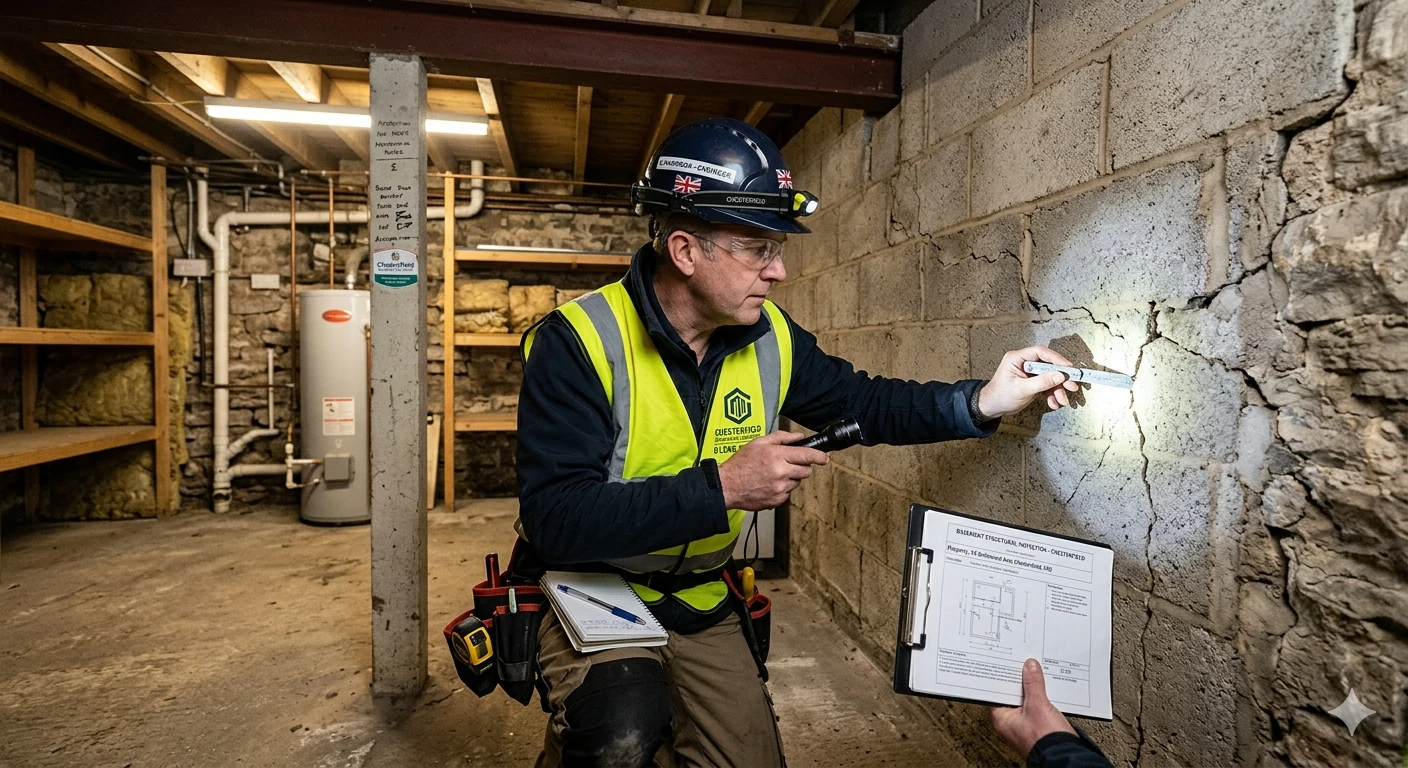
Warning Signs That Warrant a Structural Inspection
Most people don't call about their basement until something looks wrong enough to worry about. That's normal. But the tricky part is knowing which signs are cosmetic and which ones mean your foundation is actually moving.
Here's what the team sees most often in Chesterfield basements that turns out to be a real problem:
- Horizontal cracks in block walls, especially at the mortar joints about halfway up
- Stair-step cracking that follows the mortar pattern in brick or block foundations
- Walls that bow or lean inward, even slightly
- Doors or windows that used to close fine but now stick or won't latch
- Visible gaps where the basement wall meets the floor slab
A hairline crack by itself isn't always a crisis. But a crack that's wider at the top than the bottom tells a different story, that pattern usually means lateral soil pressure is pushing the wall in. It's one of the most common failure modes in poured and block foundations around the Chesterfield Valley areas where clay soils shift with the seasons.
Water stains and efflorescence along the base of your walls can also point to structural movement. When a wall shifts even a fraction of an inch, it opens paths for moisture. So if your basement suddenly feels damper than usual or you're seeing white mineral deposits on the concrete, don't assume it's just a waterproofing issue. The water is a symptom. The movement is the cause.
And then there's the floor. Uneven or sloping basement floors often get blamed on settling, but active settlement that's still progressing is a different situation than a house that settled 30 years ago and stopped. The team can tell the difference during an inspection. One reading with a floor level and a crack monitor tells you whether your foundation is stable or still in motion, and that distinction changes everything about what you need to do next.
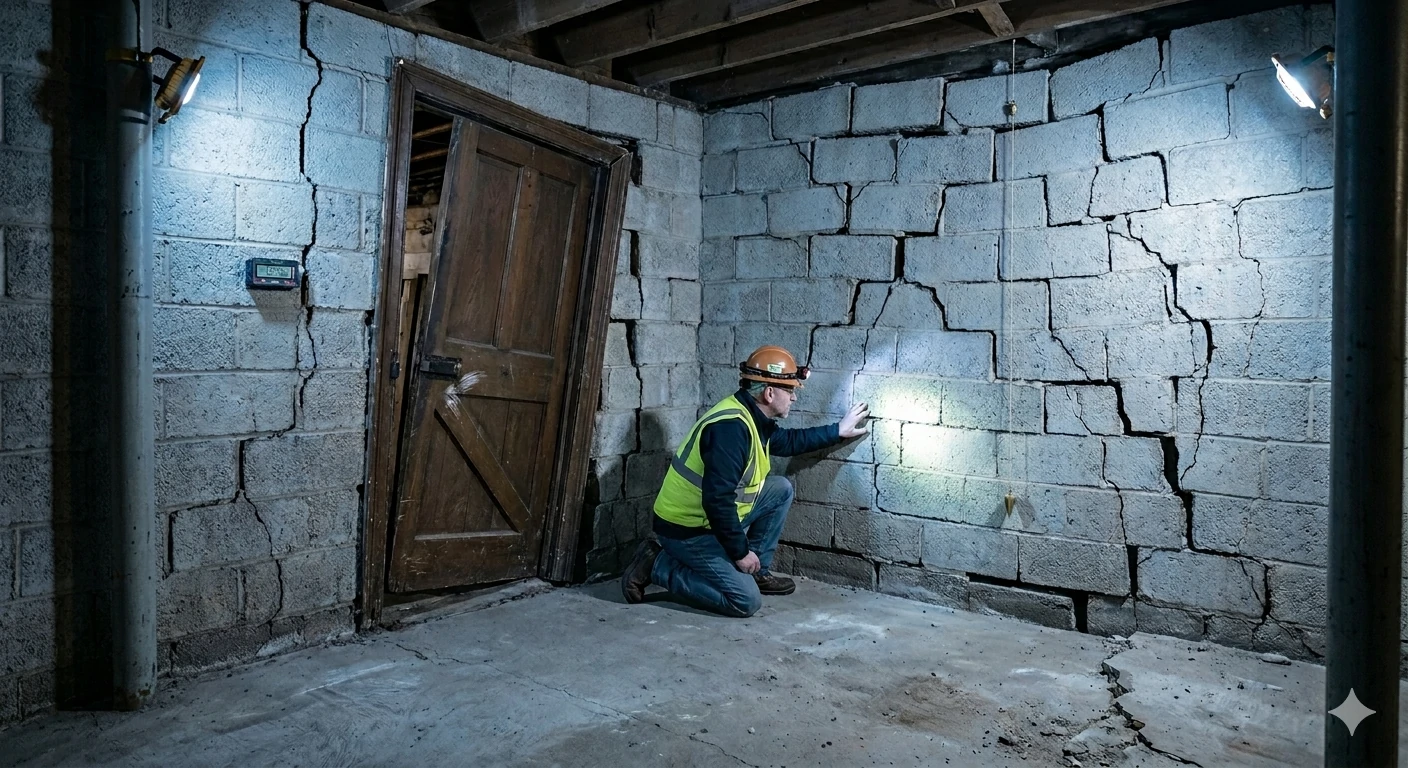
Structural Engineer vs. General Home Inspector: The Right Credential Matters
Most homeowners in Chesterfield don't realize there's a big difference between a home inspector and a structural engineer until they're already dealing with a problem. A general home inspector looks at everything in your house, HVAC, plumbing, roof, electrical, and gives you a broad overview of home inspection services. But when it comes to your basement's structural system, that overview only goes so far.
A structural engineer does something different entirely.
The team calculates loads, reads the cracks, measures the deflection in your beams, and determines whether what you're seeing is cosmetic or a real structural concern. A general inspector might note "crack in foundation wall" on a report. A licensed structural engineer tells you why it cracked, whether it's getting worse, and exactly what needs to happen next. That's the gap most people don't see until it matters.
Here's what a structural engineer brings to a basement inspection that a general inspector can't:
- The ability to stamp drawings and structural calculations that your municipality will accept for permits
- Training to evaluate load paths from your roof down through your foundation
- Knowledge of local soil conditions, like the expansive clay common across Chesterfield and the Wildwood border, that directly affect basement walls
- Authority to specify repairs that meet current building code requirements
Structural failures in residential buildings most often trace back to missed warning signs during earlier inspections. That's not a knock on home inspectors, they do good work in their lane. But basement structural issues sit outside that lane.
When someone calls after a general inspection flagged something, the team finds the report was either too vague to act on or missed the real issue altogether. A note that says "monitor this crack" doesn't help you sleep at night. And it definitely doesn't help your contractor know what to fix.
If your basement has signs of movement, bowing, or cracking, the right credential isn't optional. Give us a call.
What Chesterfield's Soil and Climate Do to Basement Walls
Most basement problems in Chesterfield don't start with the foundation itself. They start with the dirt around it.
The soil here is heavy with clay, expansive clay, specifically. It swells when it absorbs water and shrinks when it dries out. That cycle puts lateral pressure on your basement walls every season. Expansive soils cause more financial damage to structures annually than floods, hurricanes, and earthquakes combined, and Chesterfield sits on some of the most reactive clay in the St. Louis metro.
Here's what that looks like over time:
- Horizontal cracks along block or poured walls, usually about halfway up
- Inward bowing that starts small and gets worse each wet season
- Stair-step cracking in block walls near corners
- Gaps forming between the top of the wall and the floor framing above
The team sees these patterns constantly in neighborhoods like Chesterfield Valley and Wildhorse, where the water table sits closer to the surface. Spring snowmelt and summer storms push moisture into that clay fast, the soil expands, and your walls take the hit. Then August comes, everything dries out, the soil contracts, and the pressure releases. But the wall doesn't go back to where it was.
That's the part most homeowners miss. Each cycle is a one-way trip. The wall moves in a little more every year and never rebounds fully.
Freeze-thaw adds another layer. Water sitting against your foundation freezes in January and expands roughly 9% by volume. Hairline cracks become quarter-inch cracks. One bad winter can turn a cosmetic issue into a structural one.
So when someone calls about a crack that "just showed up," it almost never just showed up. The soil has been working on that wall for years. A basement structural inspection catches what's already in motion before the damage gets ahead of you.
What to Expect During a Basement Structural Inspection
Most homeowners in Chesterfield call because they've noticed something off. A crack that wasn't there last year. A door that sticks for no reason. A basement wall that looks like it's leaning. The team shows up already knowing what to look for, but your home tells its own story.
A basement structural inspection isn't a quick walk-through. It's methodical. Here's what actually happens on site:
- The team checks the exterior grading and drainage around your foundation first. Water management is the number one factor in basement wall movement around here.
- Inside, every visible wall gets examined for cracking patterns, bowing, and displacement. Horizontal cracks tell a different story than diagonal ones.
- Floor slabs get checked for heaving or settlement. The team uses a level and measures at multiple points.
- Load paths from the main floor down through the basement columns and beams are traced. If a beam is undersized or a post is sitting on a cracked footing, that shows up here.
- Any signs of moisture intrusion, efflorescence, or active water get documented because they affect long-term structural performance.
- The team photographs and measures everything. You get a written report, not a verbal opinion.
The cracks homeowners worry about most aren't always the ones that matter most. A hairline vertical crack in a poured wall is normal shrinkage. But a stair-step crack running through block mortar joints near the Wildhorse neighborhood is telling you about lateral soil pressure, and it needs engineering review.
The whole process usually takes about an hour for a standard Chesterfield basement. Larger homes or finished basements where walls are covered can take longer. If drywall is hiding the foundation walls, the team will note what's accessible and what isn't. No one's ripping open your finished space during an inspection.
Roughly one in four homes in the U.S. is affected by expansive soils. The clay-heavy ground under most of Chesterfield fits that profile exactly.
You don't need to prepare anything special. Just make sure the team can get to the basement and move along the walls.
How to Use Your Inspection Report After the Visit
The report isn't a souvenir. It's a working document, and how you use it in the next few weeks matters more than most people realize.
After the team completes your basement structural inspection in Chesterfield, you'll get a written report covering every finding, crack locations, wall deflection measurements, moisture observations, load path concerns, all documented with photos. But here's where homeowners sometimes stall out. They read it, feel relieved or worried, and then set it on the counter. That report needs to go to specific people depending on what it says.
If Repairs Are Needed
Hand the report directly to your contractor before they quote the job. A contractor's repair approach changes once they see an engineer's findings. The report tells them exactly what needs fixing, where, and how critical it is. It also gives them the structural context they can't get from just looking at a crack. If your project requires structural repair design or permit drawings, the team can handle that next step so your contractor has stamped plans ready to submit.
If You're Buying or Selling
For pre-purchase situations, the report becomes a negotiation tool. Buyers in neighborhoods like Chesterfield Valley use these findings to request credits or repairs before closing. Sellers use clean reports to remove doubt from the transaction entirely. Either way, the report carries weight because it comes from a licensed structural engineer, not a general home inspector.
Here's what to do with your report right away:
- Share it with your contractor, real estate agent, or insurance adjuster within the first week
- Flag any items marked "monitor" and set a calendar reminder for the recommended follow-up date
- Keep a digital copy stored somewhere you won't lose it
- If permits are involved, confirm your municipality's submission requirements before your contractor starts work
And don't toss the report after repairs are done. It becomes part of your home's structural history, useful for future buyers, future projects, future inspections. The team sees homeowners pull out reports from five or six years back when they're planning a room addition or finishing the rest of the basement. Smart move every time.
Frequently Asked Questions
How long does a basement structural inspection take in Chesterfield?
Most basement structural inspections in Chesterfield take between one and two hours. The inspector measures wall deflection, checks crack patterns, and levels the floor to see if movement is still active. If your basement has multiple problem areas — like bowing walls and floor gaps — expect the full two hours. You'll get a clear picture of what's stable and what needs attention before you leave that day.
Can a general home inspector find basement structural problems?
A general home inspector can spot visible cracks, but they can't tell you why the crack is there or whether it's getting worse. A structural engineer measures deflection, reads load paths, and identifies the cause — not just the symptom. In Chesterfield, where clay soils shift every season, that difference matters. A report that says 'monitor this crack' doesn't give your contractor anything to work with.
What does a horizontal crack in my basement wall actually mean?
A horizontal crack usually means lateral soil pressure is pushing your wall inward. This is one of the most common problems in Chesterfield block and poured foundations. Clay soil swells in spring, pushes against the wall, and the wall bends. Each wet season moves it a little further. A horizontal crack halfway up the wall is a sign that movement may still be active — that's the first thing we check during an inspection.
Does Chesterfield's clay soil really make basement problems worse?
Yes, and it's one of the biggest factors we see in this area. Chesterfield sits on expansive clay that swells when wet and shrinks when dry. That cycle puts pressure on your walls every single season. Neighborhoods like Chesterfield Valley and Wildhorse see this constantly because the water table sits closer to the surface. Each cycle moves the wall slightly inward — and it never fully rebounds. That's why early inspection matters here more than in areas with sandy or loamy soils.
Should I get a structural inspection before buying a home in Chesterfield?
Yes — especially if the home has a block foundation or sits in an area with clay-heavy soil. A standard home inspection won't catch slow-moving wall deflection or tell you if a crack is still active. Getting a structural engineer involved before closing gives you real answers. If there's a problem, you'll know the scope before you own it. That's a much better position than finding out six months after move-in.
What happens after the inspection — do I get a written report?
Yes, you receive a written report that documents what was found, including crack measurements, wall deflection readings, and floor level data. If repairs are needed, the report outlines what type of repair is appropriate and why. A licensed structural engineer can also stamp drawings if your repair requires a permit in Chesterfield. That documentation protects you and gives your contractor a clear scope to work from.