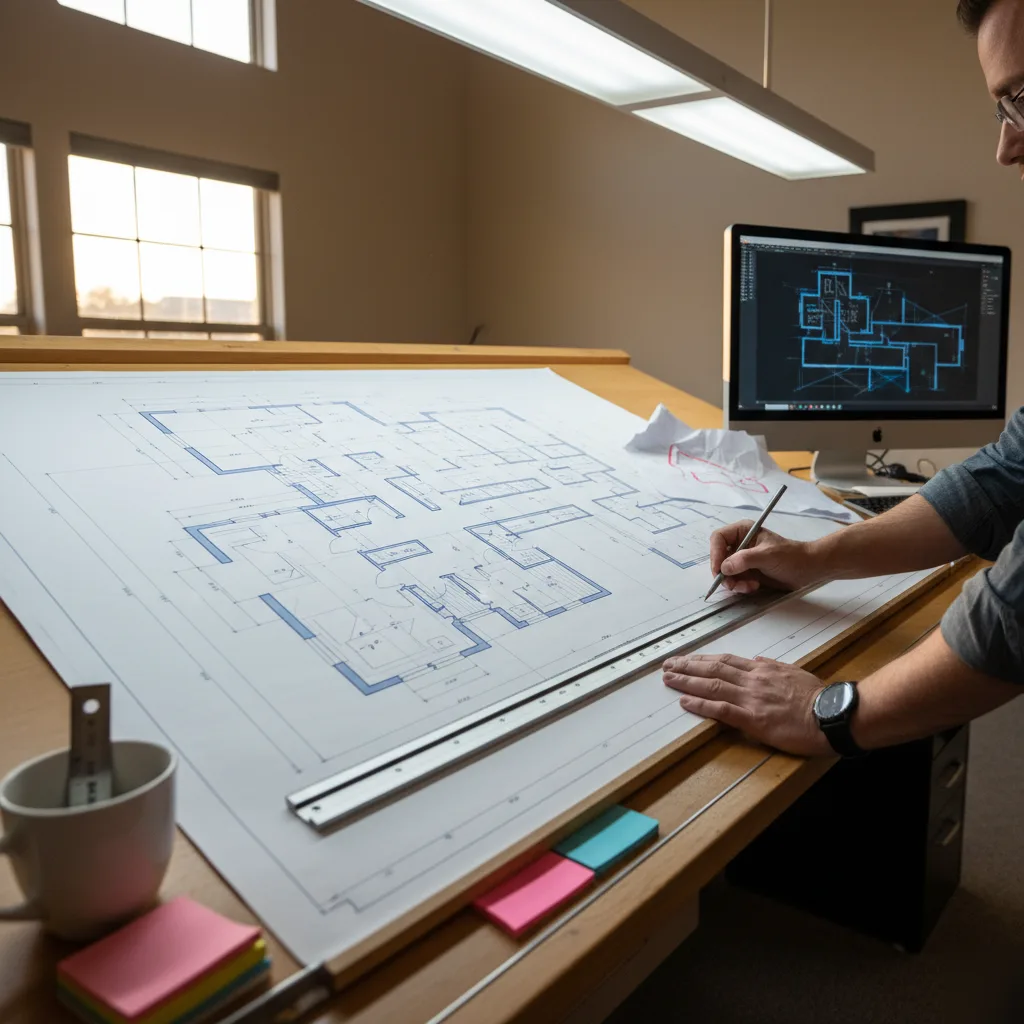
What Architectural Drafting Includes for Your Project
When you hear "blueprint," you might imagine a quick, basic sketch. But the process of architectural drafting is actually much more, as it encompasses every drawing required for construction and for review by the plan examiner. For homeowners here in Clayton, this distinction is important.
We don't just create rough sketches; we provide ready-to-build documents for every project we handle. That means providing detailed drawings that include dimensions, structural information, specification lists and code-based information as related to your specific project needs. What is included in your drawings:
- floor plans with walls, doors, rooms and dimensions
- elevations and cross sections to show heights, grades and structural connections
- foundation plans, existing conditions or new designs
- structural details for beams, headers, load paths where load-bearing walls have been opened up
- plans and site plans indicating setbacks needed by St. Louis County to submit a permit
Typically what comes across our desk in Clayton is a renovation to an existing older brick home; perhaps a kitchen remodel by opening up a wall that's load bearing, or an addition on the rear of a 1940s colonial near Wydown. No matter what the scope is, the drafting reflects the existing conditions of the home rather than a wishful concept of the design.
We take measurements on-site and or use existing as-built drawings before drafting begins. We need to know how the existing structure is framed, what foundation type it sits on and what kind of floor framing it has, so the new design ties in properly with the existing structure. This is the type of information missing from the drafting package that can get you denied in plan review.
Scott's background with St. Louis County plan review experience is reflected in the permit drawings — exactly what the plan examiner needs to see, so we don't make mistakes in the submittal requirements for the drawings. This avoids back and forth revisions and waiting in plan review.
So whether your Clayton renovation, remodeling project or interior remodeling project is a simple kitchen remodel or a large addition, the architectural drafting we prepare for you to take to plan review is created for that specific home and permit. Not a template or a reused package.
When Does The Clayton Building Department Require Permit Drawings?
Architectural drawings are usually the last thing you think about when planning for renovations; often the thought comes up only when the paperwork for your permit application is on the desk, or even when you realize that it can't be filed without architectural drawings for the project.
The building department in Clayton falls under the permitting system for St. Louis County. This means that renovations, additions, or any structural changes to a building require drawings to be reviewed and signed off on by the County Plan Examiner. This is a weekly call I get for customers in Clayton, and there are some tell-tale signposts:
What Needs Permit Drawings?
Not every home improvement project requires full permit drawings. But more do than you might think. What generally triggers a permit drawing in Clayton?
- Load bearing wall removal, such as removing a wall between the dining room and kitchen for a kitchen remodel.
- Adding a room of any size, such as building a new sunroom or expanding a master suite.
- Structural modifications to floor system, rooflines, or foundations.
- Basement finish that involves adding an egress window or modifying stairs.
- Building a new deck or balcony larger than a specified size.
If a project falls into one of these categories, it requires engineered drawings. The county has to review plans (with floor plans, structural details, and dimensions, plus notes that describe the work and prove its compliance with current building code). You won't be able to get by with sketches on graph paper or photos from old construction.
This catches a lot of people off guard: You might hire an architect to design a kitchen remodel near Wydown, they'll give you gorgeous design renderings of what your kitchen will look like, but those renderings have nothing to do with your permit drawings. Design renderings show the beauty of the project. Permit drawings explain how the structure is built. They are separate documents.
Scott is intimately familiar with the way the St. Louis County plan examiner reviews drawings. And that is why we design permit drawings with the plan review process in mind, to give exactly what is needed, in the format they want, with the right details, on the right page (such as all required notes on sheet one). That is the difference between a fast-track project through the county's plan review and a long drawn-out process with a rejection letter and a list of corrections to fix. And those corrections are costly. Each resubmission pushes your project further back (sometimes by a matter of weeks). It pays to get the drawings right the first time to make sure your project is completed on schedule and within your budget.
As-Built Drawings for Older Homes in Wydown-Forsyth and Moorlands
Most homes in the Wydown-Forsyth and Moorlands neighborhoods were built before the era of digital documentation. So, when you want to remodel, there is usually nothing on file to show what the home's layout is. There's no original floor plan for the first floor or the second floor, there's no plans to show any of the structural details, there is no documentation of past additions or modifications, and the as-built drawings are what come to fill in that void.
As-built drawings are a record of your home today. We go to the site, take field measurements, and accurately record your home's existing walls, windows, beams, floors, ceilings, etc. For most homes in Clayton from the 1920s to the 1940s, this is a necessary step since few homes today are built according to their 1930 plans. So, many owners have since modified the home. They moved a few walls to add more closet space, converted an enclosed porch to a living space, finished off the basement for more living areas, and none of that has been recorded. I receive a phone call from an owner of a home like this every week; they're going to remodel, they call the county asking for existing plans, the county tells them they don't have anything on file. That is normal for homes of this age.
This is the scope of our as-built drawing service:
- Detailed, measured floor plans for each level of the house
- Locations and dimensions of all structural members (beams, columns, load-bearing walls)
- Description of the foundation (stone, poured concrete (old or new), or both)
- Notes about any work that has been done but not permitted
These as-builts are the starting point for all subsequent work. You need them for your architect. You need them for your structural engineer. You need them so the St. Louis County plan examiner can review your plans for a permit.
That is one step that has nothing to do with whether you are a developer or a one-time homeowner. If you don't have accurate drawings, it will be more difficult for you to obtain a permit. This means your project could easily get off to a bad start.
Scott has participated in St. Louis County plan review a couple of hundred times (at least). That knowledge is put to work when we create your as-builts because those drawings go directly into your structural package. The professionals who produce these documents come from a specialized field — those interested in the discipline can learn more about architecture and design careers through Missouri's official state resources.
Do not know whether your home requires as-built drawings for renovation purposes? If no plans exist, it is usually a good bet that you will need them.
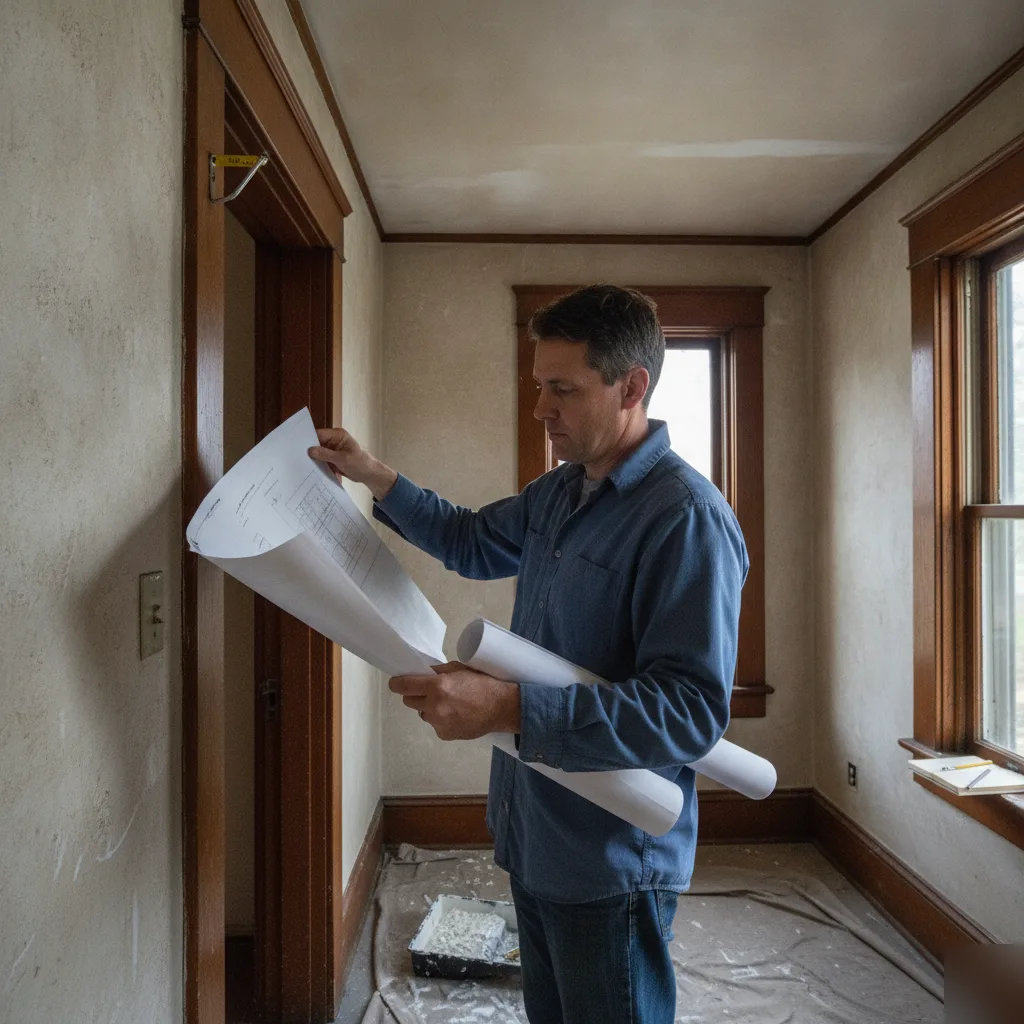
The Importance Of Architectural and Structural Drawings to Your Permit Application
The average Clayton homeowner is unaware that a residential renovation usually requires a permit application containing two sets of drawings.
The architectural drawings (architectural drafting) show the appearance of the new construction.
- Plans
- Elevations
- Scales and room layout
The structural drawings show the structural details.
- Beam sizes
- Connections
- Structural loads
- Foundation design
Both sets of drawings are necessary for the application to move forward, and the two sets of drawings must agree. Period. This is where the problems arise.
- You get the architectural work done by one firm and the structural work done by another.
- The structural drawings and architectural drawings you receive do not match. A wall depicted in your floor plans is actually an area where an engineer expects a beam, for instance. Or, a window size that was shown in an elevation doesn't account for the header size that a structural engineer needs.
- The plan examiner rejects the plans and sends them back with a note to "reconcile differences." It now takes weeks before your architectural team and structural team agree on a fix, and a set of corrected drawings can go back to the plan examiner.
We do both the architectural work and the structural work under one roof, and our services provide the most streamlined route to permit approval. When you obtain your architectural drawings and structural drawings from us, all the details are in harmony from the beginning:
- We go out to your Clayton property and produce your as-built drawings that show the existing conditions.
- We produce your architectural plans to depict the proposed new construction. This includes plans that display the size and layout of every room in your addition.
- Scott calculates the new structural members (beams or headers) or foundation repairs necessary for your project.
- We check both sets of drawings to confirm all pieces line up before we send any of them to the County.
- We assemble the entire permit package and send it over for review.
Scott has navigated this entire workflow hundreds of times across Clayton and the other St. Louis County cities. The projects that breeze through plan review are the ones where the architectural and structural documents were aligned from the start. As for the projects that get sent back? Almost always, it is because the architect and structural engineer did not coordinate. Choosing an architecture firm Clayton projects trust that handles both sides of that equation is how you sidestep that issue completely.
The Drafting Process From First Call to Approved Drawings
When people contact us, they typically already have a project in mind. Perhaps you've drafted something on a sheet of graph paper, or you're just starting to imagine what you want. No matter which scenario it is, we stick to our standard process because missing a single step invariably costs more in the end.
This is what an architectural drafting project looks like for our Clayton customers:
- Initial consultation and scope. We discuss the project you want to build, alter, or expand. You share your vision. We ask about your anticipated budget, your timeline, and whether you're working with a contractor. The initial conversation usually takes 15 to 20 minutes.
- Site visit and measurements. We visit your site to record the as-built conditions. With the many old brick colonial-style residences from the 1930s around Wydown, or homes along Brentwood Boulevard, this step is more than most people realize. Walls aren't always where the original plans indicate. Floors have settled. We measure what exists today.
- As-built drawings. Prior to beginning new design work, we create accurate drawings representing the existing home. These become the basis for each design choice moving forward.
- Design development. This is when we start drafting your project: floor plans, elevations, sections, structural details, and more. All plans are created to comply with St. Louis County submission requirements. Scott is aware of what the plan reviewer is seeking, and that familiarity guides all of our drafted drawings.
- Review by you. Before we take anything to the permit office, we review the drawings with you. This is when modifications are made, not once the permit application is submitted.
- Permit submission. We assemble the full set of documents required by the Clayton permitting office and answer any plan reviewer inquiries we receive.
Projects that were sent back for plan review were missing key information the reviewer expected. This isn't an issue with our drawings.
Also keep in mind, we also perform the structural engineering calculations in-house. Your structural analysis and architectural drafting stem from the same team, with a consistent file and coordinated documents. Nothing needs to be passed back to separate firms if a change is requested. This fact alone saves most Clayton homeowners a week or more of additional time needed to obtain their permit.
Frequently Asked Questions
Does Clayton require permit drawings even for a simple kitchen remodel?
Yes, if your kitchen remodel involves removing a load-bearing wall, you will need permit drawings. Clayton falls under St. Louis County's permitting system, so the County Plan Examiner must review and approve structural drawings before work begins. A lot of homeowners are surprised by this. They assume a kitchen update is minor. But opening up a wall between your dining room and kitchen triggers a full structural drawing requirement — floor plans, structural details, dimensions, and code notes included.
What's the difference between design renderings and permit drawings?
Design renderings show what your finished project will look like. Permit drawings show how the structure is actually built. They are completely separate documents. You can have beautiful kitchen renderings from a designer and still be unable to file your permit without proper construction drawings. Permit drawings include structural details, load path information, dimensions, and code-compliance notes — the technical information the County Plan Examiner needs to approve your project.
Why do older homes in Wydown-Forsyth and Moorlands need as-built drawings before drafting starts?
Most homes in those neighborhoods were built in the 1920s through 1940s with no digital records on file. There are no original floor plans, no structural documentation, and no record of past additions. Before any new drafting can begin, we measure the home as it stands today. That field measurement process creates an accurate as-built record. Without it, your permit drawings would be based on guesswork — and that gets projects rejected during plan review.
How do you avoid back-and-forth corrections during St. Louis County plan review?
You avoid corrections by submitting drawings that match exactly what the plan examiner expects to see. That means the right details, the right format, and required notes on the correct sheet. Every resubmission after a rejection pushes your project back by weeks. Scott's background with St. Louis County plan review means the drawings are built around that process from the start — not revised to fit it after the fact.
Do I need to have existing blueprints before you can start drafting for my Clayton home?
No, you do not need existing blueprints. Most Clayton homeowners don't have them. We come to your home, take field measurements, and document the existing conditions ourselves. We need to understand how the structure is framed, what foundation type it sits on, and how the floors are built before new drafting begins. That on-site measurement step is what makes the permit drawings accurate for your specific home — not a generic template applied to any house.