Architect Services in
Clayton MO
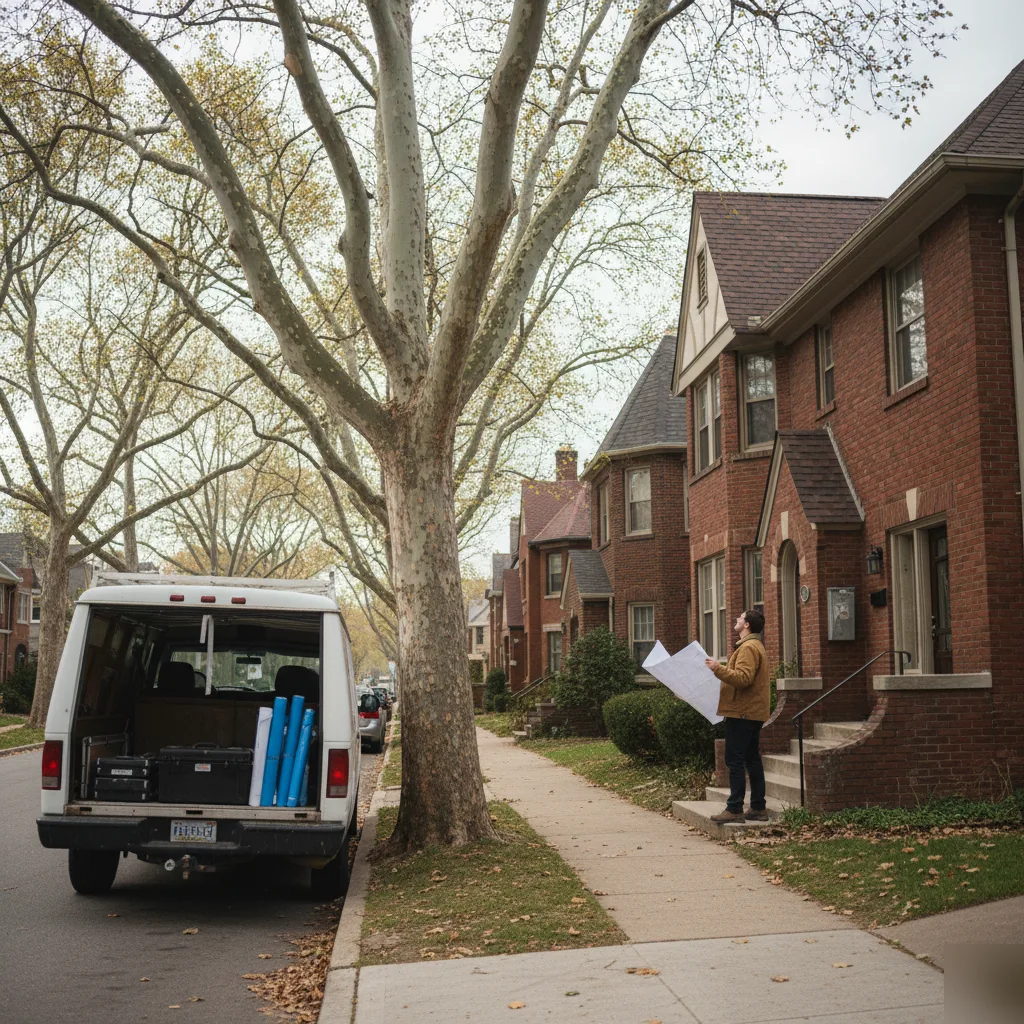
Clayton's older homes present a drafting and design challenge that most architectural service providers underestimate until they are standing inside a 1930s brick home on Forsyth trying to reconcile what the original drawings say was built with what is actually there. The two frequently do not match. Original construction drawings for Clayton homes are often unavailable, incomplete, or inaccurate relative to the decades of modification, addition, and renovation that have accumulated since original construction. Working from those documents produces designs that fail in the field. Working from field-verified existing conditions produces designs that execute cleanly.
That is the foundation of every architectural service Open Concept Engineering provides in Clayton. We begin with what is actually there — measured accurately, documented completely, and verified against the structural reality of the building before a single design decision is committed to. Scott's LiDAR measuring technology and wall scanning tools produce existing condition documentation with a level of accuracy that hand measurements and visual inspection cannot match, and that accuracy is the starting point for every as-built drawing, every architectural drafting package, every interior space renovation design, and every light commercial project we take on in this market.
As an architecture firm Clayton contractors and homeowners trust for work that requires both architectural and structural credentials, Open Concept Engineering occupies a specific position in this market. We are not a pure architectural design firm. We are a structural engineering firm that provides architectural drafting and design services with a licensed structural engineer for permit drawings behind every document we produce. For Clayton projects where the permit process runs through St. Louis County, where the housing stock is structurally complex, and where the coordination gap between architect and structural engineer is the most common source of permit rejection — that combination is not a nicety. It is the difference between a project that moves and one that stalls.
As-built drawings
in Clayton, MO
As-built drawings are among the most in-demand and least discussed architectural services in Clayton's renovation market. Every homeowner planning a significant renovation needs them. Most do not know they need them until a contractor or permit office asks for documentation of existing conditions that does not exist.
The scenario is consistent. A homeowner wants to renovate. The original architectural drawings for the home are unavailable — which in Clayton, where much of the housing stock was built before standardized plan archiving existed, is the rule rather than the exception. The renovation requires a permit. The permit requires documentation of existing conditions. The existing conditions have never been formally documented. The project stops while as-built drawings are produced.
Our as-built drawings service exists specifically to close that gap — and Scott's LiDAR measuring technology makes it faster and more accurate than any manual measuring process can achieve. LiDAR captures existing conditions across an entire floor plan in a fraction of the time conventional measurement requires, producing a point cloud of the existing space that becomes the geometric foundation of every as-built drawing we produce. Wall locations, door and window openings, ceiling heights, structural element locations, and mechanical penetrations are all captured with sub-inch accuracy and translated into architectural drawing format that meets St. Louis County documentation requirements.
For Clayton homeowners, as-built drawings serve multiple purposes beyond the immediate renovation permit. They establish an accurate existing condition record that becomes the baseline for every future renovation, repair, or improvement the home undergoes. They document structural modifications that previous owners may have made without permits — load bearing walls that were removed, additions that were framed without engineering, basement conversions that altered the original structural system — giving the current owner an accurate picture of what is actually there structurally and architecturally.
For real estate transactions in Clayton, as-built drawings are increasingly requested by buyers conducting due diligence on older properties with renovation potential. An accurate as-built drawing set documents what the home actually is — not what the listing describes, not what the tax records show, not what the original plans specified — and gives buyers the architectural foundation they need to evaluate renovation feasibility before closing.
Scott's direct experience in St. Louis County plan review means as-built drawings we produce are formatted around what the county permit office requires for renovation submissions — because an as-built drawing set that captures existing conditions accurately but is formatted incorrectly for the local review standard is a drawing set that still comes back with corrections. Ours are built to move through review the first time.

Architectural drafting
in Clayton, MO
Architectural drafting is the translation layer between a design concept and a buildable, permittable set of documents. It is where a homeowner's vision for their space, a contractor's scope of work, or an architect's design intent becomes the precise graphic language that the permit office reviews, the contractor builds from, and the inspector references in the field. When architectural drafting is done correctly, everything downstream moves smoothly. When it is done without the structural engineering coordination that Clayton projects require, it produces permit corrections, contractor confusion, and field discoveries that the drafting process should have resolved before anyone picked up a tool.
Open Concept Engineering provides architectural drafting services for residential renovation and light commercial projects throughout Clayton and surrounding St. Louis County communities. Our drafting packages are produced in direct coordination with the structural engineering work the project requires — which means the architectural drawings and the structural drawings are integrated from the outset rather than coordinated after the fact. In Clayton's older homes, where the coordination between architectural and structural documents is the most common source of permit rejection, that integration is the specific advantage our drafting service provides over any drafting-only firm that does not have structural engineering credentials behind the work.
For renovation projects specifically, our architectural drafting starts from the field-verified existing conditions documentation produced by Scott's LiDAR measuring technology. The accuracy of that existing condition baseline is what prevents the most common and most expensive drafting problem in Clayton renovations — drawings that are architecturally correct but structurally inconsistent with what is actually in the walls, floors, and foundation of a 1930s or 1940s home that has been modified multiple times over its history.
Our architectural drafting deliverables include floor plan drawings, elevation drawings, section drawings, door and window schedules, and any architectural documentation St. Louis County requires for the permit submission associated with the project scope. Every drafting package we produce is formatted around the specific documentation requirements of the St. Louis County plan review process because Scott's background in that process means he knows exactly what the examiner needs to see, in what format, and at what level of detail for every project type this category covers.
For contractors who need architectural drafting support on Clayton projects — homeowners who want to pursue a renovation but need architectural drawings before they can engage a contractor, and design-build teams who need drafting services integrated with structural engineering — our architectural drafting service provides a single-source solution that eliminates the coordination gap between design and engineering that most Clayton renovation projects navigate poorly.

Interior space renovation
in Clayton, MO
Interior space renovation design in Clayton is, at its core, an open concept problem. The homes here were built for a different era of living — compartmentalized floor plans with defined rooms for defined purposes, walls between spaces that made sense in 1938 and make no sense in a household that wants the kitchen, dining, and living spaces to function as a single connected environment. The demand for open concept living in Clayton is not a trend. It is a consistent, decade-long renovation driver that shows no sign of slowing in a housing stock that was built for exactly the opposite spatial arrangement.
The challenge is that every open concept conversion in Clayton starts with the same structural question: what are those walls doing, and what does removing them require? The answer is never assumed. It is engineered — from field-verified framing conditions, actual load path analysis, and a structural design that accounts for everything the wall was supporting before it comes down.
Our interior space renovation service covers the complete scope of what a Clayton open concept remodel requires. We evaluate existing structural conditions in the field using LiDAR measuring technology and wall scanning tools, determine the structural function of every wall the renovation proposes to remove or modify, design the beam and header work required to remove load bearing walls safely and correctly, and produce a combined architectural and structural design package that the contractor can build from and the county permit office can approve.
For Clayton homeowners around Wydown, on Forsyth, or along the streets south of Shaw Park, interior space renovation design carries the specific complexity of older construction. Stone foundations may influence where new structural loads can be introduced. Original timber framing may require reinforcement before it can accept the loads a new beam transfers to it. Unreinforced masonry walls that appear to be purely interior partitions may be providing lateral load resistance that the renovation has to account for in the new structural configuration.
None of these conditions prevent the open concept renovation from happening. They are design parameters that require an engineer who understands how these structures were built — and that is exactly the combination Open Concept Engineering provides. The brand name reflects the work. Open concept living is what we design for, structural engineering is how we make it safe, and Scott's St. Louis County plan review experience is how we make it permitted.
Interior space renovation packages we produce are stamped by a licensed P.E., formatted for St. Louis County plan review, and built around first-time permit approval. The most expensive open concept remodel delays are always the structural ones that were not anticipated at the design stage. Our interior space renovation service exists specifically to ensure they are anticipated — and resolved — before the permit application goes in and before the contractor swings the first demo hammer.
Light commercial design
in Clayton, MO
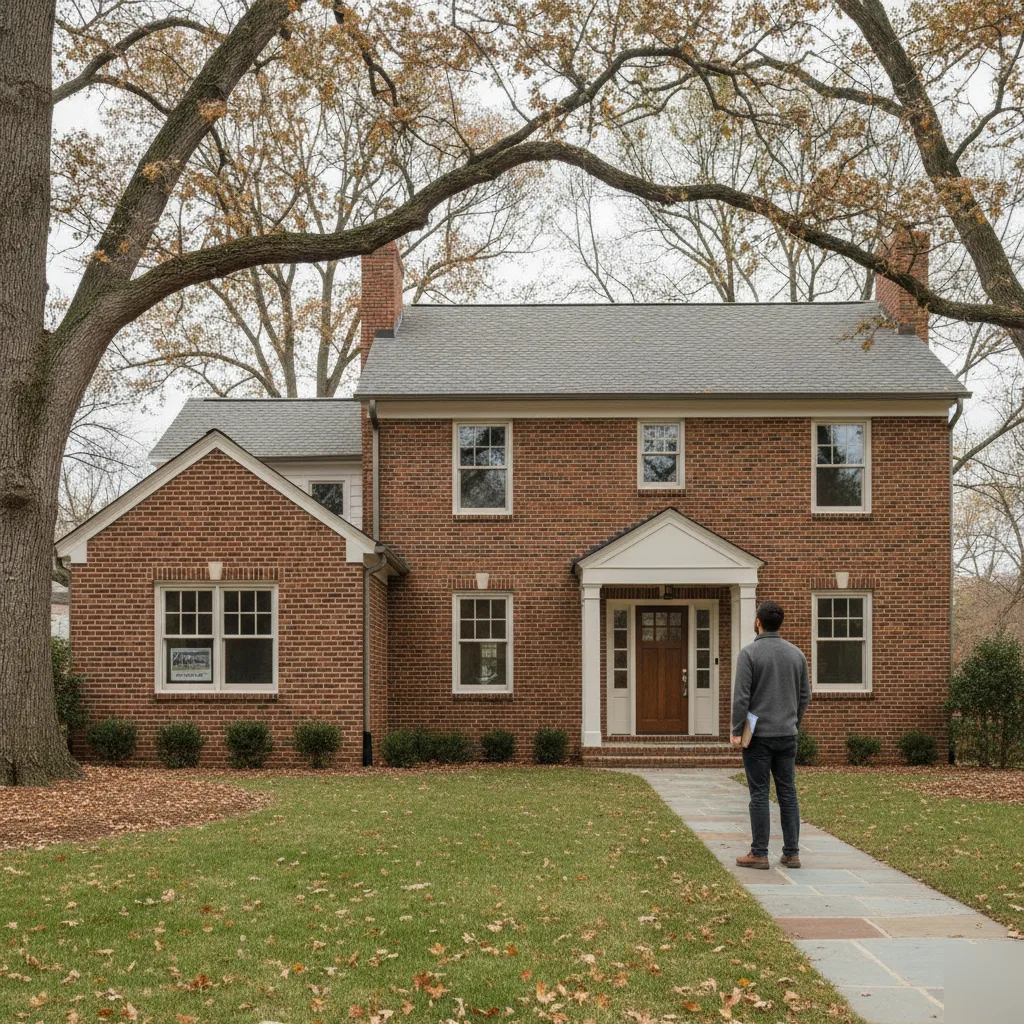
Clayton's commercial corridor — concentrated along Forsyth Boulevard, Hanley Road, and the streets surrounding the central business district — generates consistent demand for light commercial design services that the residential architectural market is not positioned to serve. Tenant improvements in older commercial buildings. Office reconfigurations that require structural analysis before a floor plan change can be executed. Retail spaces that need architectural and structural documentation for a permit submission that the tenant's contractor cannot produce. Building owners managing properties that need design documentation for lease negotiations, capital improvement planning, or sale due diligence.
Light commercial design in Clayton operates under the same St. Louis County plan review process that governs residential work — which means the same documentation standards, the same structural engineering requirements, and the same expectation that permit submissions are complete, accurate, and formatted around what the county examiner needs to see. The difference is that commercial permit submissions are reviewed against both the International Building Code and the applicable occupancy and use requirements that residential projects do not carry. Scott's plan review background covers both tracks — which means light commercial design packages we produce are formatted around the complete documentation picture the county requires for commercial permit submissions.
Our light commercial design service covers tenant improvements, office and retail space reconfigurations, light commercial additions and expansions, and any light commercial project that requires both architectural design documentation and structural engineering support. We evaluate existing building conditions in the field, design the proposed improvements in coordination with structural engineering requirements, produce architectural drawings formatted for St. Louis County commercial permit review, and stamp the structural elements of the package with a licensed P.E. seal.
For Clayton building owners managing older commercial properties — many of which were built in the same era as the residential stock and carry the same structural complexity — light commercial design from Open Concept Engineering provides something no architectural-only firm can offer: a design package where the architectural drawings and the structural engineering are produced by the same licensed P.E. who understands how the building was built, what its structural systems can support, and what the St. Louis County commercial permit process requires to approve the proposed improvements.
For tenants negotiating commercial leases in Clayton and needing to understand what a space can become before signing a long-term commitment, our light commercial design feasibility work provides the structural and architectural picture that makes an informed lease decision possible. For building owners preparing properties for sale or repositioning, our light commercial design services produce the documentation that supports due diligence and establishes an accurate improvement cost baseline.
The light commercial market in Clayton is not large enough to sustain a dedicated commercial architecture firm focused exclusively on it — but it is active enough to generate consistent demand for the light commercial design work that falls between the residential and full commercial architectural markets. Open Concept Engineering serves that specific need with licensed P.E. credentials, St. Louis County plan review experience, and a direct understanding of the structural conditions that define Clayton's older commercial building stock.
Why Clayton architectural work
requires structural engineering behind it.
The most consistent source of problems in Clayton architectural projects is the gap between architectural design and structural engineering. A design that is architecturally complete but structurally unverified produces permit corrections at the county level, field discoveries mid-construction, and — in the worst cases — structural conditions that the design assumed away rather than resolved.
In Clayton specifically, that gap is wider and more consequential than in most St. Louis County markets. The housing stock is old enough that existing conditions routinely diverge from what drawings or assumptions suggest. The permitting process is specific enough that documentation formatted for a different jurisdiction or a different era of plan review standards consistently produces correction letters. And the structural complexity of older masonry and timber construction is significant enough that architectural design decisions made without structural engineering input create problems that are expensive to correct after the project is committed to them.
Open Concept Engineering closes that gap by design. Every architectural service we provide — as-built drawings, architectural drafting, interior space renovation, light commercial design — is produced by a licensed P.E. with direct experience in how Clayton's older structures were built, how they behave under renovation loads, and how St. Louis County's plan review process evaluates the documentation we submit. The architectural and structural work are not coordinated after the fact. They are integrated from the first field visit through the final permit submission.
For Clayton homeowners and commercial property owners, that integration means one engagement, one point of contact, and one document set that moves through review the first time — because every architectural decision in the package has already been evaluated against the structural reality of the building and the documentation standards of the local permit process.
Serving Clayton and surrounding St. Louis County communities including Richmond Heights, Ladue, University City, Brentwood, Webster Groves, Kirkwood, and the greater St. Louis metro.

Ready to move your Clayton architectural project forward?
Whether you need accurate as-built drawings of an existing home, architectural drafting for a renovation permit submission, structural and design support for an open concept remodel, or light commercial design for a Clayton property improvement — we produce permit-ready architectural and structural documents fast and build them around first-time St. Louis County approval.
217.273.6959Most architectural drafting and design projects turn around within days of the initial site visit. Call us before your project commits to a design that has not been evaluated against the structure it depends on.