
What Light Commercial Design Actually Covers
Most people picture skyscrapers or big-box retail when they hear "commercial design." We focus on smaller-scale commercial projects in Clayton. This includes tenant buildouts, small office renovations, retail storefronts, mixed-use spaces, and restaurant remodels. These are the kinds of buildings you walk past every day on Central Avenue or near Shaw Park.
We receive inquiries about these projects weekly.
A property owner might convert a first-floor space into a new cafe. A dentist's office may need walls moved to add a treatment room. Or a small LLC signs a lease on a multi-tenant building near Forsyth Boulevard and needs structural drawings before starting demolition.
What Falls Under Light Commercial Design
Here's what we typically handle for these projects:
- Structural permit drawings for interior renovations and tenant improvements
- Beam and header design for opening walls in older commercial buildings
- Floor system design for adding mezzanines or changing occupancy loads
- Building code compliance consulting to confirm your plans meet current requirements
- As-built drawings for existing conditions that were never properly documented
These projects differ from full commercial engineering in scale and complexity. Light commercial projects do not typically need seismic analysis or deep foundation systems. But they do require a licensed P.E. to stamp the drawings. St. Louis County plan reviewers expect this, and for good reason.
Many Clayton commercial buildings date back to the 1940s and 1950s. Their original structural framing does not always match modern expectations. We have opened ceilings in small office spaces and found conditions that changed an entire renovation scope. You cannot design around unverified conditions.
Scott's direct experience in St. Louis County plan review means your permit drawings are built around exactly what the examiner needs to see. This matters because Clayton projects go through county review, not a separate municipal process. Getting it right the first time saves you weeks — and that is the advantage every commercial architect Clayton project gets when the engineer behind the drawings has worked inside that same review process.

Why Clayton's Older Office Buildings Require More Than a Floor Plan
Most light commercial projects in Clayton begin with a simple idea. A dentist may want to split a large suite into two treatment rooms. A law firm might need a conference space where a storage closet once stood. A landlord could convert a first-floor retail unit into a small café. On paper, the floor plan seems straightforward.
Then structural questions arise.
Clayton's commercial building stock is often older than people expect. Many two- and three-story office buildings along Forsyth Boulevard and near the central business district were built in the 1950s and 1960s. Some date back further. These structures often use construction methods unfamiliar to many general contractors. Examples include unreinforced masonry walls that carry load, steel lintels hidden behind plaster, or concrete floor systems with unusual span configurations. You cannot simply draw new walls on a plan and submit it for a permit.
We regularly see this problem. A tenant improvement project may focus on aesthetics and function, but nobody checks if the existing structure can handle the changes. Moving a doorway might require cutting into a load bearing wall. Adding heavy equipment to an upper floor could exceed the original floor system's capacity. These issues commonly cause permit rejections and construction delays in Clayton.
Here's what makes older commercial buildings tricky:
- Original structural drawings are often missing or incomplete
- Building materials degrade over decades, reducing load capacity
- Previous renovations may have altered the structure without proper engineering
- Current building codes require higher performance than the original design
A floor plan tells you where things go. Structural drawings tell you how things stay up. This is a big difference. St. Louis County plan reviewers understand that difference. Scott's hands-on background with St. Louis County plan review means your permit drawings are built around exactly what the examiner needs to see. This saves you rounds of revision and weeks of waiting.
Before you sign a lease or commit to a build-out timeline, get the structure evaluated first. This initial step changes everything downstream.
The Design-to-Permit Process for Commercial Tenant Improvements
Most business owners call us after signing a lease and then realize the space needs significant work before opening day. The clock is already ticking.
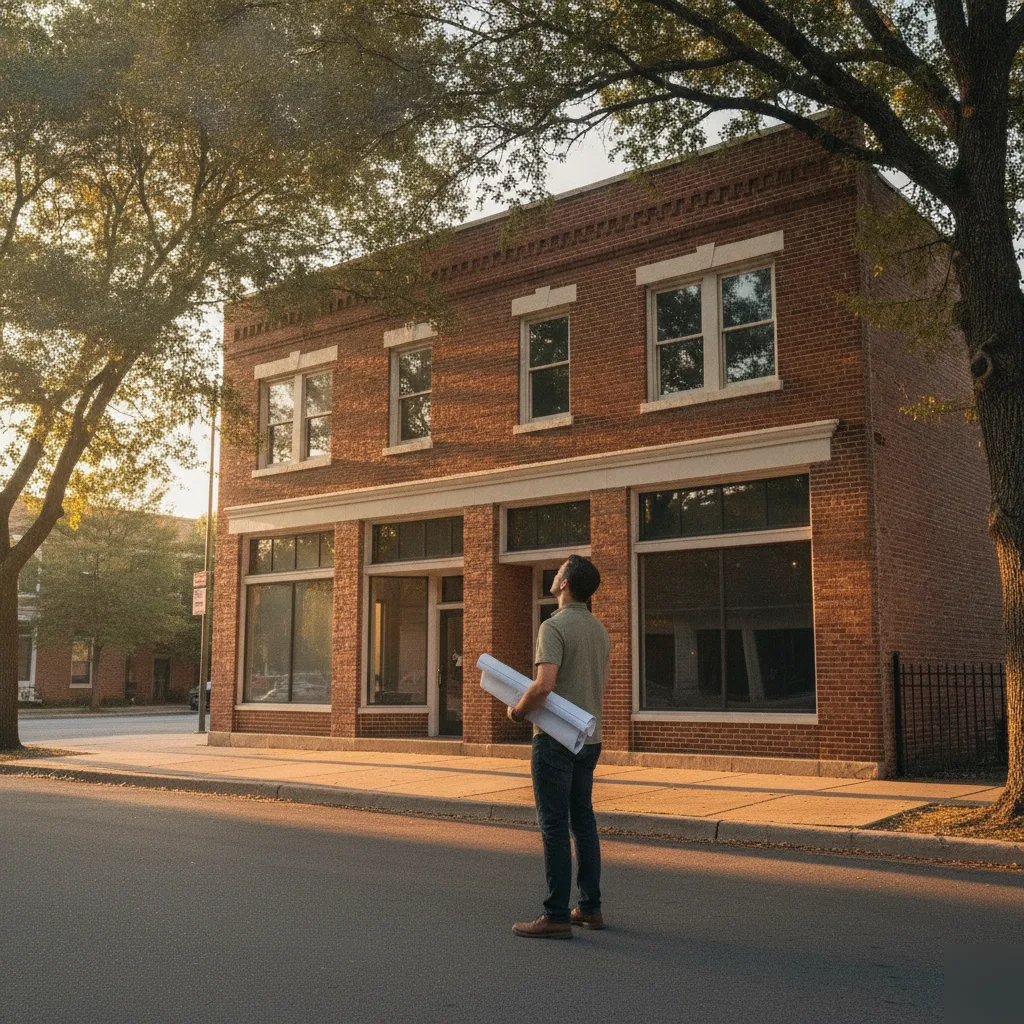
We handle light commercial design for tenant improvements in Clayton, from the first sketch to an approved permit set. The process moves quickly when you work with a team that understands what St. Louis County examiners expect on drawings. Here's how we approach it:
- Site visit and measurements. We visit the space, document existing conditions, and take detailed measurements. For older buildings along Forsyth Boulevard or near the Demun neighborhood, we also examine the existing structure to identify anything that could slow the project later.
- Program review with you. You tell us what the space needs to do: reception area, treatment rooms, open office layout, kitchen line. We confirm feasibility within the existing footprint and structure.
- Design development. We produce floor plans, reflected ceiling plans, and any structural details the project requires. If walls need removal or new openings need headers, those structural calculations are built directly into the package.
- Permit drawing assembly. Other firms often see projects stall at this stage. Not with us. Scott's background in St. Louis County plan review means your permit drawings are built around exactly what the examiner needs to see. This includes code compliance notes, occupancy details, egress paths, and ADA clearances, all included from the start.
- Submission and examiner coordination. We submit the package and handle any questions from the county. Revisions are rare because we front-load the detail.
Projects that drag on for months often had incomplete drawings at submission. A missing structural detail or unclear egress plan sends you back to the end of the review queue in Clayton. This means weeks lost.
What matters most to you is this: A clean permit set means you can start demolition on schedule. Your buildout stays on the timeline your landlord agreed to. We see tenants lose free-rent periods because their design team could not get drawings through review. That is real money gone.
Need help getting your tenant space permitted and built out on time? Give us a call.
Structural Engineering and Design Under One Roof
Most light commercial projects in Clayton involve two separate firms. One firm handles the design, and another performs the structural engineering. This split adds time, cost, and unnecessary back-and-forth communication.
We do both.
When your architect's vision hits a structural wall, literally or figuratively, we are already working to solve it. This means no waiting for a third party to review drawings and send back markups weeks later. Our team produces the structural calculations and the design documents in one workflow. This approach helps small retail buildouts near Shaw Park or tenant improvements off Forsyth Boulevard stay on schedule.
Why Combined Services Matter for Commercial Projects
We often see this scenario: A business owner leases a space in Clayton, hires a designer, and then learns they need stamped structural drawings before St. Louis County will even look at the permit application. They scramble, unable to start work while the lease clock ticks. This is a familiar situation.
When structural engineering and design live under one roof, several things change quickly:
- Design decisions account for structural limits from day one, to avoid later redesigns
- Permit drawings arrive ready for plan review, not half-finished
- You receive clear, buildable documents without chasing two firms for answers
- Scott's county plan review experience means your permit drawings match exactly what the examiner needs to see
This last point holds more weight than people realize. A drawing set that does not match what the county reviewer expects gets kicked back. We have seen projects in Clayton lose three or four weeks over details that should have been right the first time.
Because we handle structural calculations for contractors alongside the design work, your general has one point of contact, one phone number, and one email thread. Questions about beam sizing or connection details receive same-day answers, without routing through a coordination chain.
Need help pulling your project together? Give us a call.
This is not about convenience for its own sake. It is about getting your commercial space open, operational, and producing revenue faster. This combination of structural engineering and design delivers real benefits for Clayton business owners and surrounding St. Louis County communities.

Getting Commercial Drawings Approved in Clayton
Permit drawings for commercial projects in Clayton go through St. Louis County plan review. This is a specific process with specific expectations. Drawings often get kicked back when the engineer does not understand what the examiner requires.
Scott has worked directly inside the St. Louis County plan review process. Your permit drawings are built around exactly what the examiner needs to see. This is not a small detail. It is the difference between a two-week approval and a two-month back-and-forth process that stalls your entire project timeline.
For light commercial projects, structural drawings must show more than just beam sizes and connection details. The county wants to see load path continuity, lateral force resistance, and clear documentation of how your building meets current code. Missing any of those elements leads to a revision request. We include the following in every commercial drawing set:
- Complete structural calculations with load path documentation from roof to foundation
- Connection details for steel, wood, or mixed framing systems
- Foundation design tied to actual soil conditions in Clayton
- Lateral analysis for wind and seismic compliance per current IBC standards
Projects get stuck in review when they miss one of these items, or present information that forces the examiner to guess. We do not leave room for guessing.
Commercial spaces along the Forsyth Boulevard corridor and near the central business district often involve renovations to older mixed-use buildings. These structures often have quirks: original framing that does not match standard details, and masonry walls that may or may not be load bearing. We document existing conditions with as-built drawings before designing anything new, so the permit set tells the full story.
This is what matters most to you: A clean permit approval means you can start on schedule. You avoid delays, surprise resubmittals, and change orders because someone missed a structural requirement. We build the drawings right the first time so your project keeps moving forward in Clayton's active commercial market.
Frequently Asked Questions
Do Clayton commercial projects go through county plan review or a separate city process?
Clayton commercial projects go through St. Louis County plan review, not a separate municipal process. This matters because county examiners have specific expectations for how drawings are formatted and what details must be included. Missing code compliance notes, occupancy classifications, or egress paths will trigger a revision request. Getting those details right on the first submission saves you weeks of back-and-forth while your lease clock keeps running.
What happens if the existing structure in my Clayton space doesn't match the original drawings?
Missing or incomplete original drawings are common in Clayton's older commercial buildings, especially those built in the 1950s and 1960s along Forsyth Boulevard. When original documents don't exist, we document existing conditions through a site visit before any design work begins. We have opened ceilings in small office spaces and found conditions that changed the entire renovation scope. You cannot design around unverified conditions, so this step protects your timeline and budget.
How long does the design-to-permit process typically take for a tenant improvement in Clayton?
Most light commercial tenant improvements move from site visit to submitted permit drawings in two to four weeks, depending on project complexity. Older buildings near the Demun neighborhood or central business district sometimes take longer because existing conditions need more documentation. Projects stall most often when structural questions come up late in the process. Identifying those issues at the start keeps your schedule predictable and your contractor ready to move when the permit is approved.
Does a light commercial project in Clayton actually need a licensed engineer to stamp the drawings?
Yes, St. Louis County plan reviewers require a licensed P.E. stamp on structural drawings for commercial projects, even smaller tenant improvements. This applies when you are removing walls, adding openings, or changing occupancy loads. Many business owners assume a general contractor or architect can handle this alone. For projects in Clayton's older commercial buildings, where unreinforced masonry and hidden steel lintels are common, an engineer's review is not optional — it is what gets your permit approved.
Can I start planning my buildout before I know exactly what the existing space looks like?
You can start planning, but you should not commit to a construction timeline until the existing structure is evaluated. We regularly see lease agreements signed with aggressive opening dates before anyone checks if the space can support the planned changes. Moving a doorway might require cutting a load-bearing wall. Adding kitchen equipment to an upper floor could exceed the original floor system's capacity. A site visit early in the process changes everything downstream and helps you negotiate realistic timelines with your landlord.