What Room Addition Design Actually Includes
Many homeowners believe room addition design only involves drawing a floor plan. This is a common misconception.
Room addition design provides the complete structural and architectural package. This package moves your project from initial concept to an approved permit. It defines how the new space joins your existing home, how loads move through walls and foundations, and how all details comply with St. Louis County building code. We manage this work in Clayton weekly, and its full scope often surprises homeowners.
Here's what a complete room addition design package typically includes:
- Structural calculations detailing how new beams, headers, and columns transfer weight to the foundation
- Foundation design considering your existing footing type and local soil conditions
- Floor system design connecting the addition to your home's current framing
- Structural permit drawings for county plan review submission
- Building code compliance details specific to your lot setbacks and zoning
We frequently encounter this scenario in Clayton's established neighborhoods. A homeowner might plan a family room off the back of a 1940s brick home. Often, the existing foundation is old poured concrete, or the roof framing does not meet modern standards. The design must address practical challenges, not merely look good on paper. Every connection point between the old structure and new construction requires engineering.
Generic drafting services often fall short here. They provide a pleasing layout but omit the necessary structural calculations. This results in county plan rejection.
Scott's direct experience in St. Louis County plan review means your permit drawings are built around exactly what the examiner needs to see. This reduces revision cycles and avoids weeks of waiting. Every architectural planning Clayton homeowners and contractors receive from us is more than a blueprint; it is an engineer-stamped document, backed by a licensed P.E.
Ultimately, room addition design combines structural engineering, architectural drafting, and code compliance into one deliverable. You receive a permit-ready set of drawings, ready for construction to begin.

Why Older Homes Require a Structural Assessment First
Most homes in Clayton were built between the 1920s and 1950s. This age factor holds more weight than many people recognize when planning a room addition.
A home built in 1935 performs differently than one built in 2005. Its foundation might be stone or early poured concrete. The floor joists could be undersized by today's code. Also, load paths through the walls may not follow patterns a modern builder would recognize. We observe this every week in neighborhoods near Wydown and throughout the Moorlands area. Homeowners planning a family room or kitchen expansion often assume the existing structure can handle it. This is not always the case without modifications.
A structural assessment before starting the room addition design process prevents costly surprises during construction. We inspect several key factors:
- Foundation condition, particularly cracks or settling in older stone foundations
- Load-bearing walls that may need reinforcement or removal to connect the addition
- Floor system capacity to support new loads for the expanded layout
- Existing framing connections requiring integration into the new structure
Your addition does not simply sit next to your house; it becomes an integral part of it. Every new wall, roof line, and beam transfers load back into the existing structure. If the existing structure has weaknesses, the addition amplifies them.
We have inspected Clayton homes where original foundations shifted two inches over 80 years. While not noticeable inside, this amount of movement alters the engineering approach for an addition. Skipping the assessment would require redesigning everything after excavation began.
Scott's direct experience in St. Louis County plan review means your permit drawings reflect what the examiner actually needs to see. However, those drawings rely on accurate underlying data. A proper assessment provides real numbers to work with, avoiding assumptions. This is the difference between a room addition design that proceeds smoothly through permitting and one that receives a red stamp rejection. Before committing to any design direction, reviewing a Home Remodeling Design Guide can help Clayton homeowners understand what to expect from the full process.
Clayton's Zoning Rules Shape Your Addition Before Design Begins
Homeowners often contact us with a vision: an extra bedroom, a sunroom off the back, or a second story over the garage. However, Clayton's zoning code dictates what is possible before we draw any plans.
Setback requirements in Clayton are strict. Your addition cannot be placed arbitrarily on the lot. The city enforces minimum distances from property lines on all four sides, and these distances vary by zoning district. For instance, a home near Wydown Middle School might have different rear setback rules than one closer to Shaw Park. We verify this information first, as it directly controls the size and placement of your addition.
Lot coverage is another factor. Clayton limits the percentage of your lot a structure can occupy. This includes your existing house, garage, and any new square footage. We have encountered homeowners who planned a 400-square-foot addition, only to find they were already at 90% of their allowable coverage. This does not halt the project, but it requires creative design solutions for footprint and height.
Here's what we look at before room addition design moves forward:
- Zoning district classification and permitted uses for your parcel
- Front, side, and rear setback minimums
- Maximum lot coverage and floor area ratio limits
- Height restrictions that impact second-story additions
- Historic overlay rules if your home is within a designated area
Some Clayton neighborhoods are within historic or architectural review districts. This adds complexity. You may need approval from a review board before the county even receives your permit application. Scott's direct experience in St. Louis County plan review means your permit drawings are built around exactly what the examiner needs to see. We eliminate guesswork about county requirements.
If your lot triggers a variance request, we handle the structural documentation supporting your case. Homeowners who encounter delays often fail to check zoning before designing. We conduct this review first, every time.
Permit-Ready Drawings: What Clayton's Building Department Requires
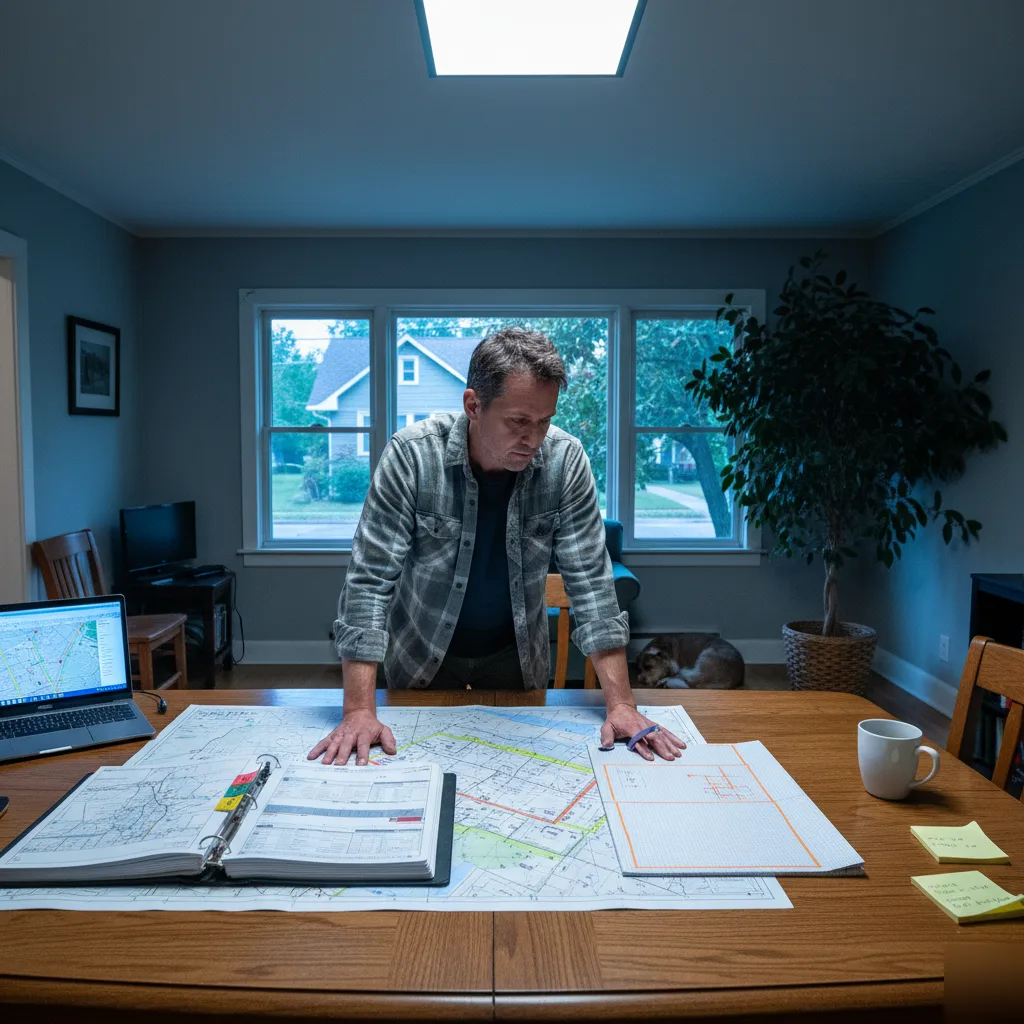
This stage often causes room addition projects to stall, not due to poor design, but because the drawings lack necessary details for the plan examiner's initial review.
Clayton adheres to St. Louis County's permitting process, and the building department maintains a high standard for structural permit drawings. Specific details are required: foundation connections, load paths from roof to footing, framing plans with member sizes specified, and lateral bracing details. Omitting any of these results in a rejected submission. This delay can add weeks, sometimes longer, especially if your contractor's schedule shifts.
Scott's direct experience in St. Louis County plan review means he understands which details cause flags and which calculation packages receive approval without questions. This background saves valuable time for Clayton homeowners, who are often managing tight timelines and material lead times.
Here's what a complete room addition design submittal typically includes for Clayton projects:
- Structural floor plans illustrating new and existing framing connections
- Foundation design with footing sizes, reinforcement, and depth below frost line
- Roof framing plan with ridge, rafter, and bearing point details
- Lateral load analysis for wind and seismic per current building code
- Connection details at every point where new structure joins old
We see this every week. A homeowner near Wydown or along Brentwood Boulevard might present plans an architect started, lacking engineering backup. The county will not accept architectural drawings alone for structural work. Stamped structural calculations and drawings from a licensed P.E. are required to proceed.
A clean first submittal means faster permit approval, allowing your contractor to start on schedule. We prepare every drawing package in Clayton with this goal. This results in no revisions, no resubmittals, and no surprises from the building department.
Need help getting your permit drawings right the first time? Give us a call.
Connecting the New Addition to Your Existing Home's Structure
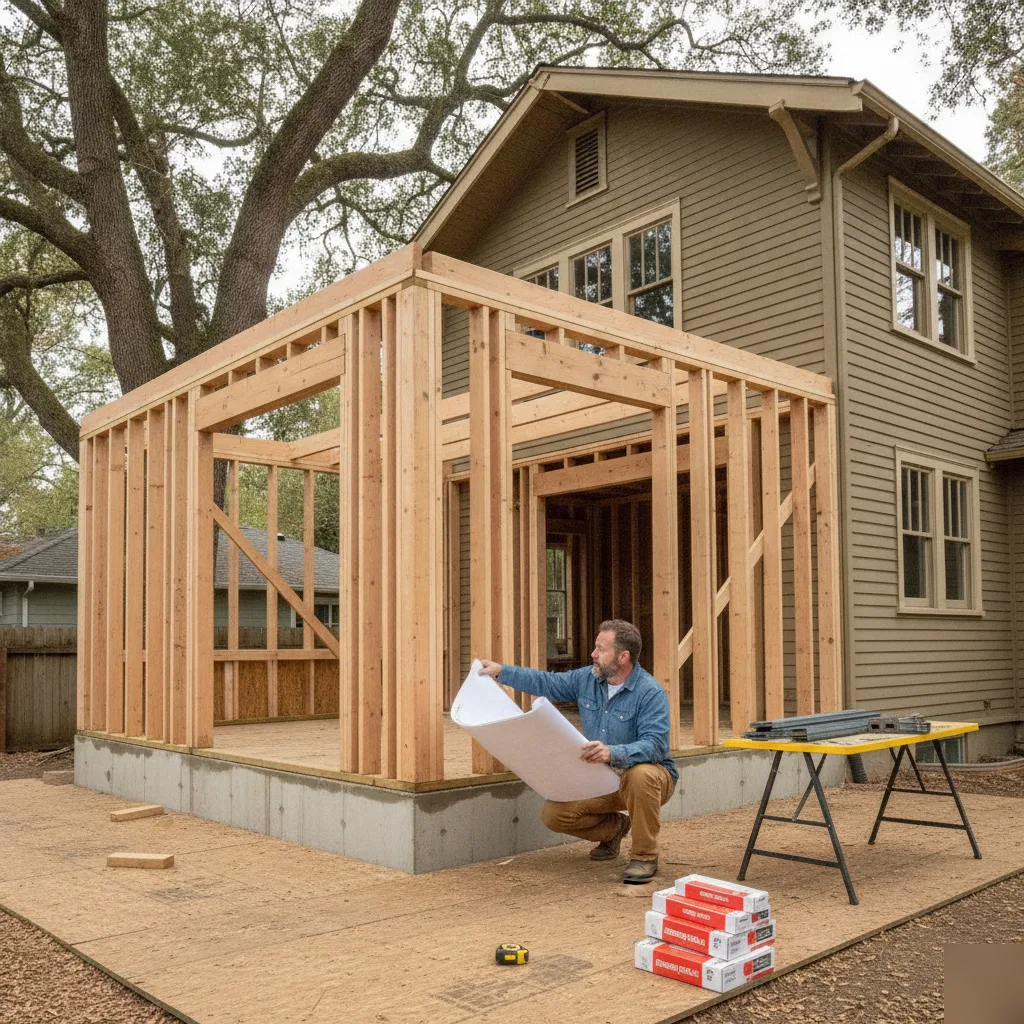
This is where room addition design becomes critical. A new addition is not a separate building; it must integrate with the existing structure. This connection point represents the most structurally critical aspect of the entire project.
We see this every week in Clayton. A homeowner might add a family room off the back of a 1940s brick colonial. The new foundation must match the bearing depth of the original. The roof framing must integrate with existing rafters. Problems often arise at the wall where old meets new if the engineering is incorrect.
Here's what we evaluate at the connection point:
- Existing foundation type and condition, particularly older stone or poured concrete common in Clayton homes
- Load paths through the current structure that will be influenced by the new opening
- Roof tie-in geometry, including ridge heights, pitch matching, and valley framing
- Floor system compatibility between the original home and the addition
- Differential settlement risk between old and new foundations
Differential settlement risk is more significant than many realize. Your existing home has settled for 80 years. The new addition begins its own settlement process. Without proper design, cracks will appear at the seam within a few years. We account for this in every set of structural drawings.
Can your existing walls handle new loads? This is one of our initial checks. Many homes near Wydown feature original framing undersized by current code. However, this does not prevent construction. It means we design appropriate beam and header connections to safely transfer loads into the existing structure.
Connection details between old and new construction are consistently the most scrutinized part of a room addition submission at the county level. Scott's direct experience in St. Louis County plan review means he draws them clearly, sizes every member, and specifies every fastener schedule. This eliminates ambiguity for the reviewer and prevents delays for you.
Our goal is simple. Your addition should seamlessly integrate with the existing home.
Frequently Asked Questions
Does Clayton require a permit for a room addition, and how long does approval usually take?
Yes, Clayton requires a permit for any room addition, and St. Louis County plan review typically takes four to eight weeks. The timeline depends on how complete your permit drawings are when submitted. Drawings missing structural calculations or code compliance details get flagged and sent back. That adds weeks to your project before a single shovel hits the ground. A complete, engineer-stamped submittal moves through review much faster than a basic floor plan from a generic drafting service.
My Clayton home was built in the 1940s — do I really need a structural assessment before designing the addition?
Yes, and skipping it is one of the most common mistakes we see on older Clayton homes. Homes built before 1950 often have stone or early poured-concrete foundations that have shifted over decades. Floor joists may be undersized by today's code. Load paths through the walls rarely follow modern patterns. We have found Clayton homes where foundations moved two inches over 80 years. That kind of movement changes the entire engineering approach for an addition. A quick assessment gives you real numbers instead of assumptions.
What is the difference between an architectural floor plan and a full room addition design package?
A floor plan shows the layout. A full room addition design package includes structural calculations, foundation design, floor system details, and permit-ready drawings stamped by a licensed engineer. Without those structural elements, St. Louis County plan review will reject the submittal. Many homeowners receive a rejection because their drawings look good but lack the engineering backup the examiner requires. You want a complete package the first time so you avoid revision cycles and extra waiting.
How do Clayton's setback rules affect where I can place my addition?
Clayton's setback requirements control exactly where your addition can sit on the lot, and they vary by zoning district. You cannot simply build to the property line. Front, side, and rear minimums all apply, and lot coverage limits cap how much of your lot any structure can occupy. We have worked with Clayton homeowners who were already near their maximum lot coverage before the addition was even designed. Knowing those numbers first shapes the entire design direction and prevents surprises late in the process.
How do I know if my existing walls are load-bearing before the addition design starts?
You likely cannot tell just by looking, and guessing wrong is expensive. Load-bearing walls in older Clayton homes do not always follow predictable patterns. During a structural assessment, we trace how loads travel from the roof down through the floors to the foundation. Any wall that sits in that path needs to stay, be reinforced, or be replaced with a properly sized beam. Identifying this before design begins means the addition connects correctly to your home instead of creating a structural problem mid-construction.