Architectural Designer Services in
Clayton MO
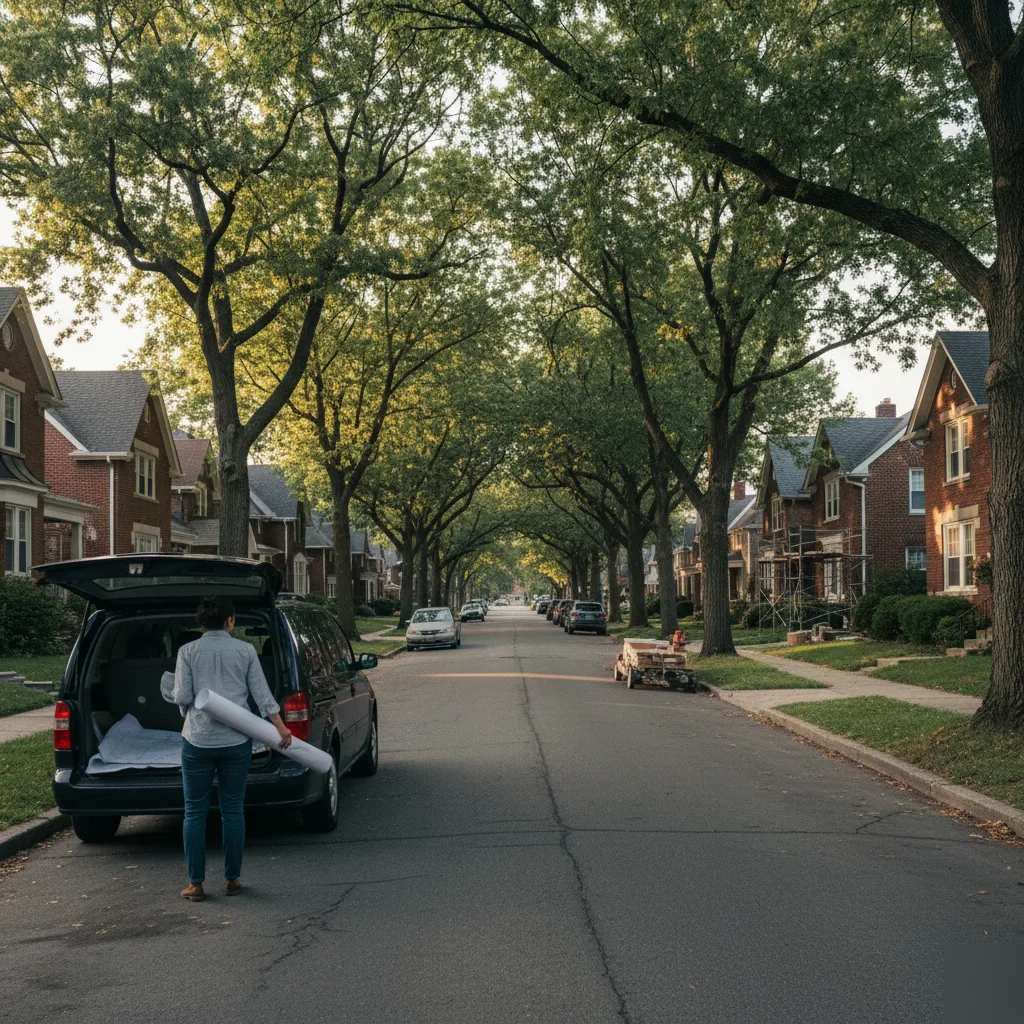
Clayton's older homes were not designed for the way people live today. Kitchens isolated from dining rooms. Bathrooms sized for a different era. Floor plans built around walls that made sense in 1938 and make no sense in a household that wants light, space, and the kind of open connection between rooms that defines how modern families actually use a home.
The gap between the home you have and the home you want is almost always structural. A wall that needs to come out. A floor system that needs to be evaluated before a soaking tub goes in. A room addition that needs load path analysis before a contractor can frame it. That gap is not a design problem. It is an engineering problem with a design solution — and it is exactly where Open Concept Engineering operates.
As an architectural design firm Clayton homeowners and contractors have come to rely on, we provide residential design services that are grounded in structural engineering from the first conversation. Scott's direct experience in St. Louis County plan review — covering everything from permit drawings and structural inspections to complete floor plan and room addition packages — means every design we produce is built around what the St. Louis County permit office needs to see, not what looks good on paper before the permit office sees it.
The brand name is not accidental. Open concept living is what Clayton homeowners are consistently asking for, and structural engineering is what makes it possible to deliver safely, correctly, and with a permit package that passes the first time.
Floor plan design
in Clayton, MO
Floor plan design in Clayton starts with a constraint most design firms do not account for at the outset — the existing structure. Before a new layout can be drawn, the load bearing conditions of the existing floor plan have to be understood. Which walls carry load? Which ones are purely partition? What does the floor system support? What does the foundation below expect to receive? In a 1940s Clayton home, those questions have answers that cannot be assumed from a general knowledge of residential construction. They have to be found in the field.
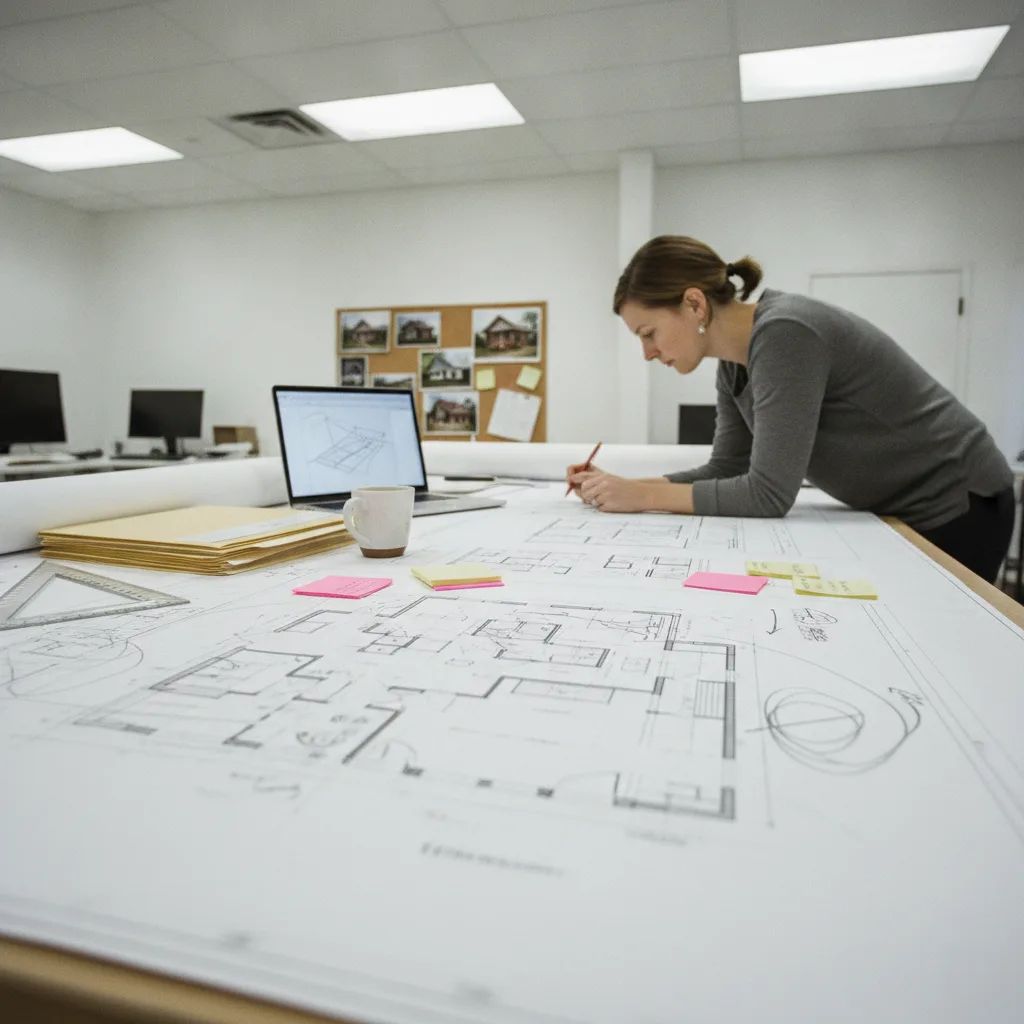
This is where Open Concept Engineering's approach to floor plan design differs from every architectural design firm Clayton homeowners might otherwise engage. We begin with field verification — actual framing conditions documented with LiDAR measuring technology and wall scanning tools that produce an accurate existing condition picture rather than assumptions. That field picture becomes the structural foundation of every floor plan design decision that follows.
From that verified baseline, we design new floor plan layouts that maximize usable space, improve circulation, and create the open connections between rooms that Clayton homeowners consistently want — while accounting for every structural condition the existing building presents. Walls that can come out come out. Walls that need to stay get designed around. Walls that need engineering to remove get the beam and header design work that makes removal possible and permit-ready.
For Clayton's older homes specifically, floor plan design frequently surfaces conditions that require structural resolution before the new layout can be executed. Undersized floor joists that need sister framing before a new layout changes the load distribution. Load bearing walls in locations that conflict with the desired open plan. Foundation conditions that influence where new load can be introduced. These are not obstacles — they are design parameters, and accounting for them at the floor plan stage is infinitely less expensive than discovering them after a contractor has already started framing the new layout.
Our floor plan design deliverables include the architectural layout drawings and the structural design documentation required to permit and build from them — in a single package, from a single firm, produced by a licensed P.E. whose St. Louis County plan review background means the permit submission is built around what the county examiner needs to see. No coordination gap between the architect and the structural engineer. No version mismatch between the design drawings and the permit drawings. One integrated package that moves through review and into construction without the back-and-forth that separate design and engineering engagements consistently produce.
Kitchen remodel design
in Clayton, MO
The kitchen remodel is the most common renovation project in Clayton — and the one most likely to involve load bearing walls, floor system modifications, and structural conditions that the design process cannot responsibly ignore.
The pattern is consistent. A homeowner wants to open the kitchen to the dining room or living area. The wall between those spaces is load bearing. The floor system below may not support an island with the weight of stone countertops and appliances concentrated on new point loads. The existing framing may need reinforcement before a new layout that removes a partition can be safely executed. All of those conditions exist before a single design decision is made — and they all need engineering answers before a kitchen remodel design can be finalized and permitted.
Open Concept Engineering's kitchen remodel design service accounts for all of it. We evaluate existing structural conditions in the field, determine what the kitchen remodel requires structurally, design the beam and header work for any wall removals, evaluate floor system capacity for new load concentrations, and produce a combined architectural and structural design package that the contractor can build from and the permit office can approve.
For older Clayton homes around Wydown, on Forsyth, or along the streets south of Shaw Park, kitchen remodel design carries an additional layer of complexity that newer construction in the western suburbs does not. Stone foundations below may influence where new load can be introduced. Original timber floor joists sized for a 1930s kitchen load may not meet current deflection requirements when a stone tile floor and a heavy island are added. Unreinforced masonry walls may create lateral load considerations that influence how the new kitchen layout is framed.
None of these conditions prevent a beautiful kitchen remodel from happening. They do require an engineer who understands how these structures were built and what they can handle — before the design locks in a layout that the structure cannot support without modifications that should have been designed from the beginning.
Our kitchen remodel design packages are produced and stamped by a licensed P.E., formatted for St. Louis County plan review, and built around first-time permit approval. Contractors working in Clayton's kitchen remodel market bring us in at the design stage specifically because a kitchen permit package that comes back with structural corrections is a project that stops while the redesign happens. The most expensive kitchen remodel delays are always the structural ones that were not anticipated at the design stage. Our job is to make sure they are anticipated — and resolved — before the permit application goes in.

Bathroom renovation design
in Clayton, MO
Bathroom renovation design in Clayton's older homes requires structural engineering input more consistently than any other renovation category — and receives it less often than any other renovation category. The result is a predictable pattern of mid-project discoveries that blow timelines and budgets in ways that a structural evaluation at the design stage would have prevented entirely.
The structural concerns specific to bathroom renovations in Clayton are not exotic. They are consistent and well-understood by anyone who has worked in this housing stock. Floor systems in older Clayton bathrooms were not designed to support the concentrated weight of a freestanding soaking tub, a curbless shower with a thick mortar bed, or the stone tile and heated floor systems that today's bathroom renovations consistently include. The original floor joists in a 1940s Clayton home may span a distance that met the code requirements of their era while falling well short of the deflection limits current standards require for a tile floor installation. A bathroom renovation that does not evaluate the floor system before specifying the finish floor is a renovation that risks cracked tile, failed grout joints, and structural movement that gets diagnosed correctly only after the floor has been opened back up.
Beyond floor system capacity, bathroom renovations in older Clayton homes frequently involve wall reconfigurations that require load bearing analysis. Moving the layout of a master bath, expanding into an adjacent closet, or combining two smaller bathrooms into a single larger space may require removing or relocating walls whose structural function was never obvious from the finished interior. Scott's LiDAR measuring technology and wall scanning tools identify load bearing conditions accurately before demo begins — eliminating the mid-project discovery that stops a bathroom renovation cold while the structural question gets answered.
Our bathroom renovation design service covers the complete structural scope of what the renovation requires. Floor system evaluation and reinforcement design. Load bearing wall analysis for any proposed reconfigurations. Beam and header design for any wall removals. Structural drawings formatted for St. Louis County permit submission. And a design package that gives the contractor an unambiguous set of documents to build from — without field decisions being made about structural conditions that should have been designed before anyone picked up a demo hammer.
For Clayton homeowners planning master bath renovations, the engineering consultation is not an added cost. It is the step that determines whether the renovation executes cleanly or stops mid-demo waiting for answers that should have been in the original design package.
Room addition design
in Clayton, MO
Room addition design is the most structurally complex residential project the architectural designer category encompasses — and the one where the gap between architectural design and structural engineering creates the most expensive problems when it is not closed at the outset.
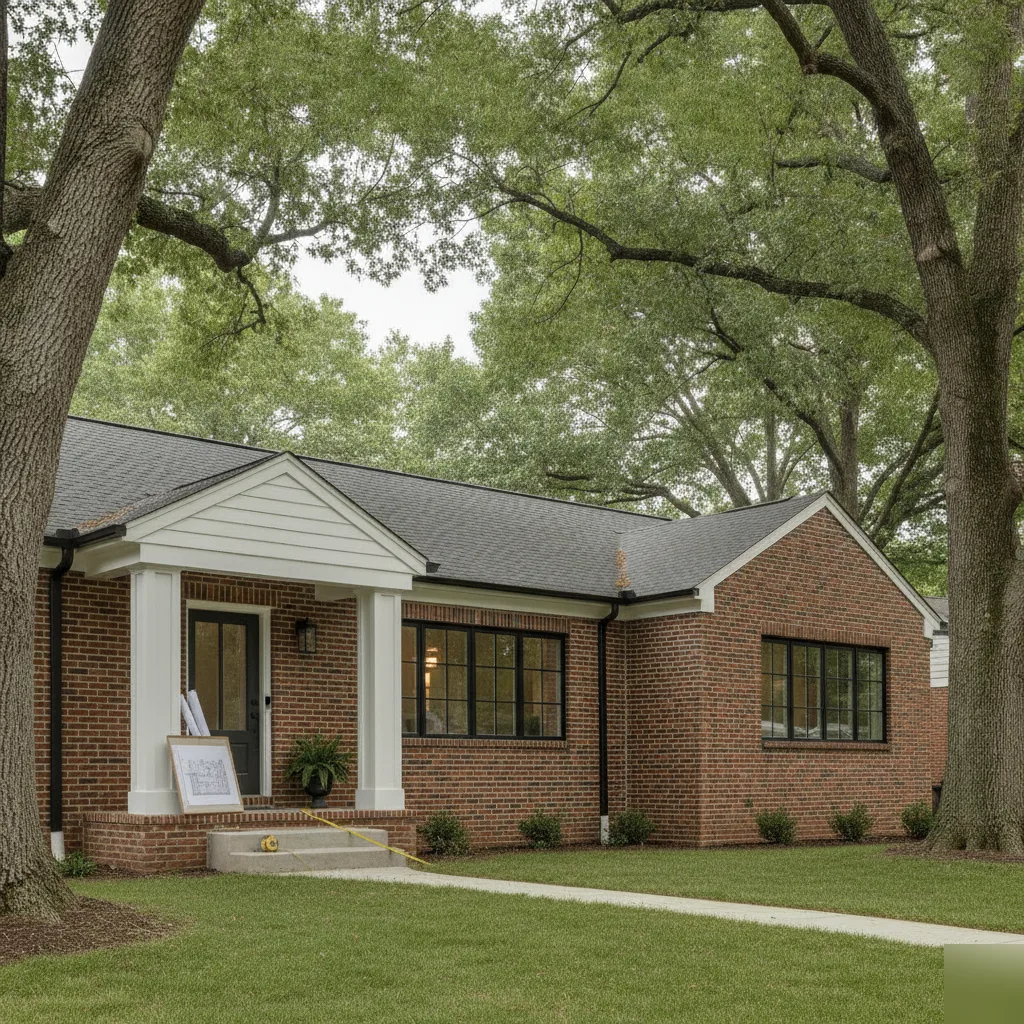
A room addition in Clayton is not just a design exercise. It is a structural intervention that changes how load travels through an existing building, introduces new foundation requirements, alters the lateral load behavior of the structure, and creates a connection between new and existing framing that has to be engineered correctly or it fails — visibly, expensively, and in ways that are difficult and costly to correct after the fact.
Clayton's housing stock makes room addition design more complex than newer construction for reasons that are structural rather than aesthetic. Existing foundations may not have the bearing capacity to support additional load without reinforcement or extension. Original framing systems connected to the new addition must be evaluated for their capacity to accept the new loads the addition introduces. The connection between new and existing framing at the addition's interface with the house is frequently the most structurally critical detail in the entire project — and the one most often underengineered when the design process treats the addition as an architectural exercise rather than a structural one.
Our room addition design service starts where the structural conditions are — in the field, with actual measurements, actual foundation conditions, and actual framing evaluated before a single design decision is committed to. From that field-verified baseline, we design the addition's structural system completely: foundation requirements, floor framing, wall framing, roof structure, and the connection interface with the existing building — all integrated into a single permit-ready package.
Scott's direct experience in St. Louis County plan review means room addition structural packages we produce are formatted around what the county examiner needs to see before issuing a building permit. Room addition permits are among the most document-intensive residential permits St. Louis County processes — the structural package has to be complete, the load path documentation has to be clear, and the foundation design has to reflect actual site conditions rather than generic assumptions. Incomplete room addition permit packages are among the most common sources of permit rejection at the county level. Our packages are built to avoid that outcome from the first submission.
For Clayton homeowners planning additions — whether a primary bedroom suite, a family room, a garage conversion, or a second story addition over an existing footprint — the structural design work that makes the addition possible safely and legally starts with a consultation. Call us before the design gets locked in around structural assumptions that have not been verified by an engineer.
The Open Concept Engineering difference
in Clayton architectural design.
Clayton homeowners working through a renovation or addition project have no shortage of design options. Architects, interior designers, design-build firms, and kitchen and bath specialists all compete for the same projects in this market. What separates Open Concept Engineering from every other design option available is not aesthetic — it is structural.
Every design service we provide is produced by a licensed P.E. with direct experience in St. Louis County plan review. Every floor plan, kitchen layout, bathroom renovation design, and room addition package we produce is structurally verified before it is architecturally finalized. Every permit submission we produce is built around the specific requirements of the St. Louis County review process — because a design that cannot get through the permit office is not a design that can be built.
For Clayton specifically, that combination of structural engineering credentials and local plan review experience addresses the two conditions that most consistently create problems in this market. The first is the structural complexity of older homes that require engineering analysis, not design assumptions. The second is the permitting specificity of St. Louis County that requires documentation built around local review standards, not generic permit templates.
We work with homeowners who are planning renovations, contractors who need a reliable design and engineering partner, and real estate investors who need to understand what a property's floor plan can become before committing to an acquisition. In every case, the deliverable is the same — a design package that is structurally sound, permit-ready, and built to execute without the mid-project discoveries that define renovation projects where the engineering was not done at the design stage.
Serving Clayton and surrounding St. Louis County communities including Richmond Heights, Ladue, University City, Brentwood, Webster Groves, Kirkwood, and the greater St. Louis metro.

Ready to redesign your Clayton home the right way?
Whether you are opening up a floor plan, redesigning a kitchen, planning a bathroom renovation, or adding square footage to your home — the structural engineering and design work that makes it possible starts with a conversation.
217.273.6959Most design consultations turn around within days. Call us before your renovation commits to a layout the structure has never been evaluated to support.