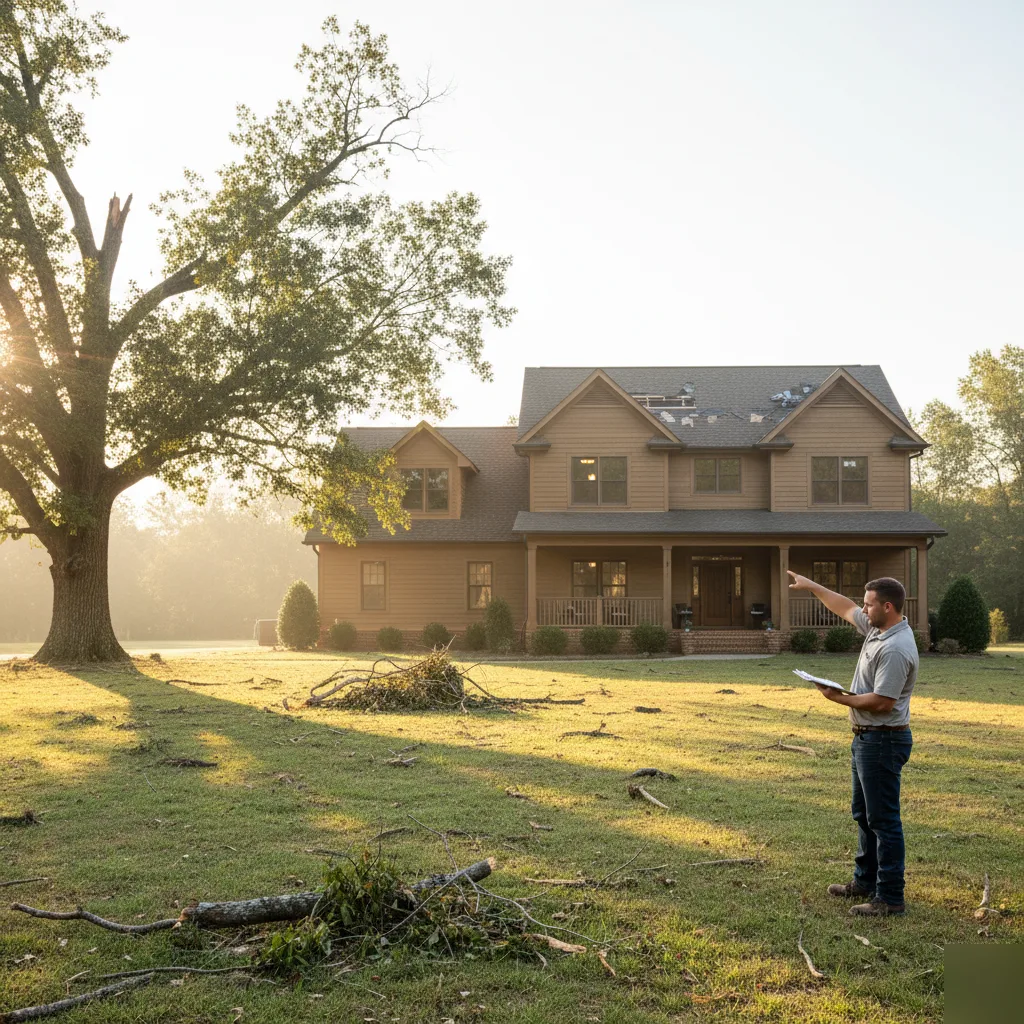
What a Storm and Wind Damage Assessment Actually Covers
Many homeowners believe a storm assessment means someone points out obvious problems around the house. That is not what we do.
A structural wind damage assessment is a full engineering review. We examine every load path in your home, from the roof framing down through the walls and into the foundation. Wind not only rips shingles; it generates uplift forces, lateral loads, and pressure differentials that can shift framing connections hidden from view. In Clayton, many homes date back to the 1930s and 1940s. These older brick and stone structures respond to storm forces differently than modern wood-frame construction. We account for this difference.
Here is what we evaluate during a typical assessment:
- Roof sheathing attachment, truss or rafter connections, and ridge beam integrity
- Exterior wall displacement, brick veneer separation, and mortar joint cracking
- Window and door header deflection caused by racking forces
- Foundation movement or cracking that may have worsened during a storm
- Water intrusion paths that point to envelope breaches in the structure
We document everything with measurements, photos, and structural notes. The damage people often worry about most is not always the real problem. Issues behind walls or under floor systems often require closer attention. A cracked window might be cosmetic. A shifted header above that same window could mean the wall took a serious lateral hit.
Scott's direct experience in St. Louis County plan review means the documentation we produce is recognized by insurance adjusters and local building officials. Our report, stamped by a licensed P.E., provides the precise information insurance adjusters and permit examiners require.
We are not just checking boxes. We tell you what is structurally sound, what needs repair, and what can wait. This clarity lets you move forward with confidence instead of guessing whether your Clayton home is safe to occupy or ready for renovation after a storm.
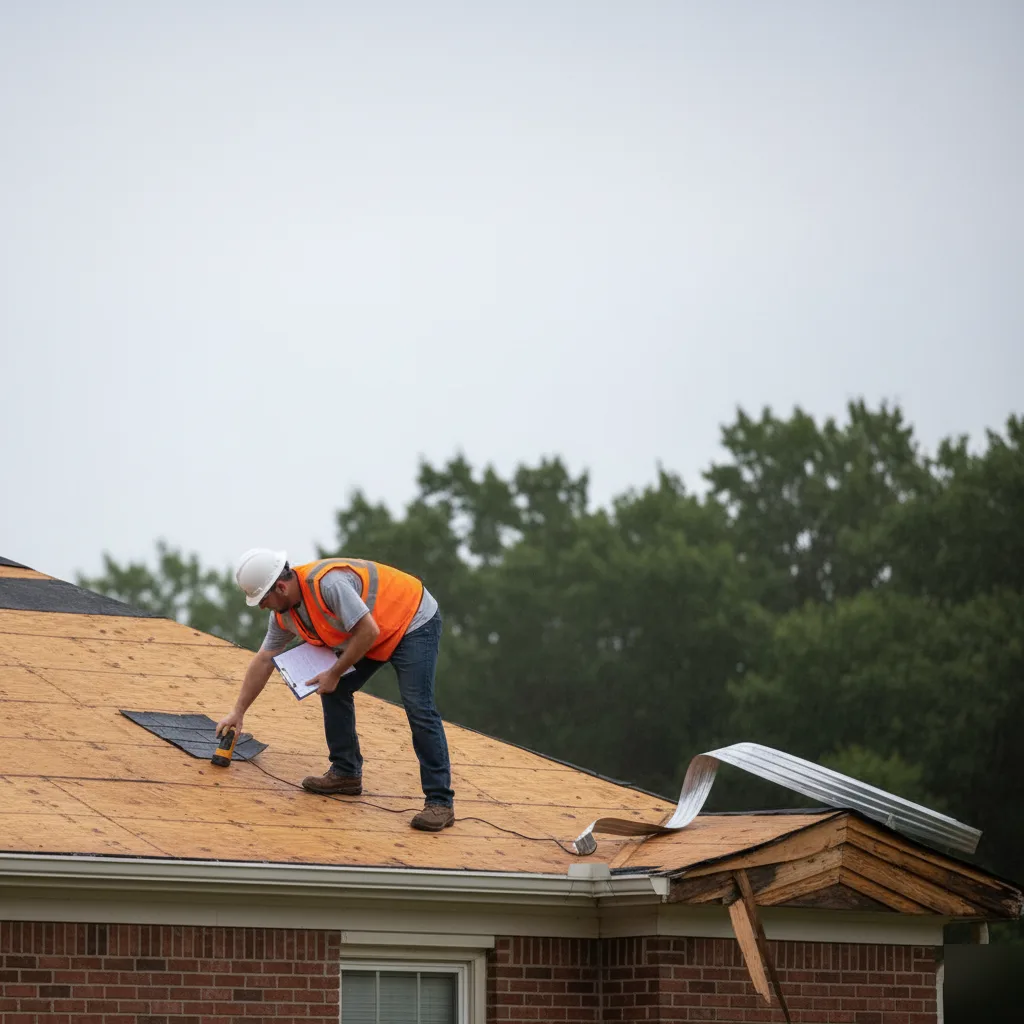
Signs Your Building Needs an Engineering Assessment, Not Just a Visit
We frequently see this scenario in Clayton: A homeowner calls a general repair service after a storm. This service patches what is visible. However, months later, the actual structural problem appears. Cracks spread across a foundation wall, door frames stop closing, or a roof line shifts just enough to notice.
A general repair service fixes surfaces. An engineer finds the cause.
That distinction matters after wind and storm events. Not every bit of damage is obvious, and not every obvious crack is structural. You need someone who can tell the difference. A building consultant Clayton area homeowners rely on sees this every week with older brick homes near Wydown or along the streets south of Shaw Park — those 1930s and 1940s structures have stone foundations and aging mortar joints that respond to wind stress in ways newer builds do not.
So how do you know it is time to call an engineer instead of a general repair service? Watch for these signs:
- New cracks in foundation walls or basement floors that appeared after a storm
- Doors or windows that suddenly stick or will not latch
- Visible separation between brick veneer and the wood framing behind it
- Sagging or uneven roof lines you did not notice before the storm
- Water intrusion in areas that were previously dry
Any one of those can point to structural movement. Structural movement after a storm is not cosmetic. It means loads are shifting in ways the building was not designed to handle. A repair technician might caulk that crack or re-hang that door. But if the root cause is a compromised load path from wind uplift, the problem will keep getting worse.
We approach every engineering assessment in Clayton with a licensed P.E. on site. This is not a formality. The findings carry legal and technical weight for insurance claims, permit applications, and repair design. Scott's direct experience in St. Louis County plan review means if your assessment leads to structural repair drawings, those documents are built around exactly what the examiner needs to see.
Not sure if what you are seeing is structural? That is common. Most people cannot tell by looking, and that is exactly why the engineering assessment exists.
The FEMA Survey Does Not Replace Your Engineering Report
After a major storm hits Clayton, you will likely see FEMA teams doing preliminary damage surveys. Those surveys serve a purpose. They do not tell you what is structurally wrong with your building.
A FEMA survey is a broad-stroke assessment. It categorizes damage levels across a wide area to determine disaster funding eligibility. It is not a structural analysis. The surveyor does not calculate whether your roof connections can handle the next storm. They do not measure deflection in floor joists or check for foundation shifts. That is a completely different job.
What a FEMA Survey Misses
We see this confusion almost every storm season. A homeowner gets their FEMA determination and assumes that is the full picture. Months later, cracks widen or a door frame shifts further out of square. Here is what a FEMA survey typically will not cover:
- Hidden structural damage behind walls or below grade in older stone foundations
- Connection failures at roof-to-wall tie-downs that are not visible from ground level
- Load path continuity through the full structure from roof to foundation
- Whether existing damage was pre-storm or storm-caused
A proper engineering assessment from a licensed P.E. goes element by element. We document the specific failure points, measure what moved, and calculate what it takes to bring the structure back to code. That report carries authority with your insurance adjuster. A FEMA survey does not.
In Clayton's older neighborhoods near Wydown or along Brentwood Boulevard, many homes have brick masonry and original mortar joints from the 1930s and 1940s. Wind damage in these structures can look minor on the surface but compromise the wall's lateral resistance. You need someone who understands load paths in aging construction, not a general damage category on a federal form.
Here is the practical difference: Your insurance claim needs specific engineering documentation to get approved for the full scope of repairs. Understanding how official damage assessment processes are structured and documented helps clarify why a licensed P.E. report carries far more weight than a broad survey. Scott's direct experience in St. Louis County plan review means any structural repair drawings we produce after the assessment are built around exactly what the examiner needs to see. The FEMA report will not get you there.

How the Assessment Process Works, Step by Step
You have damage and need answers quickly. Here is what happens when we arrive:
- Initial contact and scheduling. You call or submit a request. We ask a few questions about what you are seeing and when the storm hit. We schedule most Clayton assessments within 24 to 48 hours.
- On-site visual inspection. We walk the full exterior and interior of your property. Roof lines, fascia, soffits, window frames, foundation walls. We check every surface that could have taken a hit. On older brick homes near Wydown or in the Central Business District, we specifically examine mortar joints and lintels that may have been loosened by wind pressure.
- Structural assessment. This differentiates our service. We are not just looking at cosmetic issues. We check load paths, wall connections, and whether the framing shifted. If a tree came through your roof, we assess whether floor joists or bearing walls were compromised underneath.
- Documentation and photography. We photograph and note every finding with its exact location on the structure. This documentation serves two purposes: it supports your insurance claim and it provides contractors with a clear scope of work.
- Written assessment report. You receive a detailed report from a licensed professional engineer. It covers what is damaged, what is structurally sound, and what needs repair. The report provides the necessary detail for your insurance adjuster and for St. Louis County permitting, should repairs require a permit.
The whole process usually takes a few hours on site. Homeowners in Clayton tell us they expected it to take weeks. It does not.
Consider this: Scott's direct experience in St. Louis County plan review means if your storm damage repairs need structural permit drawings, we can move straight from assessment into design. There is no handoff to another firm, nor a wait for someone else to get up to speed. One team handles the full picture from damage assessment through repair drawings.
Need help figuring out your next step? Give us a call.
Why Clayton's Building Stock Demands a Structural Engineer, Not a General Inspector
A general inspector can tell you a roof looks damaged. Can they calculate whether the remaining structure is safe to occupy? That is the gap that matters after a storm.
Clayton's housing stock is different from newer subdivisions. Many homes here date to the 1930s and 1940s. They were built with materials and methods that do not match modern building codes. These buildings feature stone foundations, unreinforced brick walls, balloon framing, and plaster over wood lath. These older systems respond to wind forces in ways a checklist-based inspection simply will not catch. We see this every week in Clayton and surrounding St. Louis County communities.
Here is what a licensed structural engineer assesses that a general inspector cannot:
- Load path continuity from the roof system down through the walls to the foundation
- Whether wind uplift has compromised the connection between rafters and bearing walls
- Lateral stability of older brick masonry that may have shifted or cracked at mortar joints
- Foundation movement that storm saturation may have triggered in stone or older poured concrete
A general inspector documents what they see on the surface. A structural engineer determines what those visible signs mean for the building's safety and long-term performance. The difference is not subtle. It is the difference between a photo and a diagnosis.
Why Credentials Matter for Insurance and Permits
Insurance adjusters give more weight to a report stamped by a licensed Professional Engineer. So does St. Louis County plan review. If your storm damage leads to repairs that need permits, Scott's direct experience in St. Louis County plan review means your permit drawings are built around exactly what the examiner needs to see. That saves you weeks of back-and-forth.
Homeowners near Shaw Park or along Wydown Boulevard call us after a general inspector told them "it looks fine" but something still feels off. Trust that instinct. Structural damage hides behind intact siding and paint. The only way to find it is with engineering analysis, not a visual walkthrough.
Frequently Asked Questions
How soon after a storm should I schedule a wind damage assessment in Clayton?
You should schedule your assessment within a few days of the storm, not weeks later. Structural conditions can change as moisture gets in and loads continue to shift. In Clayton, older brick homes near Wydown or along the streets south of Shaw Park are especially vulnerable to progressive damage after a wind event. Waiting too long can make it harder to prove what was storm-caused versus pre-existing. The sooner a licensed P.E. documents the damage, the stronger your insurance claim will be.
What should I expect when the engineer arrives at my Clayton home?
Expect a thorough, methodical walkthrough of your entire structure — not just the obvious damage. The engineer will examine your roof framing, wall connections, foundation, and load paths from top to bottom. You will be asked about what you noticed during and after the storm. The visit typically takes a few hours for a standard single-family home. You will receive a stamped report with measurements, photos, and structural notes that insurance adjusters and Clayton building officials recognize.
Can a FEMA survey replace an engineering assessment for my insurance claim?
No, a FEMA survey cannot replace an engineering assessment for your insurance claim. FEMA surveys categorize broad damage levels for disaster funding eligibility — they do not analyze load paths, measure deflection, or identify hidden structural failures. Insurance adjusters need specific documentation of what failed and why. A licensed P.E. report carries the technical and legal authority that a FEMA determination simply does not provide. Do not assume a FEMA determination tells you whether your home is structurally safe to occupy.
Why do older brick homes in Clayton need a different kind of storm assessment?
Older brick and stone homes in Clayton, many built in the 1930s and 1940s, respond to wind forces very differently than modern wood-frame construction. Aging mortar joints, stone foundations, and brick veneer separation are all failure points that a general repair service may miss entirely. Wind uplift and lateral loads can shift framing connections hidden behind masonry walls. An engineer who understands how these older structures carry loads will catch damage that a surface inspection would overlook completely.
What are the warning signs that I need an engineer, not just a repair contractor?
Call an engineer if you see new cracks in your foundation or basement floor after a storm, doors or windows that suddenly stick, visible separation between brick veneer and framing, a sagging roofline, or water intrusion in areas that were previously dry. Any of these can signal structural movement — not just surface damage. A repair contractor can patch what is visible, but if a compromised load path is the root cause, the problem will keep getting worse without an engineering diagnosis first.
How long does it take to receive the assessment report after the inspection?
Most stamped engineering reports are delivered within a few business days of the on-site inspection. The timeline can depend on the complexity of the damage and how many elements require detailed documentation. For Clayton homeowners dealing with insurance deadlines or permit applications, the report is formatted to meet exactly what adjusters and St. Louis County plan examiners need to see. If you have a specific deadline, mention it when you schedule so the process can be prioritized accordingly.