Can a Foundation Inspection Help Before I Sell or Buy a Home in Clayton?
A Foundation Inspection Does More Than Check for Cracks
A foundation inspection isn't just about basement cracks. It's a starting point. We check the whole structural system that holds your home up, from the ground to the roofline.
We look at how your foundation works with the soil, that heavy clay soil we see all over Clayton, and the framing, the load paths, even the drainage. Cracks tell a story. But they're just part of the overall picture.
What a Foundation Inspection Actually Covers
A licensed structural engineer focuses on a few key things during a foundation inspection. Here's what we check:
- Visual assessment of all accessible foundation walls, footings, and slabs for cracking patterns, displacement, or deterioration
- Evaluation of floor levelness using precision instruments to detect settling or heaving
- Review of moisture intrusion signs like efflorescence, staining, or active water seepage
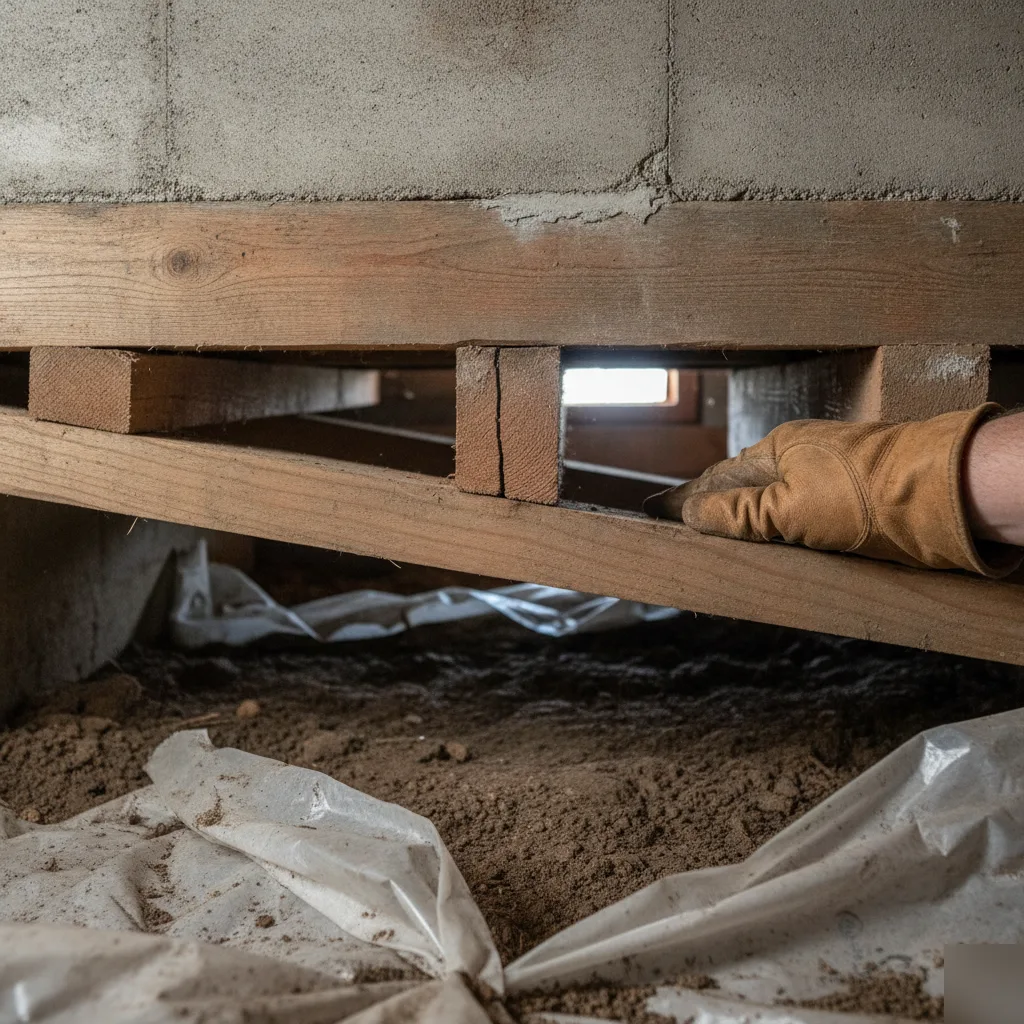
- Assessment of how the foundation connects to the structure above it
- Documentation of any previous repairs and whether they're still performing
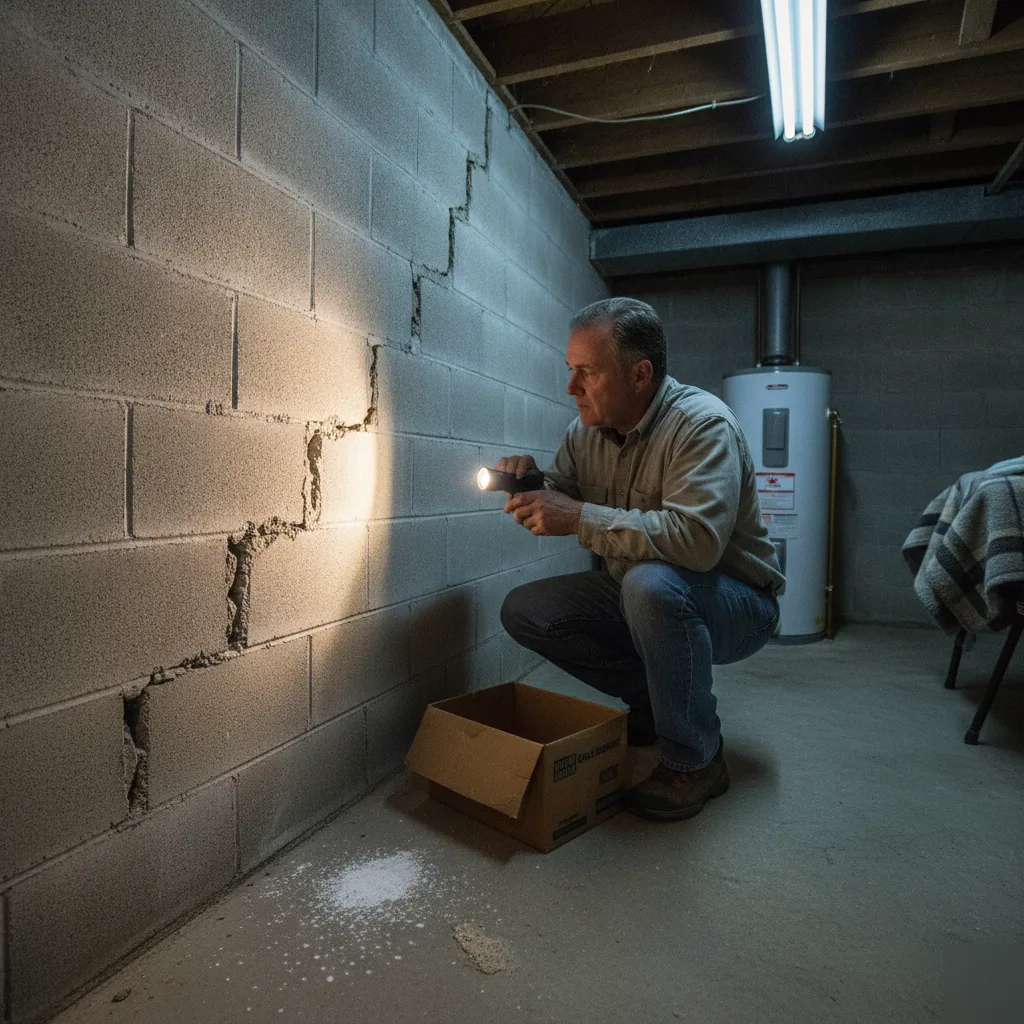
Every item we check builds a bigger picture. A lone stair-step crack in an older Clayton brick wall could be harmless. But if that crack shows up with a sloping floor and doors that suddenly stick, you've got a pattern. That pattern points to active movement, and we see a lot of it in the pre-war homes around here.
Why Clayton Homes Need a Closer Look
A lot of Clayton homes went up in the 1930s and 1940s. These often have stone or old poured concrete foundations. These older materials just don't act the same way as today's reinforced concrete, which is designed with modern load demands in mind.
Stone foundations move. Over time, the mortar connecting those stones breaks down, water gets in, and the whole thing can lose its strength. We see this often in properties near Clayton's central business district, especially in the brick walk-ups bordering Richmond Heights.
Here's a thought most people don't catch until it's too late. Older poured concrete foundations around here often skip the steel reinforcement current building codes demand. That doesn't mean they're collapsing. It means someone with experience needs to check if they're still sound for the loads on them.
What happens if you skip this step before buying?
You could buy a home with a $30,000 foundation problem hiding behind new paint. We've seen it. The American Society of Civil Engineers points out that foundation issues are some of the most expensive structural problems for homes. A foundation inspection before closing gets you the facts. You'll know what to do next, negotiate or walk away.
Sellers Benefit Too
Selling a Clayton home? A pre-listing foundation inspection gets rid of surprises. Buyers in this market are smart. They will get their own pre-purchase structural inspection. If their engineer finds something you missed, trust goes out the window. The deal stalls.
Getting ahead of this is just smarter. A clean foundation inspection report becomes a real selling point. If we find small issues, you can address them on your timeline, which is far better than scrambling during a 10-day inspection window.
We worked with Clayton homeowners who fixed a drainage problem before listing. It turned a possible $15,000 buyer credit into a simple $500 repair, showing the real value of early detection. That's the kind of practical solution a foundation inspection can give you.
This isn't about fear. It's about facts. Buying your first home near Shaw Park, or selling a place you've had for decades, a foundation inspection shows you what's going on underneath. Want to see what a full structural evaluation includes? Check our foundation inspection page. It details our process and what comes in your report.
Clayton's Soil and Housing Stock Make Foundation Inspections a Smart Move
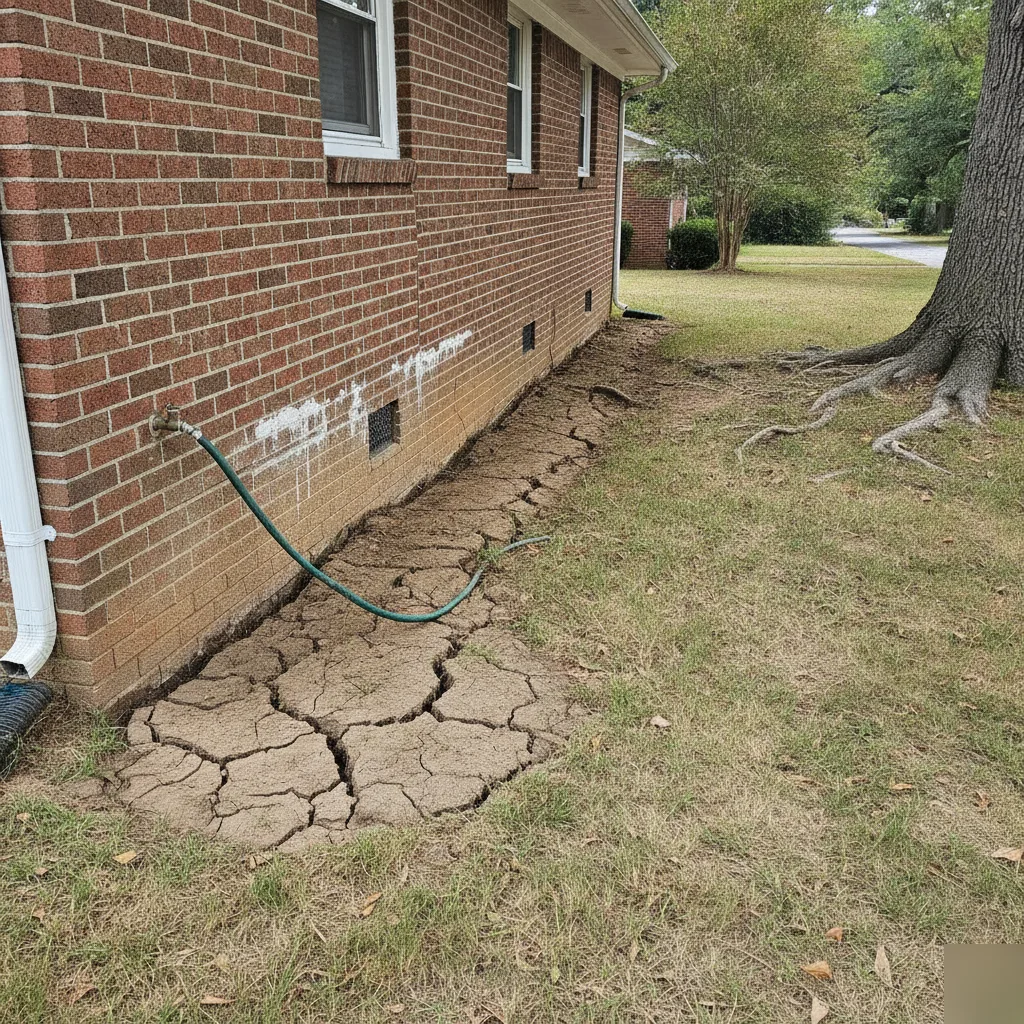
Clayton's soil has a real story to tell, one most people don't know. The ground under our homes? Heavy, expansive clay. This soil swells big when wet, then shrinks when it dries out. The American Society of Civil Engineers says expansive soils actually cause more structural damage every year than floods, hurricanes, and earthquakes combined. (That's a wild statistic, by the way.) Clayton definitely sits in that risk zone.
We see this soil movement all the time. Our foundation inspections across Clayton and St. Louis County communities, think Ladue or University City, show the impact. A hot, dry summer, like the one we just had, pulls moisture from the clay, the soil contracts, and foundation walls can move inward. A wet spring reverses it. Over years, this cycle causes real trouble.
What Clay Soil Does to Older Foundations
Most Clayton homes went up between the 1920s and 1950s. A lot of them sit on stone or older poured concrete foundations. These older materials just don't act the same way as today's reinforced concrete, which is designed with modern load demands in mind. Cracks form. Mortar joints fall apart. Floors start to slope.
Here's the tricky part. A crack in a 1940s stone foundation doesn't automatically mean it's failing. But it's not always nothing, either; sometimes it's an indicator of deeper, unseen issues requiring expert attention. This is why a foundation inspection matters before you buy or sell. You need a licensed P.E. who can read the evidence. We tell you what's actually happening, not just what looks bad.
Common signs we find during Clayton foundation inspections are:
- Stair-step cracks in brick exterior walls, especially near corners
- Horizontal cracking along basement walls from soil pressure
- Gaps between window frames and surrounding masonry
- Uneven or bouncy floors on the main level above the foundation
- Doors that stick or won't latch properly in older bedrooms
We see some of these issues in almost every pre-purchase structural inspection we do on homes near Wydown or in the neighborhoods heading toward Richmond Heights. The housing stock is old. We expect some things. But how bad it is varies wildly. Every house is different.
Why Clayton's Building Stock Needs Extra Attention
Clayton's real estate market is always moving. Homes sell fast. Many buyers plan major renovations before they even close on a house, like open concept kitchens or room additions. All these projects put new stress on an old foundation. Understanding resilient residential construction standards can help you see why older homes may not meet today's structural expectations.
So, here's the question people often miss: Can your existing foundation handle the changes you want?
A foundation inspection answers that question. It saves you real money on design work up front. We worked with Clayton buyers who wanted to remove a load bearing wall for an open-concept kitchen, only to discover a settled foundation during our on-site evaluation. Catching that early saved them from a much bigger problem mid-construction.
Sellers get something out of this too. A clean foundation inspection report gets rid of buyer doubts. It helps negotiations move faster. It cuts down on last-minute deal changes. In a market like Clayton, where homes hold real value, that report pays for itself, fast.
Expansive clay soil and old construction together? That makes Clayton a place where skipping a foundation inspection is a real gamble. Not every house has issues. But enough do. Checking first just makes sense.
Buying or selling in Clayton? A foundation inspection gives you facts. You get them before emotions and tight deadlines take over. And Scott's direct experience in St. Louis County plan review means your inspection report talks the same language as the local permitting offices. If repairs or structural engineering work come next, your path forward is already clear.
Buyers Gain Real Negotiating Power With an Engineering Report
Here's what many Clayton buyers miss until it's too late. A general home inspection just flags problems. A foundation inspection from a licensed structural engineer, on the other hand, tells you exactly how serious those problems actually are. This difference changes everything for your negotiations.
Think of it this way. You're buying a 1940s brick home near Shaw Park (we see so many of these). Your home inspector writes "cracks in foundation walls." Useful, yes. Vague, absolutely. The seller's agent can wave it off. "All old homes have cracks," they'll say. And they're not wrong, but what cracks actually matter?
A licensed structural engineer's foundation inspection answers that question. We use data. We measure crack widths. We document patterns. We check for lateral displacement in walls. We figure out if the movement is old and settled, or active and getting worse. The report gives you specific findings, with measurements. Not guesses. Just numbers.
What an Engineering Report Gives You That a Home Inspection Can't
A home inspector covers everything. They check the roof, plumbing, HVAC, and structure, all in one visit to give a broad overview. A structural engineer? We only look at one thing: is the building sound? That narrow focus creates a totally different kind of report.
- Precise crack measurements and movement analysis that show whether a foundation issue is cosmetic or structural
- A professional opinion on repair scope, so you know what you're actually asking the seller to fix
- A stamped report from a licensed P.E. that carries legal and technical weight in negotiations
- Documentation that satisfies lender requirements if the bank flags structural concerns
We see this play out constantly in Clayton's hot real estate market. Buyers with an engineer-stamped report get taken seriously at the negotiation table. Sellers respond much differently to a stamped document from a licensed P.E. than to a vague point in a general inspection.
A Real Scenario We See Often
A buyer finds a home in Clayton they really love. It has an older stone foundation, common in the 1930s–40s builds here. The home inspector writes, "Recommend further evaluation by a structural engineer." So, they call us. We do a foundation inspection before their contingency runs out, it's always a race against the clock.
We find stepped cracking in the stone mortar joints. Our measurement shows 3/16-inch displacement at the worst spot, revealing a pattern consistent with soil settlement on one corner. It's fixable. But it's a real issue.
Now you, the buyer, have options. You can ask the seller to handle repairs before closing. You can negotiate a credit based on the real repair scope, giving you clear leverage at the negotiation table. Or you can just walk away. You dodged a real problem. Without our report, you'd be guessing.
And here's what people often miss. Our engineering report often pays for itself, many times over, in negotiated credits. A vague concern gets you nowhere. A specific, documented finding, with a P.E. stamp behind it, gets real action from the seller.
Scott's direct experience in St. Louis County plan review means your permit drawings are built exactly how the examiner needs them to be for fast approval. That same background also applies to our foundation inspection reports. The documentation is clear. It's specific. It's structured the way real professionals expect to see it.
Buying a home in Clayton? Or a surrounding St. Louis County community like Richmond Heights or Ladue? Getting a pre-purchase structural inspection before your contingency runs out is one of the smartest things you can do. It protects your investment. You get facts to negotiate with.
Ready for a clear picture of a home's foundation before you commit? Visit our foundation inspection page. Learn how the process works. Schedule your inspection today.

Frequently Asked Questions
Does a foundation inspection really matter before buying a home in Clayton?
Yes, it matters a lot — especially here. Clayton's heavy clay soil expands and contracts with every wet and dry season. That movement puts real stress on older foundations. Many homes near the central business district and around Shaw Park were built in the 1930s and 1940s. A foundation inspection tells you what's actually happening below the surface before you sign anything. Without it, you could buy a home with a serious structural problem hiding behind fresh paint.
What's a common mistake buyers make about foundation cracks in Clayton homes?
The most common mistake is thinking one crack means one problem — or no cracks means no problem. A single stair-step crack in an older brick wall might be harmless on its own. But if you also see sloping floors and sticking doors, that's a pattern pointing to active movement. A crack you can't see is just as dangerous. A licensed structural engineer looks at the whole picture, not just what's visible on the surface.
How does Clayton's clay soil affect older stone and concrete foundations?
Clayton's clay soil swells when wet and shrinks when dry. That cycle repeats every season. Over years, it pushes and pulls on foundation walls. Older stone foundations are especially vulnerable because the mortar between stones breaks down over time. Water gets in, strength goes down. The American Society of Civil Engineers notes that expansive soils cause more structural damage annually than floods, hurricanes, and earthquakes combined.
Should sellers in Clayton get a foundation inspection before listing?
Yes — getting one before you list is a smart move. Buyers will order their own structural inspection. If their engineer finds something you didn't know about, the deal can fall apart fast. A pre-listing inspection gives you time to fix small issues on your schedule. One drainage fix we helped a Clayton homeowner address before listing turned a potential $15,000 buyer credit into a $500 repair. That's the kind of outcome early action makes possible.
What signs during a home tour suggest I should request a foundation inspection in Clayton?
Watch for stair-step cracks in brick exterior walls, especially near corners. Look for doors that stick or won't latch in older bedrooms. Check for gaps between window frames and surrounding masonry. Bouncy or uneven floors on the main level are another red flag. We see these signs regularly in pre-purchase inspections on homes near Wydown and heading toward Richmond Heights. Any one of these alone might be minor. Together, they're worth a closer look from a licensed P.E.
What does a foundation inspection actually include, and where can I learn more?
A foundation inspection covers the full structural system — not just cracks. A licensed engineer checks foundation walls, footings, and slabs. They measure floor levelness, look for moisture intrusion, and review how the foundation connects to the framing above. They also document any past repairs and whether those repairs are still holding. If you want to see the full process and what comes in the report, our foundation inspection page walks through every step in detail.