Signs Your Property Needs Retaining Wall Design in Clayton
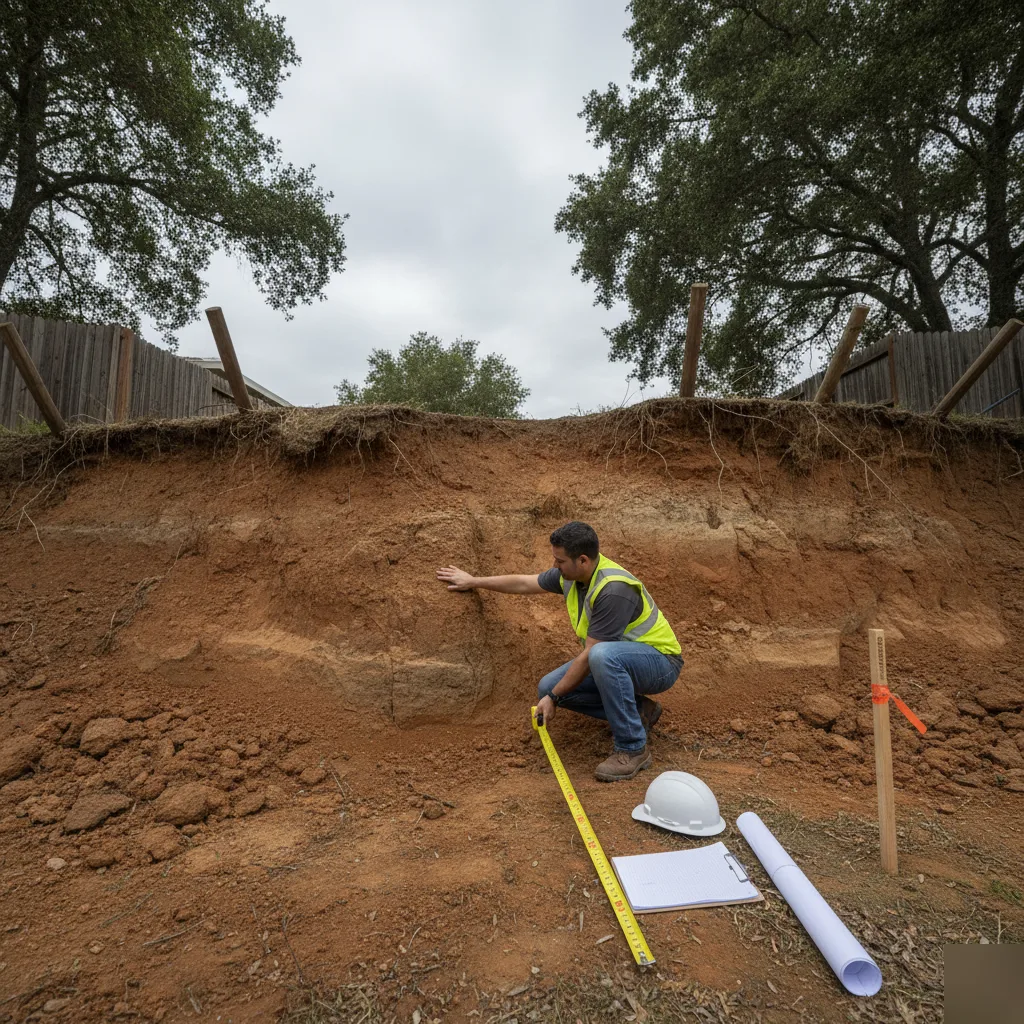
Maybe you've noticed soil creeping down your backyard slope after a heavy rain. Or there's a crack running through your patio that wasn't there last spring. These are the kinds of issues Clayton homeowners contact us about every week.
While not every slope requires a retaining wall, some problems worsen quickly if left unaddressed.
Here's what to watch for on your property:
- Soil shifting or sliding downhill after storms, especially on graded lots near Wydown or along the older streets in downtown Clayton
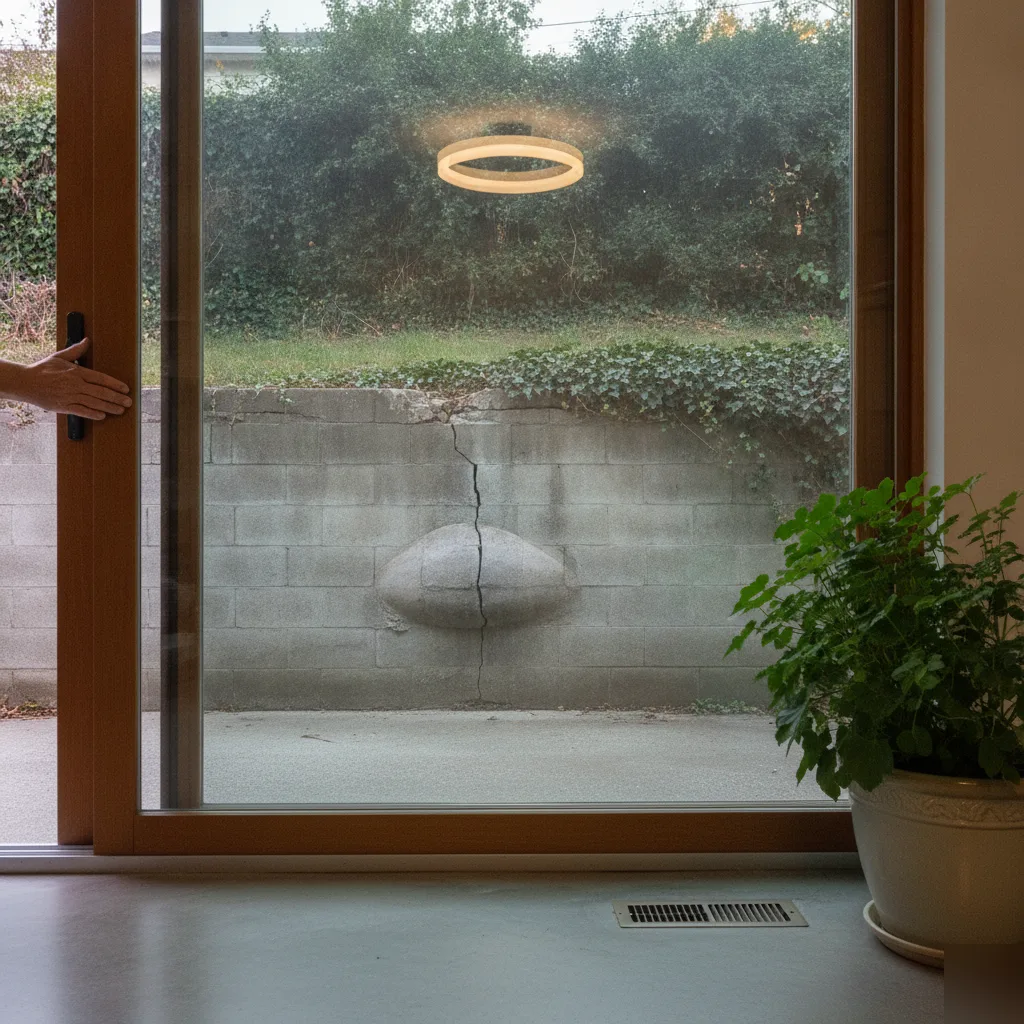
- Leaning or bulging in an existing wall that used to be straight
- Water pooling against your foundation because the grade around your home has changed over time
- Cracks in walkways, driveways, or patios caused by lateral earth pressure pushing from an unretained slope
- Erosion exposing tree roots or utility lines on hillside sections of your yard
Most homeowners watch these problems for a year or more before calling. This is common, but soil movement does not stop on its own. Gravity continues to pull it.
Many properties in Clayton sit on sloped terrain with older grading that predates modern drainage standards. Homes from the 1930s and 1940s often have lots where the original grade has shifted over decades. Mature tree root systems can make soil behavior unpredictable. A retaining wall design accounts for all these forces. This ensures the solution lasts.
A common scenario we see: a homeowner in Clayton plans a home addition or patio expansion on a sloped lot. The county tells them they will need engineered retaining wall drawings before St. Louis County will issue a permit. This is where we come in. Scott has handled St. Louis County plan review directly. Your permit drawings are built around exactly what the examiner needs to see.
If any of these signs look familiar, contact us before the next significant rain.
What Goes Into a Structural Retaining Wall Design
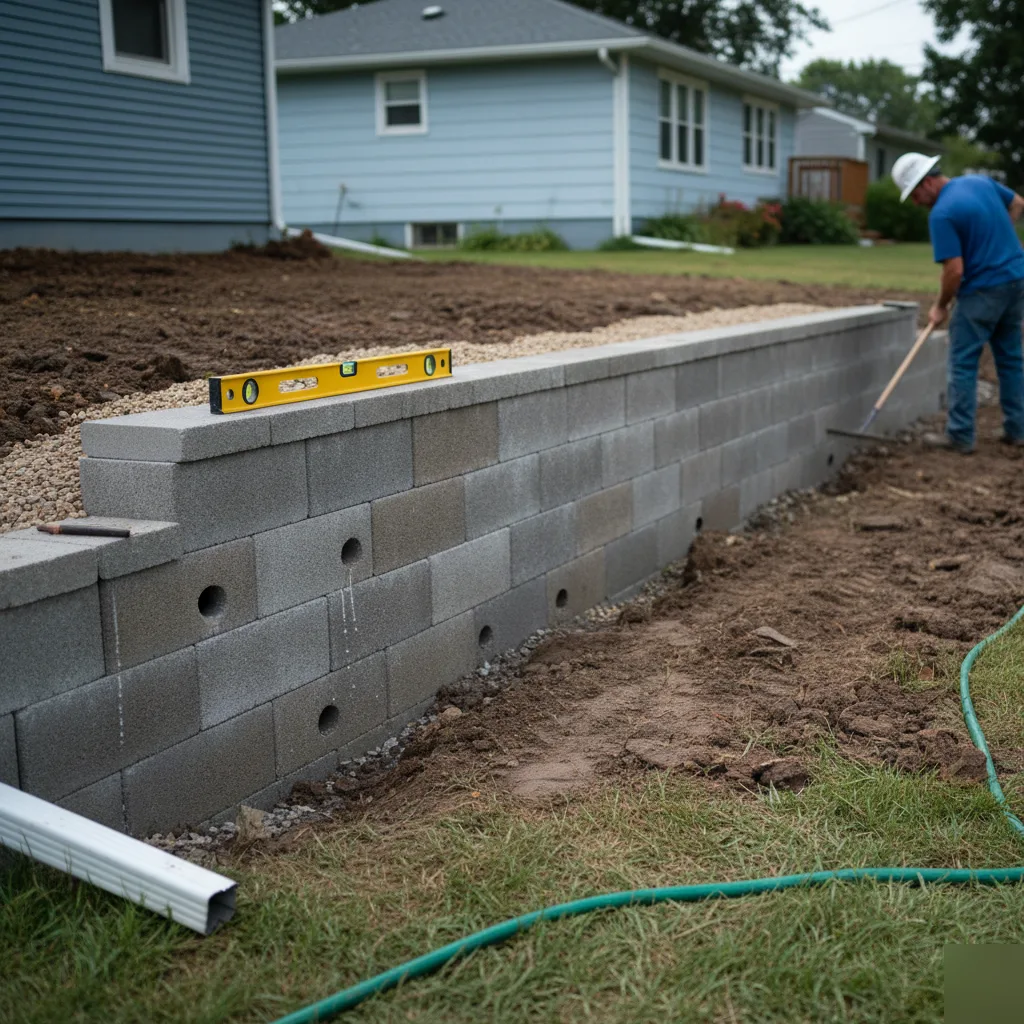
Most people picture a retaining wall as just stacked stone or concrete blocks. That's the finished product. The design behind it is where the real work happens.
Every retaining wall design begins with an understanding of the soil. Clayton properties, especially those near Wydown or along older streets south of Forsyth, often sit on expansive clay soils. Clay holds water, swells, and pushes. If your wall is not designed to handle that lateral earth pressure, it will lean, crack, or fail within a few years. We frequently observe this in walls built without engineering.
A proper structural retaining wall design accounts for several factors before a single block gets placed:
- Soil type and drainage conditions at the specific site
- Wall height and surcharge loads like driveways, patios, or structures above
- Foundation depth and footing size based on bearing capacity
- Reinforcement details including rebar placement, geogrid layers, or tiebacks
- Drainage design behind the wall to relieve hydrostatic pressure
Most walls we evaluate failed due to ignored drainage. Water builds up behind the wall, pressure increases, the wall tips forward. Proper design eliminates this problem before construction.
We also calculate overturning, sliding, and bearing capacity. These are the three failure modes of any retaining wall face. The calculations are not complicated for a licensed P.E., but skipping them is expensive. According to the American Society of Civil Engineers, retaining walls over four feet typically require engineered drawings. In Clayton, St. Louis County permitting enforces this. Scott has worked directly with St. Louis County plan review. Your permit drawings are built around exactly what the examiner needs to see.
We provide a sealed set of structural drawings. Clear dimensions. Reinforcement schedules. Drainage specs. Everything you need to build it right, everything the county needs to approve it quickly.
How Retaining Wall Design Works: Step by Step
Most people view a retaining wall as simply stacked blocks or poured concrete. This is not the case. A wall holding back soil is a structural element. Its design must account for lateral earth pressure, drainage, surcharge loads, and the specific soil conditions on your Clayton lot.
Here's how we move through a retaining wall design from start to finish:
- Site evaluation. We look at the slope, measure the grade change, and note elements above and below the wall. A driveway above? A foundation nearby? These loads alter the design.
- Soil assessment. Clay-heavy soils are common across Clayton and surrounding St. Louis County communities. This is important because clay expands when wet and creates higher lateral pressure against the wall face.
- Engineering analysis. We run structural calculations for overturning, sliding, and bearing capacity. Each wall is checked against current building code requirements.
- Drainage planning. This is where most DIY walls fail. Without proper drainage behind the wall, hydrostatic pressure builds up quickly. We specify drain tile, gravel backfill, and weep holes based on your specific conditions.
- Permit drawings. Scott has worked directly inside St. Louis County plan review. Your permit drawings are built around exactly what the examiner needs to see. This prevents back-and-forth revisions or resubmittals.
We see walls fail every week because someone skipped step three or four. A homeowner near Wydown calls because their landscaper built a four-foot block wall with no footing and no drain system. Now it leans six inches, threatening the patio above it.
That's an expensive fix. The design process exists to prevent it.
Any retaining wall over four feet in Clayton typically requires engineered drawings and a permit. Even walls under that height may need engineering if they support a slope near a structure or carry a surcharge load from a parking area.
The entire process typically takes a few days from site visit to finished drawings. We move efficiently, aligning with county expectations.

Engineer-Stamped Drawings: The Deliverable Clayton's Permit Counter Requires
A retaining wall design, no matter how good on paper, will not be reviewed by Clayton's permit office without a licensed P.E. stamp.
St. Louis County requires engineer-stamped structural drawings for retaining walls over four feet in height. This measurement is taken from the bottom of the footing to the top of the wall. Many Clayton properties, especially those along sloped lots near Wydown or in the older neighborhoods off Brentwood Boulevard, often require walls exceeding that threshold. For these, a stamped drawing is not optional. It is required for permit approval.
What Goes Into a Permit-Ready Drawing Set
Our structural drawings for retaining walls include everything the plan examiner needs to approve your project on the first pass:
- A site plan showing the wall's location relative to property lines, structures, and drainage paths
- Cross-section details with footing dimensions, steel reinforcement schedules, and drain placement
- Material specifications for concrete, block, or stone veneer
- Soil load assumptions based on site conditions and surcharge from nearby structures or driveways
- A P.E. stamp and signature certifying the design meets current building code
We see homeowners in Clayton try to submit sketches or manufacturer spec sheets. The permit office rejects these submissions. The missing piece is always a structural calculation set with a professional engineer's stamp validating it.
Scott has worked directly with St. Louis County plan review. Your permit drawings are built around exactly what the examiner needs to see. This background saves time on revision cycles and reduces waiting periods.
A critical benefit is legal protection. If a contractor builds the wall and something goes wrong, your engineer-stamped design is your documentation that the project was designed to code. Without this, you face legal exposure.
Need help getting your retaining wall permitted in Clayton? Contact us.
Retaining Wall Failures Caused by Skipping Proper Design
We get calls about failing retaining walls frequently in Clayton. The pattern is consistent. Someone built a wall without engineered drawings. It appeared stable for a year or two. Then it began leaning, cracking, or bulging outward.
This is not simply bad luck. This is what happens when soil pressure, drainage, and structural loads are not calculated before construction starts.
Here's what we see most often when retaining wall design gets skipped:
- Walls tipping forward because there's no proper footing depth for the soil type
- Block or stone walls cracking at the base from hydrostatic pressure behind them
- Timber walls rotting and bowing out within three to five years
- Drainage failures that push saturated clay soil directly into the back of the wall
- Walls built too tall for their thickness with no reinforcement or geogrid
Clayton's soil conditions exacerbate these issues. Much of the area sits on expansive clay that swells when wet and shrinks when dry. According to the American Society of Civil Engineers, expansive soils cause billions in structural damage annually across the U.S. The swelling pressure is significant. It acts regardless of the wall's surface appearance.
We've inspected walls near Wydown less than four years old, already showing 2 to 3 inches of lateral movement. The original design did not account for the surcharge load from a driveway sitting six feet behind the wall. Overturning or sliding resistance calculations were omitted. Consequently, the wall shifted.
A common frustration for homeowners is that fixing a failed wall costs more than proper design from the outset. This means paying for demolition, soil remediation, new materials, and the engineering that should have been included initially.
A failed wall presents more than just a financial problem; it is also a safety hazard. A wall holding back several tons of earth on a sloped lot can collapse suddenly. If the slope is near a walkway, patio, or neighbor's property line, there are also liability concerns.
Clayton falls under St. Louis County jurisdiction. Walls over a certain height require permitted structural drawings. Scott has worked directly with St. Louis County plan review. Your permit drawings are built around exactly what the examiner needs to see. Skipping this step does not save time — it creates a larger problem later. That is why design engineer services Clayton contractors and homeowners bring us in before the first wall comes down, not after.
Frequently Asked Questions
Do I need a permit for a retaining wall in Clayton?
Yes, most retaining walls over four feet in Clayton require a permit and engineer-stamped drawings. St. Louis County enforces this during plan review. Even walls under four feet may need engineering if they sit near a foundation or support a driveway above. Scott has worked directly with St. Louis County plan review, so your drawings are built around exactly what the examiner needs to see — no back-and-forth revisions.
Why do so many retaining walls in Clayton lean or crack after just a few years?
Most failures come down to two skipped steps: no proper footing and no drainage behind the wall. Clayton's clay-heavy soils hold water, swell, and push hard against the wall face. Without drain tile and gravel backfill, hydrostatic pressure builds up fast. We see this regularly — a landscaper builds a block wall near Wydown with no drain system, and within two or three years it leans several inches toward the patio above it.
How long does the retaining wall design process take?
The full process — from site visit to finished permit drawings — typically takes a few days. We start with a site evaluation, assess your soil conditions, run structural calculations, and plan the drainage system before producing a sealed drawing set. Getting this done quickly matters when a county permit is holding up your home addition or patio project.
What information do you need from me before the site visit?
You don't need much ready before we arrive. It helps to know the approximate height of the slope and whether there's a driveway, patio, or structure sitting above the wall area. Those surcharge loads change the design. If you have any existing survey documents or prior permit records for your Clayton property, bring those out — they can speed things up, but they're not required.
Can soil movement on my Clayton lot fix itself over time?
No — soil movement does not stop on its own. Gravity keeps pulling it downhill. Many Clayton properties sit on older graded lots, some from the 1930s and 1940s, where the original grade has shifted over decades. Mature tree roots make soil behavior even less predictable. Watching a problem for a season or two is common, but the slope continues moving the whole time. Calling before the next heavy rain is always the better choice.