Do I Need a Missouri PE Stamp for My Chesterfield Permit Drawings?

What a Missouri PE Stamp Confirms
A Missouri PE stamp is a licensed engineer's legal certification that your structural drawings meet building codes and are safe to build. It's not decoration on your plans. Chesterfield's permit office treats unstamped structural drawings as incomplete submittals, which means your project stalls before it starts.
A PE stamp is more than ink on paper. It means a licensed Professional Engineer has put their name, license number, and legal liability on every sheet of your Chesterfield structural permit drawings. The Missouri Board for Architects, Professional Engineers, Professional Land Surveyors, and Professional Landscape Architects requires that any engineer who stamps drawings hold an active Missouri PE license. A license from Illinois, Kansas, or anywhere else simply doesn't count.
Here's what that stamp actually confirms about your project.
- The structural calculations behind your drawings follow current building codes, typically the International Residential Code or International Building Code adopted by Chesterfield.
- The beam sizes, connections, foundation details, and load paths shown on the plans can handle the loads your home or building will carry.
- A licensed Missouri PE personally reviewed the work and accepts professional responsibility for its accuracy.
- The drawings are detailed enough for a contractor to build from and for a building inspector to verify in the field.
That last point trips people up more than you'd expect. The team regularly sees submittals rejected not because the engineering is wrong, but because the drawings don't show enough detail for the inspector to check the work. A proper PE-stamped set includes connection details, member sizes, bearing conditions, and notes referencing specific code sections. Chesterfield plan reviewers look for all of it.
Think of it this way: your contractor builds the project, and the inspector checks it. The PE stamp is what tells both of them exactly what to build and what to verify. Without it, neither one has a reliable reference point.
This is where most permit delays in Chesterfield actually begin. A homeowner submits drawings a contractor sketched up, or plans that came from an online drafting service. They look professional enough on the surface. But without a Missouri PE stamp, the permit office flags the submittal as incomplete, and suddenly you're weeks behind schedule tracking down an engineer, getting calculations done, and resubmitting.
One scenario the team runs into often involves load-bearing wall removal. A homeowner hires a contractor who says the wall can come out, no problem. The contractor sketches a simple plan with a new beam. But Chesterfield's permit office wants stamped structural calculations proving that beam actually works for the span and loads involved. A contractor's sketch alone won't satisfy that.
So the PE stamp isn't a formality tacked onto the process. It's the legal mechanism that moves your project from idea to approved permit. The engineer who stamps your drawings is telling the City of Chesterfield the project is safe to build as shown, and that carries real weight, exactly what the reviewer needs before signing off.

Why the Same Project Can Get Different Stamp Answers
You asked your contractor if you need a PE stamp. They said no. Then the permit office said maybe. Now you're reading this article. That's the most common version of this story the team hears from Chesterfield homeowners.
The reason you're getting different answers is fairly simple: it depends on what you're building. A PE stamp requirement isn't a blanket rule that applies the same way to every project. It shifts based on the scope of work, the structural impact, and how your local jurisdiction interprets the code.
Here's what drives that variation.
- Structural vs. non-structural scope. A kitchen remodel that moves plumbing but leaves bearing walls alone is a different animal than one that removes a wall between the kitchen and dining room. The second almost always needs stamped structural drawings.
- Project size and occupancy type. Single-family homes under a certain square footage sometimes get exceptions, but a home addition over 500 square feet or a multi-family project in Chesterfield will trigger the PE stamp requirement nearly every time.
- Municipality-level interpretation. Chesterfield operates under St. Louis County building codes, but the city's plan reviewers have their own expectations. What passes in an unincorporated area of the county might get flagged at the Chesterfield permit desk.
- Inspector discretion at intake. Some plan reviewers will accept contractor-drawn plans for minor work. Others will send that same set back and ask for an engineer's stamp before they'll even begin review. There's no public checklist that predicts which way it goes.
This is where most permit delays start. A homeowner submits drawings without a PE stamp, assuming the project is small enough to skip it. Two weeks later, the plans come back with a note requesting stamped structural calculations, and the timeline has shifted by a month or more.
The team sees this pattern constantly with load-bearing wall removal projects. A contractor tells the homeowner the beam size is fine. The permit office disagrees and wants a licensed engineer to confirm it with calculations and a stamp. That back-and-forth costs time you didn't budget for.
And it's not just walls. Floor system changes, new openings in foundations, deck structures over a certain height, staircase modifications that affect framing, all of these can land in a gray zone where one person says you need a stamp and another says you don't.
The safest approach is to ask the Chesterfield building department directly before you submit. Tell them exactly what you're changing. But even then, the answer you get at the counter can shift once a plan reviewer looks at the actual drawings. If your project touches anything structural, getting a Missouri PE stamp upfront saves you from that guessing game entirely.
One detail worth knowing: Missouri requires that the engineer who stamps the drawings hold an active PE license in the state. An out-of-state stamp won't work. According to the Missouri Board for Architects, Professional Engineers, Professional Land Surveyors, and Professional Landscape Architects, only engineers licensed in Missouri can seal documents for projects built here.

Project-by-Project: Where a Stamp Usually Comes Up
Not every home project in Chesterfield triggers the PE stamp requirement. But the ones that do tend to be exactly the projects homeowners assume they can handle with a contractor's sketch. Here's where the team sees it come up most often.
Load-bearing wall removal is the single most common reason a Chesterfield homeowner needs a Missouri PE stamp. You want to open up the kitchen to the living room. Your contractor says it's probably load-bearing. The city says prove it. That means structural calculations, a beam and header design, and stamped drawings showing the new load path from roof to foundation. No stamp, no permit.
Home additions are the second big one. Any time you're adding square footage, you're changing the structural footprint of your home. Chesterfield's building department wants to see that the new foundation ties into the existing one correctly, that floor joists are sized right, and that the roof framing works. A PE stamp on those structural permit drawings tells the plan reviewer someone took responsibility for the math.
Then there are the projects that catch people off guard.
- Deck replacements over a certain height or size often need stamped drawings, especially if the deck connects to the house structure.
- Basement finishing projects that involve cutting into foundation walls or adding egress windows can trigger a PE stamp requirement.
- Retaining walls over four feet tall almost always need structural engineering and a stamp in St. Louis County municipalities.
- Staircase modifications that change the structural support path require stamped plans showing the new framing.
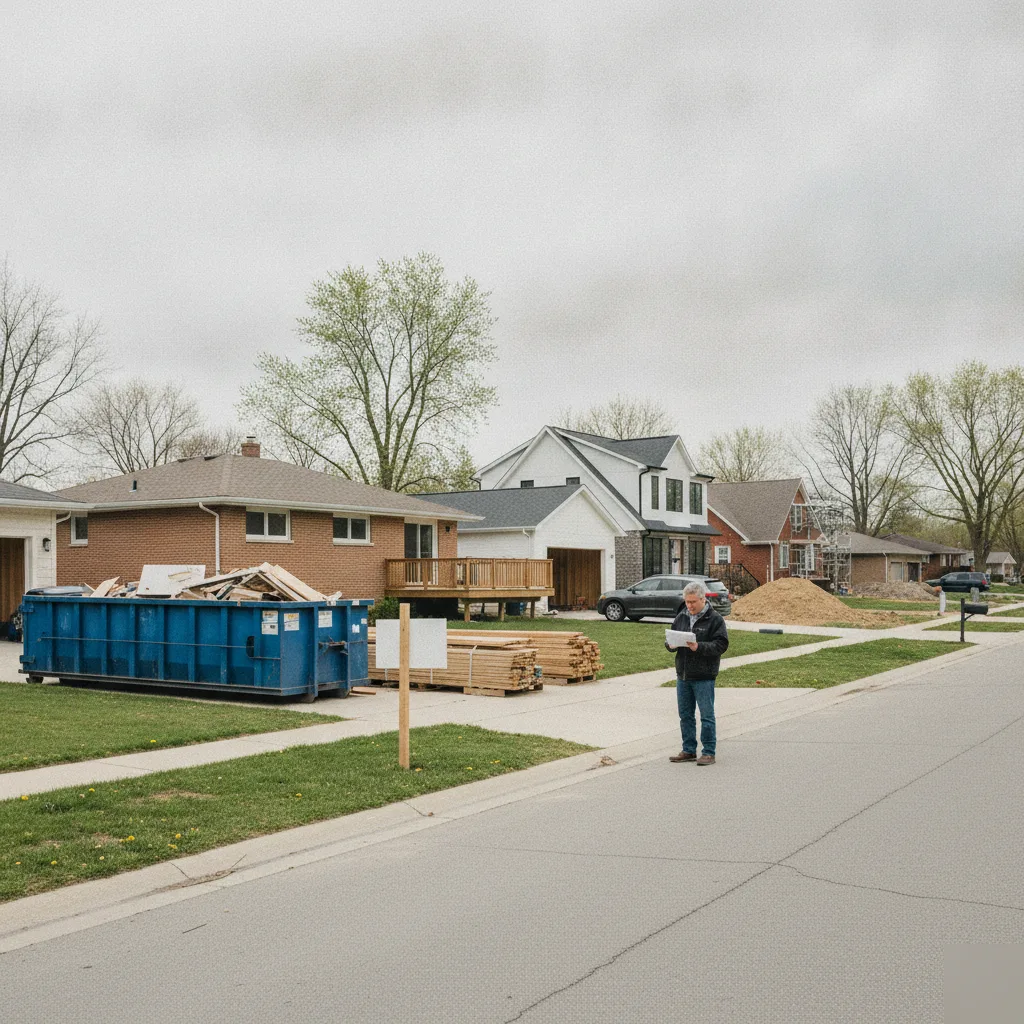
The team regularly works with Chesterfield homeowners who started a permit application for what seemed like a simple remodel, then got a call back from the building department asking for engineered drawings. That's usually the moment they realize the project is bigger than they thought, at least on paper.
One scenario that comes up a lot involves kitchen remodels. The homeowner doesn't think they're doing anything structural, but the contractor wants to move a wall, and that wall sits directly under a bearing point from the second floor. Suddenly you need a structural engineer to design the replacement beam and produce stamped structural drawings for permits. This is where most permits get held up.
Here's something most people don't realize until it's too late: if your project needs a PE stamp and you submit plans without one, the city won't simply ask you to add it later. They reject the application outright. You lose your place in the review queue, you lose time, and your contractor sits idle.
Projects that typically skip the PE stamp include cosmetic renovations like new cabinets, flooring, or paint. Simple window replacements in existing openings usually don't need one either. But the moment you change a load path or alter the building's structure, the stamp becomes part of the process.
If you're not sure whether your project falls into stamp territory, the fastest way to find out is to get a structural engineer involved early. The team can review your scope and tell you exactly what Chesterfield's building department will ask for before you submit anything. For homeowners who want to understand the licensing behind a PE stamp, it helps to know how licensed engineers earn the credentials that make their certification valid.
Frequently Asked Questions
How do I know if my project needs a stamped drawing instead of a contractor sketch?
You need a stamped drawing any time your project touches load-bearing walls, beams, foundations, or floor framing. A contractor sketch works fine for cosmetic changes like new flooring or paint. But if you're removing a wall, adding an opening, or changing how loads travel through the structure, Chesterfield's permit office wants a licensed engineer's calculations behind it. When in doubt, ask before you submit, and consider getting your structural drawings professionally stamped from the start.
What's the biggest misconception homeowners have about PE stamps?
The biggest misconception is that a professional-looking drawing means it's approved. Many homeowners assume plans from an online drafting service or a contractor's CAD program are good enough because they look detailed. They aren't, unless a licensed Missouri engineer has personally reviewed and stamped them. Chesterfield's plan reviewers check for the license number and signature, not just clean lines. Without that stamp, the submittal gets flagged as incomplete no matter how polished it looks.
Does Chesterfield handle PE stamp requirements differently than nearby St. Louis County areas?
Chesterfield follows St. Louis County building codes, but its plan reviewers apply their own judgment at intake. Plans that pass in an unincorporated part of the county can still get sent back at the Chesterfield permit desk. This happens because reviewer discretion varies by jurisdiction, even under the same code. If you're working across city lines, don't assume approval in one place guarantees approval in another. It's worth confirming Chesterfield's specific expectations before you submit.
Can I get my drawings stamped after a contractor already draws them, or do I need an engineer from the start?
You can get existing drawings reviewed and stamped later, but starting with an engineer usually saves time. When a licensed Missouri PE builds the drawings from scratch, they include the connection details, beam sizes, and code references Chesterfield inspectors look for. Adding a stamp to someone else's sketch afterward often means redoing large parts of the plan anyway. If your project involves structural changes, loop in an engineer before the design is finalized.
Why did my contractor say I don't need a stamp, but the permit office disagreed?
This happens because stamp requirements depend on project scope, not a fixed rule contractors can memorize. A contractor may see a simple beam swap and assume it's minor. The Chesterfield permit office sees a change in load path and wants stamped calculations proving the new beam works. This gap between contractor opinion and code requirement is the most common source of permit delays. Getting Missouri PE stamped drawings upfront closes that gap before it costs you weeks.
What kinds of home projects in Chesterfield most often get flagged for missing a PE stamp?
Load-bearing wall removal, deck structures over a certain height, foundation openings, and staircase changes get flagged most often. These projects shift how weight moves through your home, which is exactly what a Chesterfield plan reviewer checks first. Homeowners frequently assume these are small jobs that skip the stamp requirement, then get surprised by a resubmittal request. If your project touches any of these areas, plan on needing stamped structural drawings from the beginning.