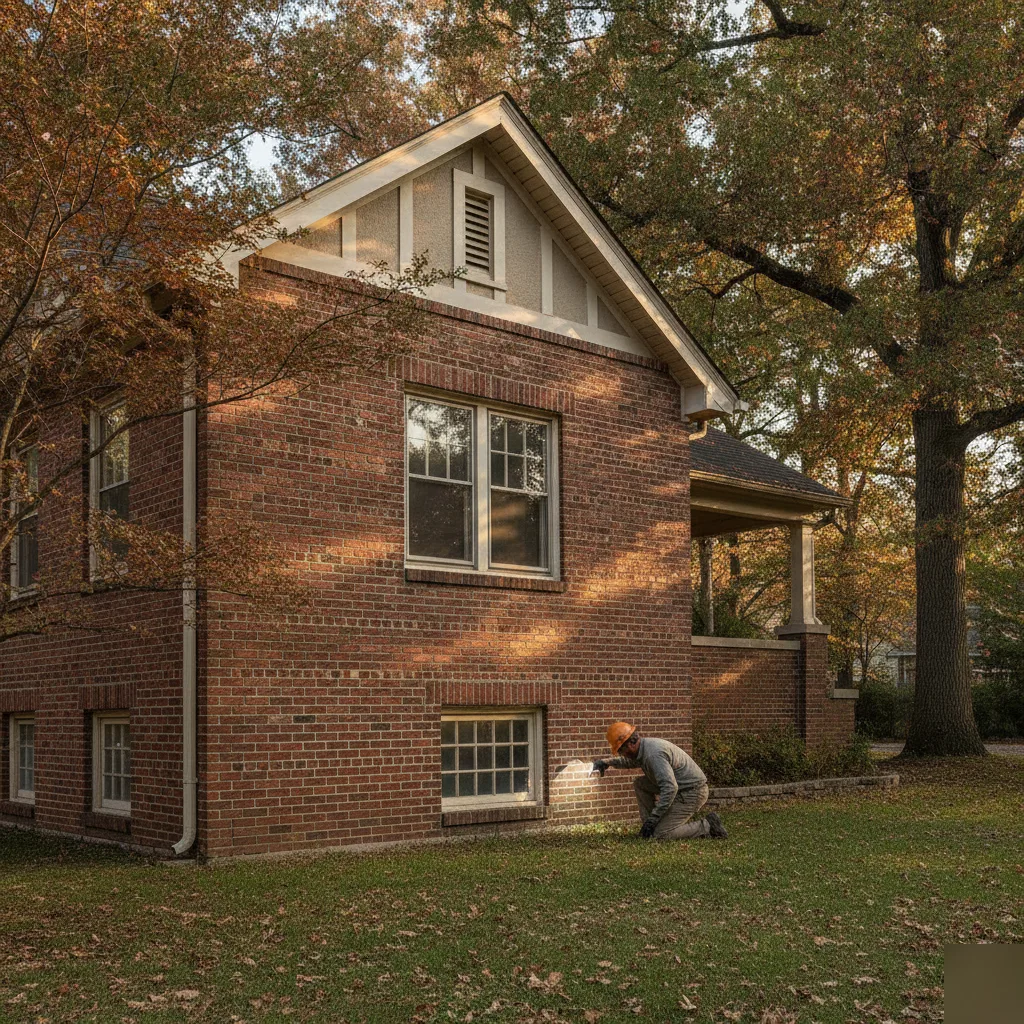
What Does a Basement Structural Inspection Include?
Many imagine a basement inspection involves someone with a flashlight simply looking in the dark. That's not how a proper inspection works.
A basement structural inspection provides an engineering analysis of the systems supporting your home from below. We examine how forces from your roof, walls, and structure transfer through the foundation and into the ground. Each crack, deflection, and moisture issue tells a story about your structure's condition. During a typical inspection in Clayton, we check:
- Foundation walls. This includes horizontal cracks, bowing, step cracking in block or stone, and signs of lateral soil pressure.
- Support beams and columns. Many older Clayton homes have undersized wood beams or columns with deteriorated footings. We look at spans, sizing, and bearing.
- Floor joists and subfloor framing. Many floor problems upstairs trace back to issues below. We look for notches, rot, termite damage, and connection problems.
- The slab or basement floor. Movement, settlement, or cracking can signal a water problem or ground movement.
- Moisture and drainage clues. Discoloration, efflorescence, or evidence of water entry is always a concern, even when it looks minor at first.
A 1930s stone foundation behaves differently from a 1960s concrete foundation, even in the same Clayton neighborhood. Our inspection accounts for these differences. Clients contact us when they notice a new crack or a dip in their floor. Some issues are minor. Others represent a slow-moving problem that has developed over years.
A basement structural inspection from Open Concept Engineering provides more than just a checklist. You receive a formal report from a licensed P.E. Our report explains findings in plain terms. It identifies what needs immediate action and notes what can wait. Our lead engineer, Scott's, direct experience in St. Louis County plan review means your permit drawings are built around exactly what the examiner needs to see. This helps a smooth path if your inspection leads to permit-required repair work.
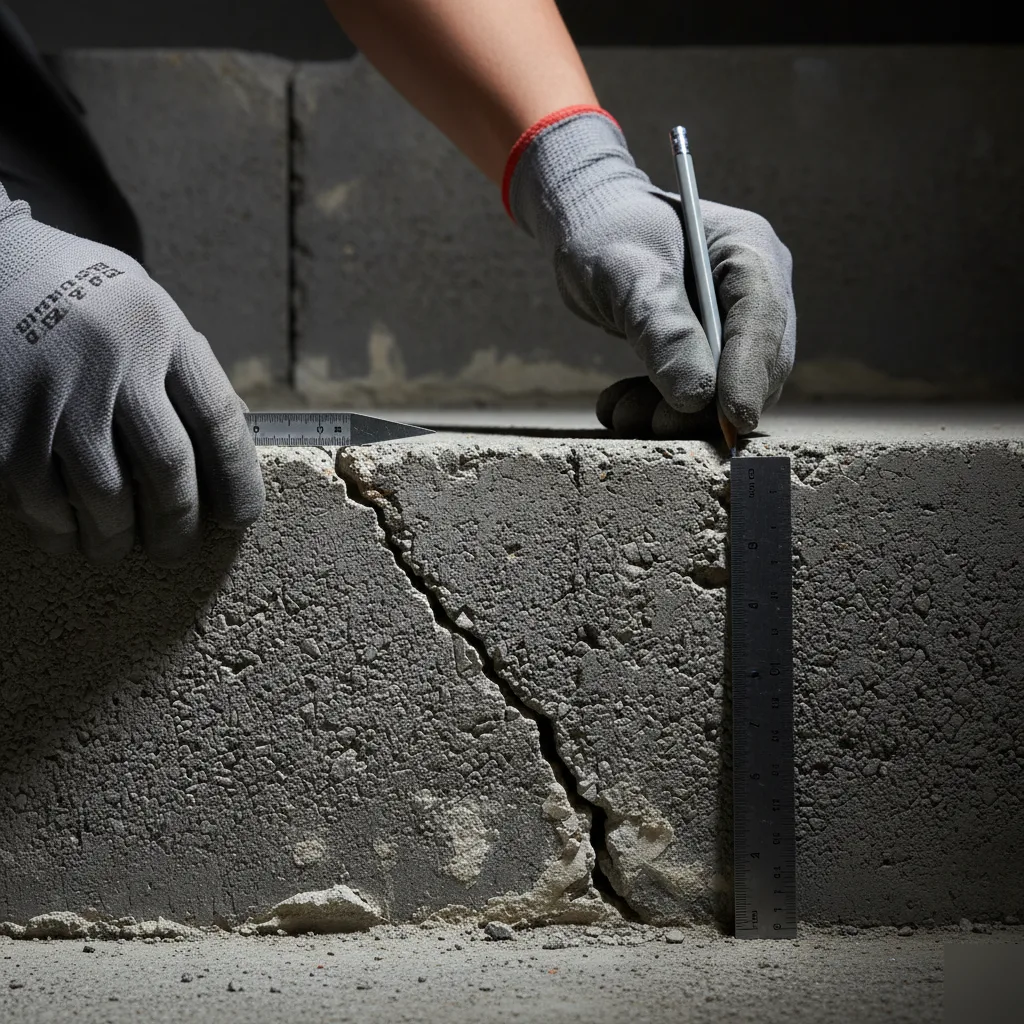
What Are Some Red Flags of a Structural Problem in Your Basement?
Most homeowners do not spend much time examining their basement walls. Warning signs of a structural problem can remain unnoticed for years before they become serious. Certain crack patterns are common in older Clayton homes, especially those built in the 1930s and 1940s with stone or early poured-concrete foundations.
Watch for these:
- Horizontal cracks in block or poured walls. These cracks suggest soil pressure against the wall. Small vertical hairline cracks from initial settling are common. Horizontal ones are not.
- Stair-step cracking in mortar joints. This is typical in older clay brick or stone foundations here in Clayton. The crack travels through mortar courses like stair treads, showing the wall is shifting.
- Bowing or leaning walls. Even a half-inch bow matters. Test for this with a long level or a straight 2x4 held flat against the wall.
- Sticking doors and windows on the floor above. If the framing shifts below, door and window frames go out of alignment above.
- White efflorescence around wall cracks. These mineral salt deposits indicate moisture migrating from outside. This water usually worsens the underlying problem.
Near Wydown or in the Clayton Central Business District, we often see this scenario: a homeowner monitors a crack for years, then it widens suddenly after a wet spring. This is not a coincidence. The soil is likely moving faster.
Not every basement crack is structural. Many are normal. The key is identifying which ones matter. A professional inspection helps determine this.
Ignoring a warning sign will not make it disappear. A small crack today can become a costly wall failure in a few years. If you observe any of these signs in your Clayton home, a professional assessment now can prevent larger expenses and issues later.
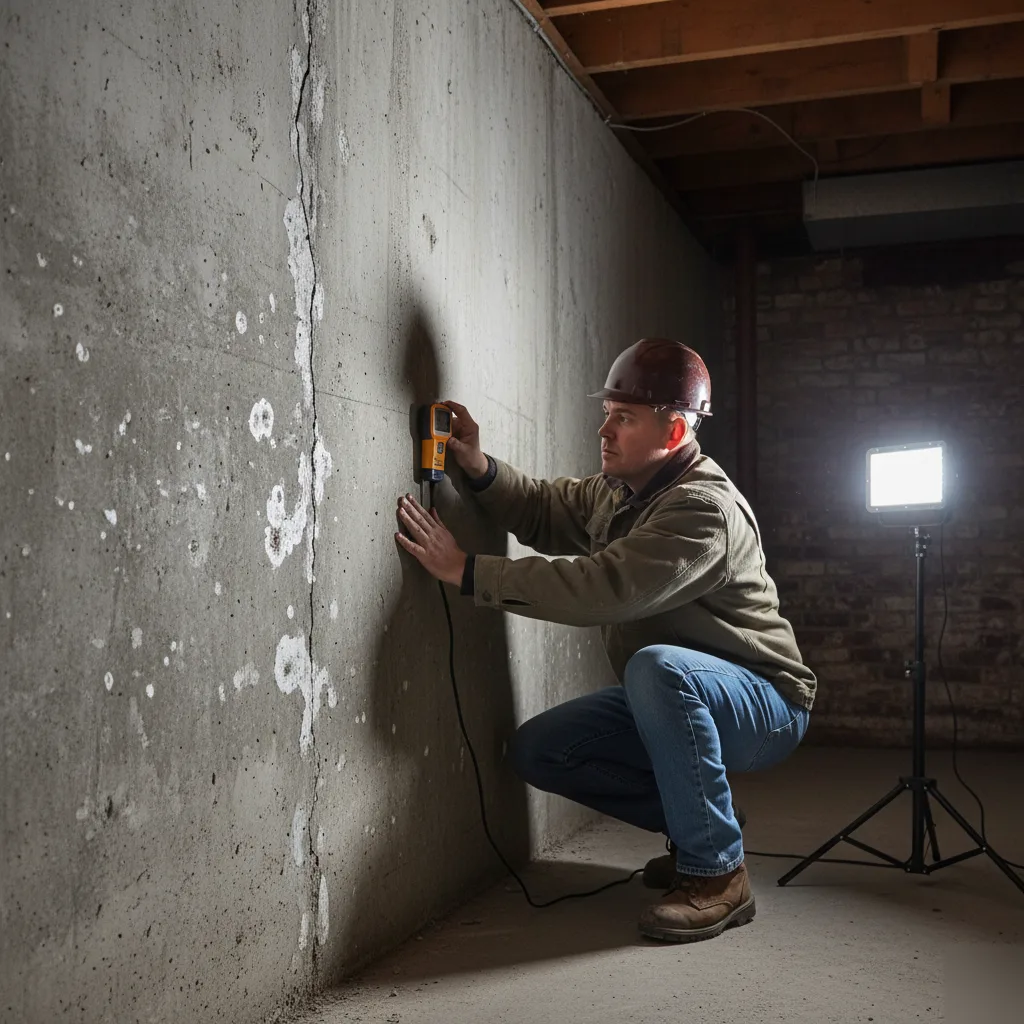
What Is the Difference Between a Structural Engineer and a Home Inspector?
There is a significant difference between a home inspector noting a cracked basement wall and a licensed structural engineer explaining why it cracked, how it cracked, and the steps needed to fix it.
Clayton homeowners often call us after a home inspector flags a crack as a "possible structural issue" or notes it "appears to be" structural. This is where a home inspector's scope ends, and a structural engineer's begins.
Here's what a structural engineer offers that a home inspector cannot:
- A Professional Engineer (P.E.) license allows us to sign and seal structural drawings and certify a building structure in legal proceedings.
- We have deep knowledge of load paths, soil mechanics, and construction materials, built over years of engineering practice.
- We provide structural calculations that St. Louis County requires during plan review for construction projects.
- Our team has familiarity with building code requirements as they apply to construction types common in St. Louis.
Home inspectors perform valuable work and cover many systems quickly. They are generalists. In one afternoon, they evaluate the roof, HVAC, plumbing, electrical, and structural elements. A structural engineer focusing on a basement, however, examines the system's capacity, wall integrity, and foundation settlement.
Why This Distinction Matters in Clayton, MO
Many homes near Wydown and adjacent to Brentwood were built in the 1930s or 1940s. Their foundations are often stone or early poured concrete. A home inspector might describe the condition as simply 'deteriorating.' A structural engineer, however, measures actual deflection, calculates remaining capacity, and proposes specific repairs.
When buying an older home, a seller's inspector report often won't satisfy your lender. It may also not give you the confidence you need. A P.E. stamp on the findings is what lending institutions typically require.
Our lead engineer Scott's direct experience in St. Louis County plan review means your permit drawings are built around exactly what the examiner needs to see. This knowledge avoids multiple rounds of revision and weeks of waiting. First submittal acceptance is not an accident — it is what home inspection and engineering Clayton projects get when the engineer behind the report has worked inside that same review process.
Why Older Structures in Clayton Pose Different Structural Challenges
Most basements we assess in Clayton were built between the 1920s and 1950s. Construction at that time relied on materials and methods no longer used in new homes. This includes stone foundations, poured concrete without rebar, and lime-based mortar instead of cement. These were not construction errors; they were the standards of the time. After eighty or ninety years, these older systems perform differently than modern poured concrete walls.
This situation is common in neighborhoods near Wydown and along streets south of Shaw Park. Homeowners often notice horizontal cracks forming in foundation walls, mortar crumbling between stones, or an upstairs door that will not latch. In older Clayton homes, these are often symptoms of basement structural problems.
Here's why those homes present a different situation than newer construction:
- Lime mortar degrades over time, so older foundations can settle and shift unevenly.
- Unreinforced poured concrete walls are far more likely to crack or fail as soil pressure builds.
- Clay drain tiles around older foundations may have crumbled, increasing hydrostatic pressure against basement walls.
- Floor joists may rest directly on a stone ledge rather than on proper sill plates, concentrating stress in one area.
A structural inspection on a 1940s Clayton home differs from reviewing a 2005 home in a new subdivision. Our approach must account for older building systems. A crack in rebar-reinforced concrete tells one story. The same crack in unreinforced 1932 concrete tells another.
The remodeling factor also plays a role. The Clayton real estate market is active. We often inspect basements where a prior owner finished the space, covering concrete or masonry with drywall. This drywall hides cracks, stains, and bowing. Our job is to find what lies behind it. Our lead engineer, Scott's, direct experience in St. Louis County plan review means your permit drawings are built around exactly what the examiner needs to see. This gives him insight into what older foundations can and cannot handle when new conditions are added above. Examples include removing a load-bearing wall for an open kitchen or adding a room to a 90-year-old house.
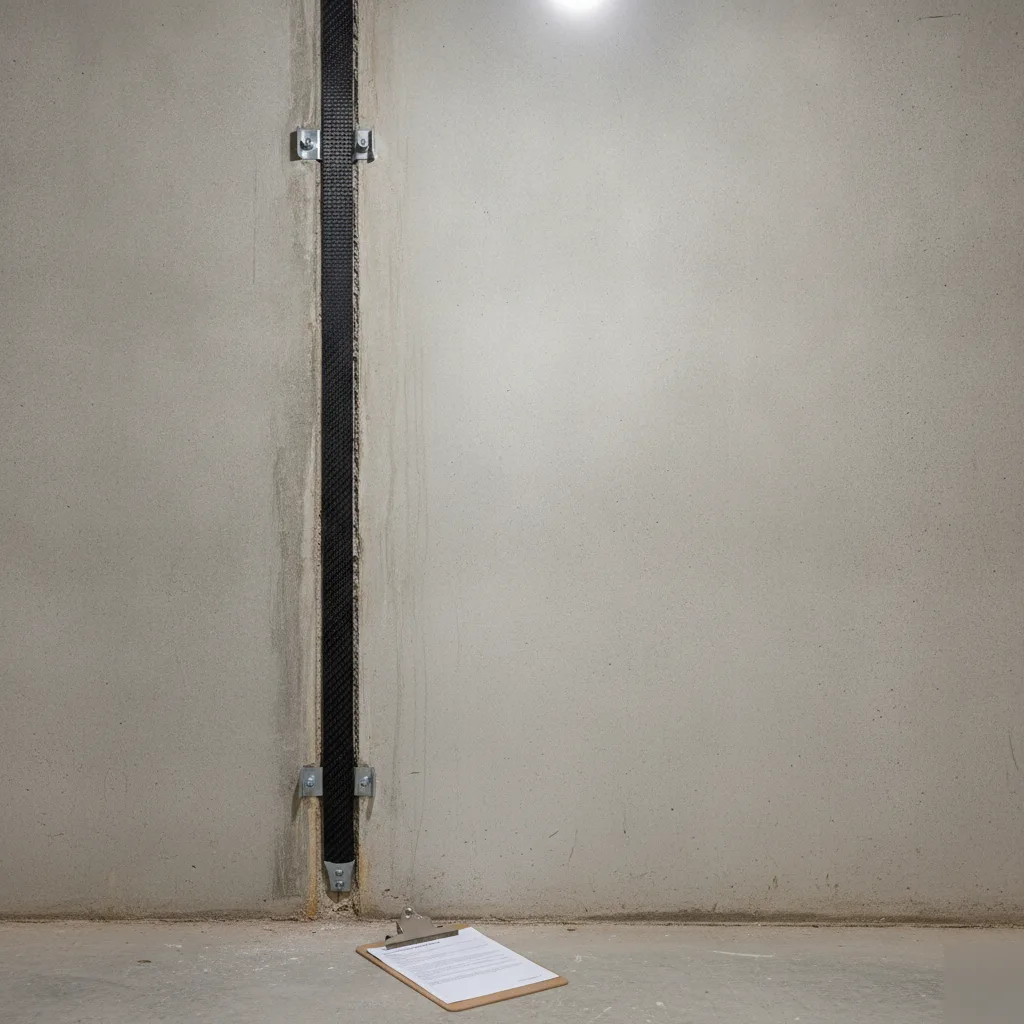
How to Prepare for Your Basement Inspection
You do not need to do much, but a few simple steps help your appointment run efficiently.
First, clear a path. We need to see the foundation walls, floor slab, and any support columns or beam lines. Please move stored items and boxes at least three feet away from the walls. If your basement is finished with carpet or wall coverings, inform us ahead of time. We cannot inspect what we cannot see. The same applies to utility rooms and closets that may require access.
A few quick things to check before your appointment:
- Move storage boxes away from foundation walls. All wall surfaces should be visible.
- Confirm basement light bulbs are working. We bring lighting equipment, but functional lights speed the process.
- Confirm utility rooms, crawlspaces, and similar areas have a clear path for access.
- If you have spotted something specific, do not cover it or make repairs before the inspection.
- Gather any records of previous inspections, renovations, or work completed on the house.
That last point is important when buying. Many Clayton homes have undergone changes since the 1930s and 1940s. Knowing where and when changes were made helps us determine if the original foundation is intact and if later modifications relate to current concerns. This scenario frequently occurs in the Wydown and DeMun neighborhoods.
Do not make cosmetic repairs to wall surfaces or clean off efflorescence before we arrive. Those white powdery deposits indicate where water is moving through the material. Removing them before the inspection eliminates evidence important for our report.
If you are in the middle of a pre-purchase inspection, coordinate with your real estate agent to schedule the basement visit as early as possible. Timelines for these transactions move quickly. The Clayton market remains competitive. Scheduling us early helps avoid delays.
Unsure if your basement needs any preparation? Call us. We can sort it out in five minutes.
Frequently Asked Questions
How long does a basement structural inspection take in Clayton?
Most basement structural inspections in Clayton take two to three hours on-site. Older homes near Wydown with stone or early poured-concrete foundations often take longer because the materials and construction methods need closer review. After the visit, you receive a formal written report from a licensed P.E. That report explains what we found, what needs action now, and what can wait. You will not be left guessing.
Do Clayton's older homes need a different kind of structural inspection?
Yes, and this matters a lot. A 1930s stone foundation behaves very differently from a 1960s poured-concrete wall. Many Clayton homes near the Central Business District were built with materials and methods that are no longer standard. Soil pressure, moisture patterns, and settling all affect these older systems differently. Our inspection accounts for the specific construction type your home has, not just a generic checklist that fits any house.
What should I do before the structural engineer arrives?
Clear a path to your basement walls and support columns before we arrive. Move stored boxes, shelving, or furniture away from the perimeter walls. If you have noticed a specific crack or soft spot in the floor above, mark it or take a photo so you can point it out. You do not need to do any repairs beforehand. We want to see the condition as it is right now.
Can a crack in my basement wall wait, or does it need immediate attention?
It depends on the crack type. Small vertical hairline cracks from normal settling are common and usually not urgent. Horizontal cracks or stair-step cracking in mortar joints are different — those suggest active soil pressure and should not be ignored. In Clayton, wet spring seasons can cause soil to move faster, and a crack that looked stable for years can widen quickly. Getting an inspection now tells you exactly where your crack falls on that scale.
Why did my home inspector say to call a structural engineer?
A home inspector covers many systems in one visit and is trained to flag concerns, not diagnose them. When they note a crack as a "possible structural issue," that is where their scope ends. A licensed structural engineer picks up from there — we explain why the crack formed, how serious it is, and what repair steps are needed. In Clayton, lenders and permit reviewers often require a P.E.-stamped report before approving repair work, which a home inspection report cannot provide.
What happens after the inspection if repairs are needed?
You receive a written report that clearly separates urgent items from items you can monitor over time. If your repair requires a permit — which is common in Clayton for structural work — our report and drawings are built to meet St. Louis County plan review requirements. That means fewer delays and back-and-forth with the building department. You will know exactly what the next step is before we leave your property.