Structural Home Inspector Services in
Clayton MO
A licensed home inspector and a licensed structural engineer are not the same credential — and in Clayton, where the housing stock is old enough, structurally complex enough, and actively renovated enough to produce structural conditions that a standard home inspection is not designed to find, that distinction matters considerably more than most homeowners realize before they are standing in front of a condition that their home inspection missed entirely.Missouri requires home inspectors to be licensed under Chapter 339 RSMo. That license covers a visual inspection of readily accessible
systems and components. It does not authorize structural engineering analysis, load path evaluation, foundation bearing assessment, or the production of structural repair drawings and permit documentation that a licensed P.E. is qualified to produce and a general home inspector is not. When a home inspector finds a crack, they document it. When a structural engineer finds a crack, they determine what caused it, what it means for the structural integrity of the building, what it will take to repair it correctly, and what the St. Louis County permit process requires to execute that repair legally.
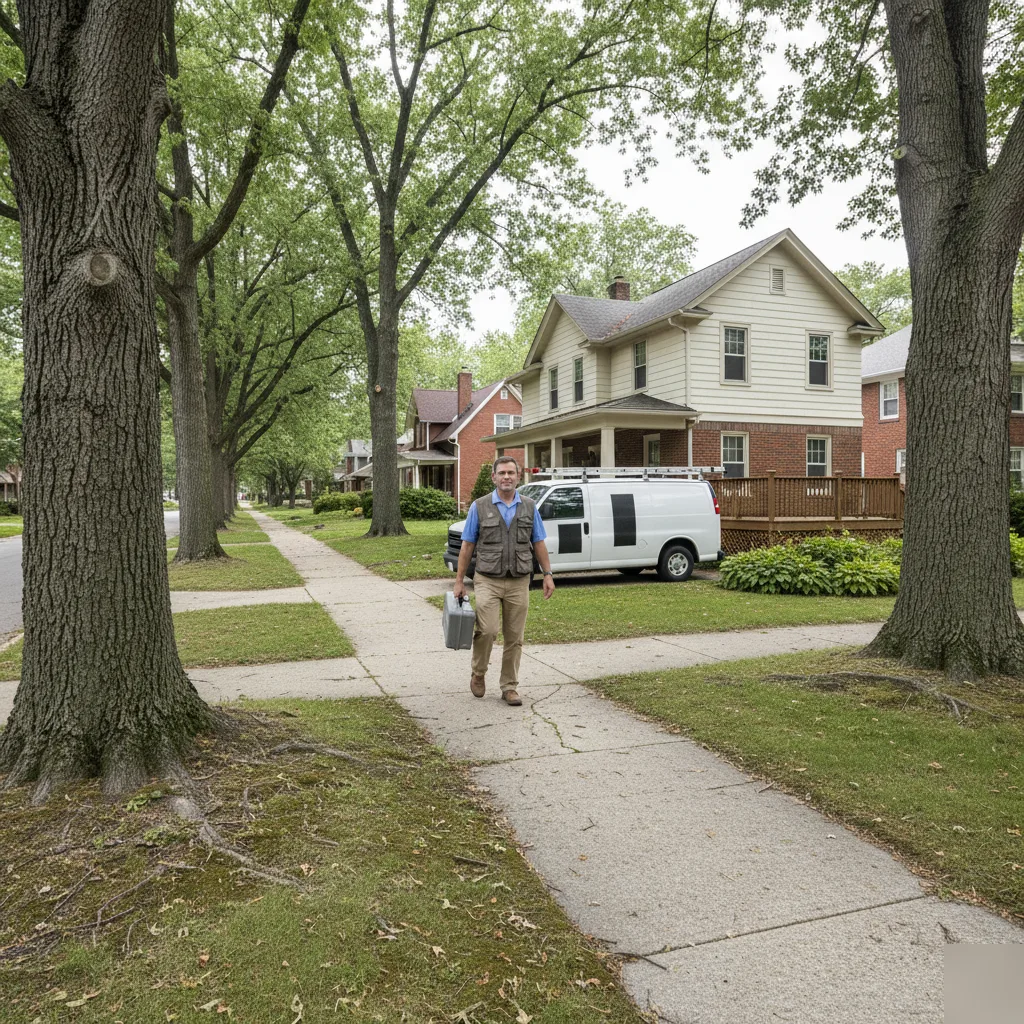
Open Concept Engineering provides structural home inspection services for homeowners, buyers, investors, property managers, and contractors throughout Clayton and the greater St. Louis metro. Every inspection we conduct is performed by Scott a structural engineer for load bearing walls, foundation conditions, and every structural system found in Clayton's older homes, whose direct experience in St. Louis County plan review means he knows exactly what structural conditions local plan examiners flag, what repair documentation the county permit office requires, and how these structures behave under the loads, drainage conditions, and settlement patterns specific to this market.
The inspection after the home inspector says you need a structural engineer — that is what we do. And in Clayton, that referral happens more consistently than in almost any other St. Louis County market, because the structural complexity of the housing stock here produces conditions that general home inspections were never designed to evaluate.
New construction inspection
in Clayton, MO
New construction in Clayton and surrounding St. Louis County communities carries a structural inspection assumption that most buyers and builders rely on without fully understanding its limitations. The county sends inspectors. Framing gets reviewed. Foundations get checked. The project moves through the official inspection process and receives its certificates of occupancy. The assumption is that the official inspection process catches everything that matters structurally.
It does not — and Scott's background in St. Louis County plan review means he understands exactly where the gaps are. County inspectors are tasked with verifying code compliance at specific stages of construction. They are not tasked with the kind of comprehensive structural evaluation that a licensed P.E. conducting an independent new construction inspection provides. They check what is required at each inspection stage. They do not perform the load path analysis, connection detail review, and structural calculation verification that an independent structural engineering inspection covers.
The conditions that a new construction structural inspection catches are predictable. Framing connections that meet the letter of the code while creating structural conditions that will produce problems under long-term loading. Beam bearing conditions that were installed correctly from a distance and incorrectly in detail. Foundation anchor bolt patterns that were placed before the concrete was poured and never verified against the structural drawings after the pour. Floor system connections at the addition interface that look complete from the accessible side and are inadequate on the side that is about to be covered by insulation and drywall.
Every one of those conditions is easier, faster, and less expensive to address during construction than after the building is closed up and occupied. That is the fundamental value of a new construction structural inspection — not catching what the county missed, but catching what nobody was specifically tasked to look for with the engineering credentials required to evaluate it correctly.
Our new construction inspection service is structured around the construction timeline. We come in at the critical framing stage — after the structure is erected and before insulation and drywall close access to the structural elements. We evaluate framing connections, bearing conditions, load path continuity from roof to foundation, and the structural details at every point in the building envelope where the design intent has to be verified against what was actually installed in the field.
Scott's direct experience in St. Louis County plan review means new construction structural inspections are evaluated against the same standards the county plan examiner applied when the drawings were reviewed — because he knows what was approved in the permit package and what field execution is required to match it. That alignment between the permitted design and the field verification is what gives new construction buyers the structural confidence that the official inspection process alone cannot provide.
For buyers purchasing new construction in Clayton and surrounding communities, an independent structural engineering inspection is the due diligence step that protects the single largest investment most families make — before the walls go up and the opportunity to verify the structure closes permanently.

Structural damage inspection
in Clayton, MO
Structural damage in Clayton's older homes arrives from multiple directions — and is misread from most of them. A storm event produces damage that looks cosmetic from the exterior and is actively structural in the framing and foundation below the surface. A deferred maintenance condition that has been managed with paint and caulk for years finally crosses the threshold from cosmetic deterioration to structural deficiency. A previous renovation removed or modified a structural element without engineering, and the consequences of that decision are only now becoming visible in the building's behavior.
In every one of those scenarios, the structural damage inspection performs the same function: it establishes what is actually happening structurally, what caused it, what the structural significance of the current condition is, and what it will take to repair it correctly. That function requires a licensed P.E. — not because the damage is always severe, but because determining whether it is severe, whether it is progressing, and what constitutes an adequate structural repair requires engineering credentials that a general contractor, a home inspector, and a restoration company do not carry.
Missouri's storm and wind exposure makes structural damage inspection a consistent demand driver in Clayton specifically. The older masonry construction that defines this housing stock — brick veneer over timber framing, stone foundation walls with aging mortar joints, unreinforced masonry walls in pre-war construction — responds to wind stress, hail impact, and the freeze-thaw cycles of the St. Louis climate in ways that newer construction does not. A severe wind event that a newer Chesterfield build handles without structural consequence can produce foundation movement, framing displacement, and masonry cracking in a 1930s Clayton brick home that is invisible from the street and very visible to a structural engineer walking through the basement.
Our structural damage inspection service starts with a comprehensive field evaluation — actual structural conditions documented with precision using LiDAR measuring technology and wall scanning tools that produce an accurate post-damage baseline. We distinguish between cosmetic damage and structural damage with the engineering specificity that an insurance adjuster, a contractor, or a general home inspector cannot provide. We identify any conditions that create ongoing safety or stability concerns, document the structural significance of every condition identified, and produce a written engineering report that establishes the complete picture of what the damage event did to the building structurally.
For insurance claims involving structural damage, our inspection reports carry the P.E. credential that distinguishes an engineering assessment from a contractor's damage estimate — a distinction that matters to insurance carriers reviewing claims that involve structural repair costs. Scott's direct experience in St. Louis County plan review means any repair work identified in the structural damage assessment translates directly into the permit documentation the county requires, closing the loop between damage identification and permitted structural repair without requiring a second engagement to produce the drawings that the first engagement should have informed.
For Clayton homeowners who experienced a recent storm event, a settling condition, or a renovation discovery that revealed damage that was not anticipated — do not wait for the condition to become unmistakably worse. The structural consequences of damage in older masonry construction are almost always more contained and less expensive when they are identified and addressed before the affected elements continue to deteriorate under ongoing load and weather exposure.
Basement structural inspection
in Clayton, MO
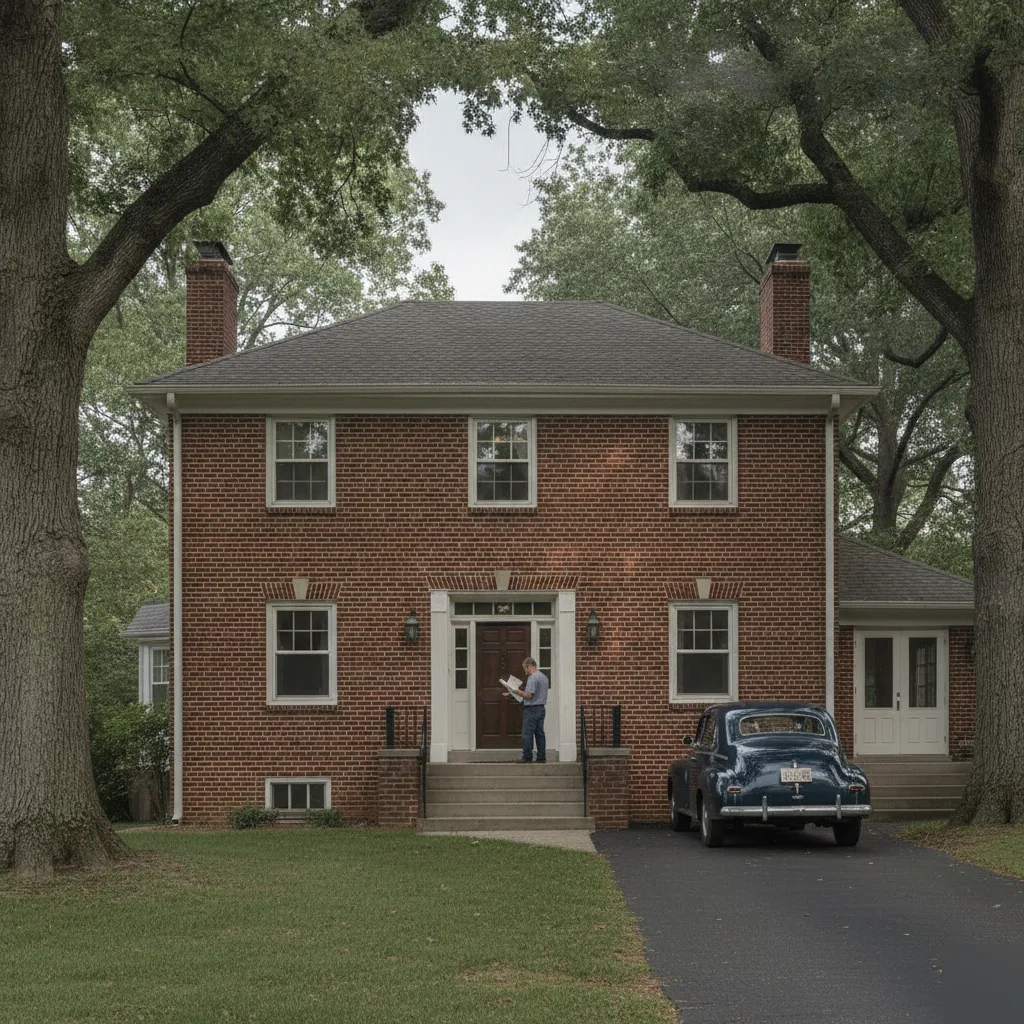
Clayton's basement structural conditions are among the most consistent sources of engineering referrals in the St. Louis metro — and the most consistently underestimated by homeowners who have lived with a basement condition for years without understanding what it means structurally.
The foundation systems in Clayton's older homes were built in an era before the drainage technology, waterproofing systems, and soil pressure engineering that modern foundation design relies on. Stone foundations with lime mortar joints that have deteriorated over decades. Early poured concrete walls with reinforcement patterns that predate current seismic and lateral load requirements. Unreinforced concrete block walls that were adequate for the original construction loads and are now carrying renovation loads that were never part of the original structural calculation. All of these systems accumulate condition over time — and the accumulation is rarely linear. A foundation that has been stable for sixty years can begin showing active movement in response to a drainage change, a nearby excavation, or a renovation that altered the load distribution above it.
Our basement structural inspection service evaluates the complete foundation system — wall conditions, floor slab, column and beam bearing points, and the interface between the foundation and the framing above it. We document crack patterns, wall orientation and displacement, any evidence of active movement versus historic movement, drainage conditions that may be contributing to the observed conditions, and the structural relationship between foundation conditions and the performance of the floor systems and load bearing walls above.
The distinction between active movement and historic movement is one of the most important engineering judgments in a basement structural inspection — and one of the most frequently misread by non-engineers. A crack that formed thirty years ago and has not moved since is a different structural concern than a crack that formed in the same location and is currently widening. Horizontal cracks in block foundation walls are a different structural condition than vertical cracks in poured concrete. Stair-step cracking in stone foundation mortar joints means something different from through-wall cracking in the same material. Reading those conditions correctly requires field experience with these specific foundation types under the specific soil and drainage conditions of the St. Louis market.
Scott's LiDAR measuring technology produces existing condition documentation at the baseline inspection that becomes the reference point for any future monitoring. For conditions that require monitoring rather than immediate repair, that baseline documentation gives the homeowner an accurate starting point for tracking whether a condition is stable or progressing — without relying on memory of what the crack looked like when it was first noticed.
For pre-purchase situations in Clayton's active real estate market — where buyers are frequently evaluating older homes with foundation conditions that the general home inspection flagged but could not evaluate structurally — our basement structural inspection gives buyers the engineering opinion they need before closing. Not a flag on a home inspection report that says "consult a structural engineer." An actual engineering assessment that defines the structural significance of what was found, what it costs to address it, and what the St. Louis County permit process requires to do it correctly.
Basement structural conditions in Clayton are not automatically deal-breakers. Most are addressable. All of them deserve an engineering assessment that tells the homeowner or buyer exactly what they are dealing with — before a purchase price is locked in, a renovation budget is committed, or a repair scope is priced by a contractor whose financial interest is in the size of the repair rather than the accuracy of its scope.
Multi-family home inspection
in Clayton, MO
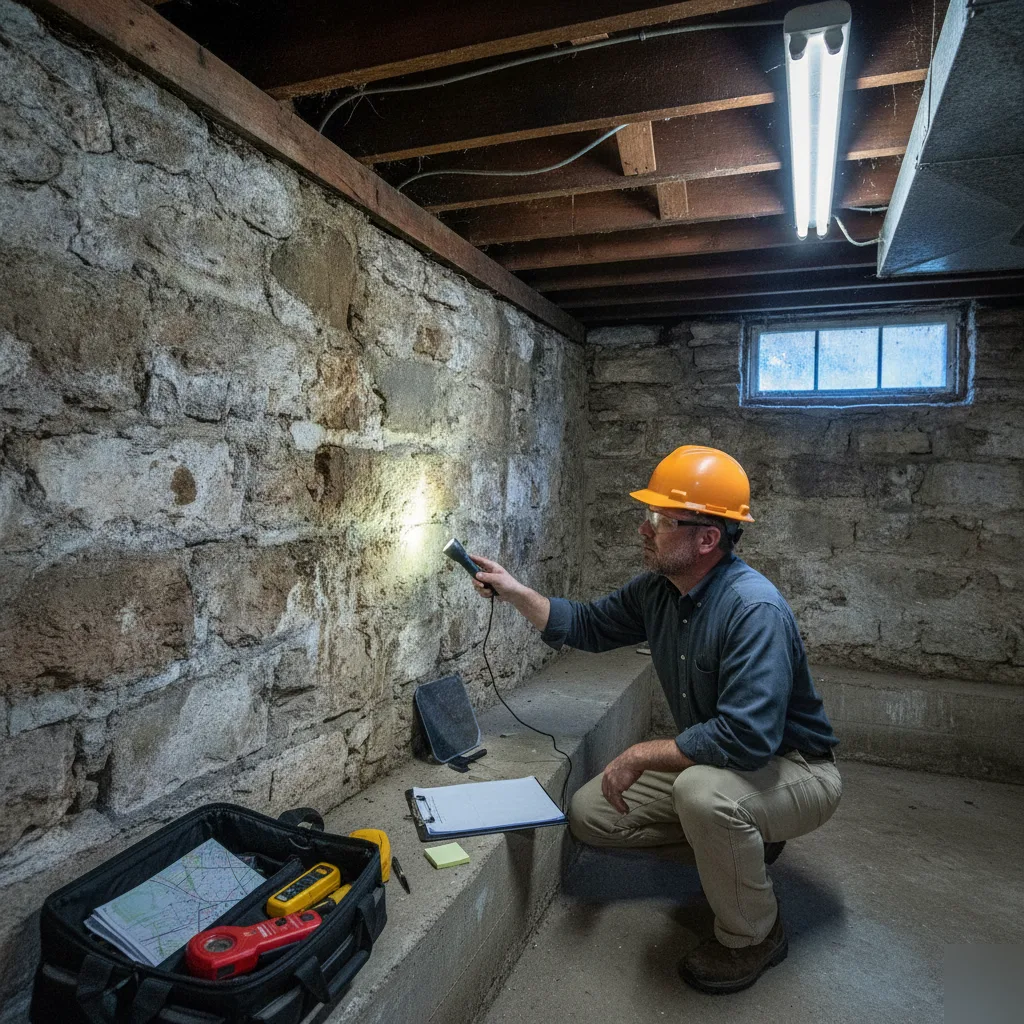
Clayton's rental and multi-family market — duplexes, three-flats, four-family buildings, and small apartment buildings spread throughout the residential neighborhoods surrounding the central business district — generates structural inspection demand that the single-family residential inspection market consistently underserves.
Multi-family structural conditions differ from single-family conditions in ways that matter enormously to property owners, investors, and managers. Shared structural systems mean that a condition in one unit can be actively affecting the structural integrity of an adjacent unit whose occupants have no awareness of what is happening in the building they share a wall or floor with. Deferred maintenance in a multi-family building compounds differently than in a single-family home — one owner's decision not to address a drainage condition, a deteriorating ledger board, or a settling foundation wall affects not just their unit but every unit the affected structural system supports.
For investors evaluating multi-family acquisitions in Clayton, structural inspection by a licensed P.E. is the due diligence step that determines whether a building's condition is consistent with its asking price, what capital improvement investment the structural condition requires over the near term, and what the St. Louis County permitting process requires to address the conditions identified. A multi-family acquisition made without a structural engineering inspection is an acquisition made without an accurate structural cost basis — and in Clayton's older multi-family stock, the gap between the assumed condition and the actual structural condition is frequently the difference between a sound investment and an expensive correction.
Our multi-family home inspection service covers the complete structural envelope of the building foundation system, floor framing on every level, load bearing walls and columns, roof structure, balconies and exterior stairs, and the interface between units where shared structural systems create conditions that affect multiple occupants simultaneously. We inspect every unit and every accessible structural space in a single engagement, producing a comprehensive written engineering report that documents all structural conditions identified, their significance, and recommended repairs prioritized by urgency and estimated cost.
For property managers dealing with tenant-reported conditions — a floor that bounces noticeably, a wall crack that appeared after a storm, a balcony that feels unstable under normal use — our multi-family structural inspection provides the engineering opinion that determines whether the reported condition requires immediate structural intervention, routine maintenance, or monitoring. That engineering determination is the difference between a property manager who responds to tenant concerns with a credible structural assessment and one who responds with a contractor's opinion that may or may not reflect the actual structural significance of what the tenant reported.
Scott's direct experience in St. Louis County plan review means multi-family structural inspection findings translate directly into the permit documentation the county requires for any structural repair work the inspection identifies. For multi-family property owners navigating the St. Louis County permitting process for structural repairs — a process that carries specific documentation requirements for multi-family occupancies that differ from single-family residential permits — that translation from inspection finding to permit-ready repair scope is the step that moves a structural concern from identified to resolved without requiring a second engineering engagement to produce the drawings the first engagement should have informed.
For estate situations involving multi-family properties that have not been actively maintained, our structural inspection establishes the accurate condition baseline that protects executors and beneficiaries from repair cost surprises after a property transaction closes around structural assumptions that were never verified by an engineer.
The difference between a home inspector
and a structural engineer in Clayton.
The distinction is not subtle and it is not a matter of credential preference. It is a functional difference in what each professional is authorized to do, trained to evaluate, and qualified to document.
A licensed home inspector conducts a visual inspection of accessible systems and components and documents observed conditions in a written report. They flag concerns. They recommend further evaluation by appropriate professionals. They do not determine structural significance, perform load path analysis, design structural repairs, or produce the engineering documentation St. Louis County requires to permit and inspect structural repair work.
A licensed structural engineer conducting a building inspection does all of those things. The inspection is an engineering evaluation — not a visual walkthrough with a checklist. The report is an engineering document — not a summary of observed conditions with referrals to other professionals. The findings are actionable in the St. Louis County permitting process — not a starting point for a second round of professional engagement to produce the documentation the inspection should have generated.
In Clayton, where the housing stock consistently produces structural conditions that fall outside the scope of what a general home inspection is designed to find and evaluate, the choice between a licensed home inspector and a licensed P.E. for structural concerns is not a question of cost. It is a question of whether the inspection will produce an actionable engineering answer or a documented referral to get one.
Open Concept Engineering provides the engineering answer — from the initial field evaluation through the written report, through the permit documentation, and through the structural repair design if the inspection findings require it. Scott's St. Louis County plan review background means every step of that process reflects the specific documentation standards and structural engineering expectations of the local permit process.
We serve homeowners, buyers, investors, property managers, attorneys, contractors, and real estate professionals throughout Clayton and surrounding St. Louis County communities including Richmond Heights, Ladue, University City, Brentwood, Webster Groves, Kirkwood, and the greater St. Louis metro.

Need a structural home inspection in Clayton?
Whether you are buying a home and need a structural engineering opinion before closing, dealing with storm or settlement damage that a home inspector flagged but could not evaluate, managing a basement condition that has been there for years and never been properly assessed, or overseeing a multi-family property that needs a comprehensive structural review — we can get out there fast and give you an engineering opinion that tells you exactly what you are dealing with and exactly what it takes to address it.
217.273.6959Most structural inspection reports are delivered within days of the site visit. Call us before a structural condition in a Clayton property gets misdiagnosed, underdocumented, or more expensive than it needed to be.