Is One Crack in My Basement Wall Enough Reason to Schedule an Inspection?
One Crack Is Always Worth a Closer Look
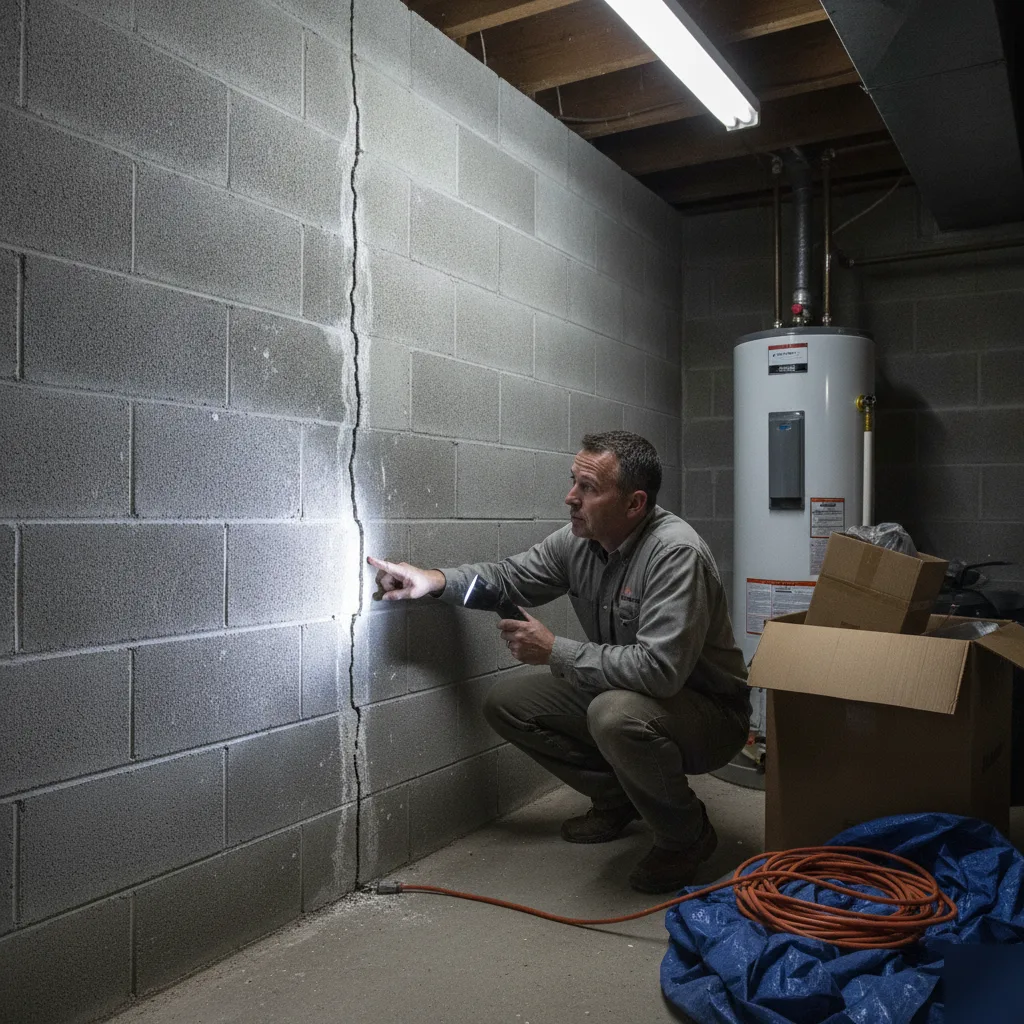
Here's our direct answer. Yes, one crack in your basement wall is enough reason to schedule an inspection. Not every single crack points to a failing foundation, of course. But every crack is your home giving you a message, and ignoring that message can cost you a lot of money later on.
We see this constantly in Clayton.
A homeowner spots just one crack in their basement wall. They search online for answers. They find five different ideas. Some say it's fine. Some say the house is collapsing. This confusion often leads to inaction. Six months later, that original crack has company, the basement door jams, and now the repair job has doubled., this is the part most people overthink. They let the internet make it complicated.
The actual truth is simpler than folks imagine. A crack is a symptom. It might signal normal concrete shrinkage during its initial curing. It could point to active foundation movement. You just can't know for sure by looking at it from across the room. Scheduling a foundation crack inspection provides the real answer in a single visit.
What One Crack Can Actually Mean
Not all cracks mean the same thing. A thin hairline crack in a poured concrete wall usually comes from shrinkage during curing. That's common, and it's generally not urgent. But a crack that's wider up top and narrow down below? That specific pattern suggests differential settlement. And a horizontal crack along a block wall can mean outside soil pressure is pushing inward. Same house, same basement, very different underlying issues.
In Clayton's older homes, especially those built in the 1930s and 1940s with their stone or older poured concrete foundations, even a single crack merits a look. These foundation materials act differently than modern concrete. They're more permeable. They react to changes in moisture in ways newer systems don't. A crack that appears small on the surface might run all the way through the wall.
- Vertical cracks often connect to general settling or concrete shrinkage.
- Horizontal cracks can signal serious inward pressure from the soil.
- Stair-step cracks in block walls typically follow mortar joints under strain.
- Diagonal cracks near corners might mean the footing has shifted.
Each type tells a distinct story. A licensed P.E. reads that story quickly.
Why Waiting Rarely Saves You Anything
Most folks don't get this point until it's too late. Foundation problems don't just stop getting worse. They keep going. Water finds the opening. Freeze-thaw cycles, which we get plenty of in St. Louis County winters, widen it. Soil shifts with the seasons. What begins as a small cosmetic flaw turns into a structural concern.
Think about it this way. Would you ignore a new sound from your car engine because it's "just one noise"? Probably not. Your basement wall works the same way. One crack is important information. It's your foundation giving an early alert before the problem becomes expensive.
And here's what many Clayton homeowners often overlook. If you're planning any renovation, a home addition, or maybe an open-concept kitchen remodel that involves load-bearing wall removal, that single crack changes the entire structural engineering plan. Scott's direct experience in St. Louis County plan review means your permit drawings are built around exactly what the examiner needs to see. Getting a basement structural inspection before you even start planning saves you from surprises at the permit counter. This approach keeps your project moving.
So if you've been eyeing a crack in your basement, wondering if it's worth a call, it absolutely is. One crack always deserves a closer look. The inspection itself is simple. You get clear answers about what's happening and if it needs immediate action or just monitoring. That's it. No guessing, no waiting for things to get worse.
If you're ready for that clarity, our foundation crack inspection page explains what you can expect.
Not All Basement Wall Cracks Signal the Same Problem
A thin line in your basement wall isn't automatically a major disaster. But it's also not automatically harmless. The crack's direction, its width, and where it's located all tell a story about your foundation. Learning to interpret that story gives you a real advantage.
Most basement wall cracks fit into a few basic types. Each points to a different cause. Some are far more urgent than others.
Vertical Cracks
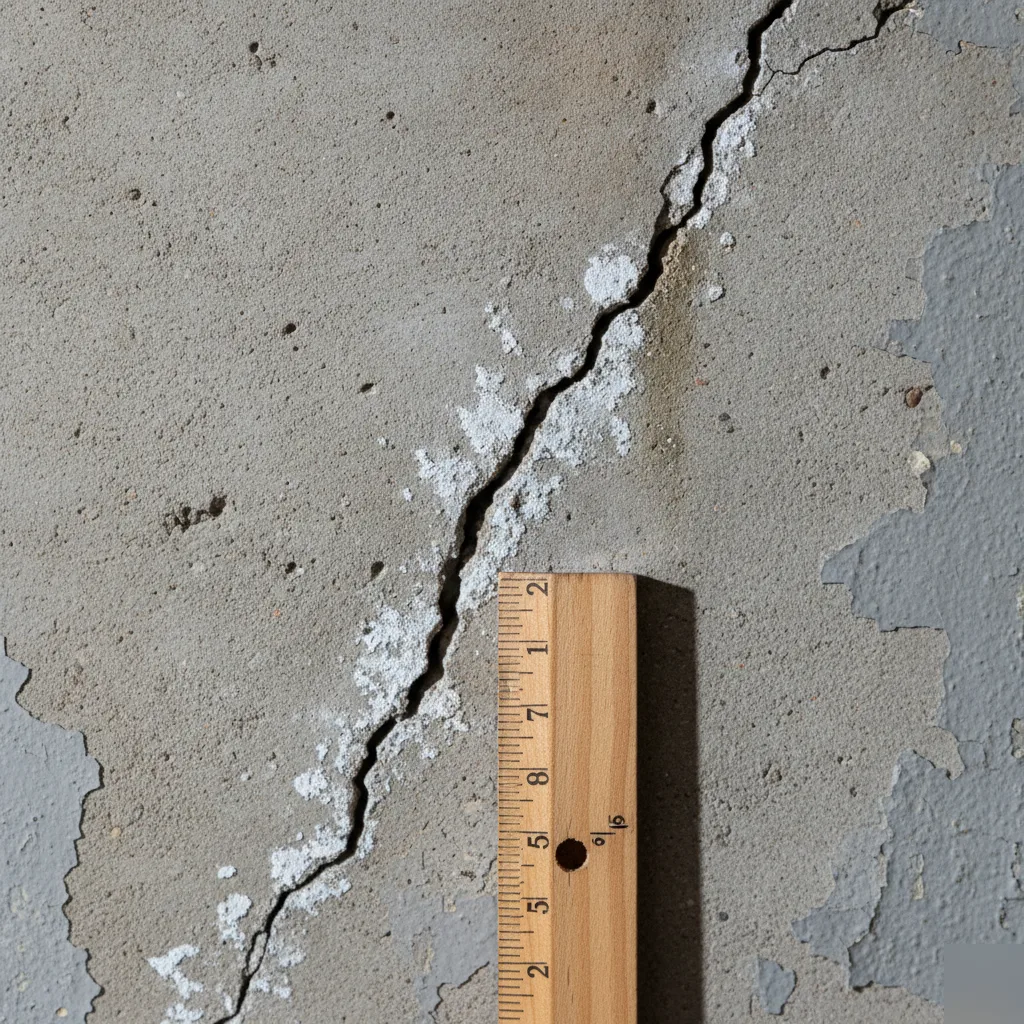
These run straight up and down, or at a slight angle. They are the most common kind we see in poured concrete walls. Concrete shrinks as it hardens, and that shrinkage creates narrow vertical cracks. In many Clayton homes built from the 1930s through the 1960s, you'll find these in older poured concrete foundations that have simply settled over decades. A vertical crack under 1/16 of an inch wide is often cosmetic. It still needs monitoring, but it rarely signals wall failure.
Horizontal Cracks
This is the type that needs your fast attention.
Horizontal cracks typically mean outside pressure is pushing against the wall. Soil expands when it gets wet. The clay-heavy soil around Clayton and surrounding St. Louis County communities is especially prone to this. The American Society of Civil Engineers points out that expansive soils cause more property damage each year than floods, hurricanes, and earthquakes combined. A horizontal crack roughly halfway up your wall suggests that soil pressure might be winning. We see this pattern consistently during basement structural inspections on older homes near Richmond Heights and University City.
Stair-Step Cracks
These follow the mortar joints in block or brick foundation walls. They zigzag, just like a staircase. Stair-step cracks often point to differential settlement. One part of your foundation is sinking while another stays put. In homes with stone foundations, which are quite common in Clayton's older neighborhoods, you might see similar patterns where the mortar between stones has worn down unevenly.
What Width Tells You
Width matters more than most homeowners realize. A hairline crack is different from one where you can fit a pencil. Here's a general guide:
- Under 1/16 inch wide: likely cosmetic, worth watching closely.
- Between 1/16 and 1/4 inch: could indicate active movement, schedule a foundation crack inspection.
- Over 1/4 inch wide: likely structural, needs a prompt professional evaluation.
- Any width with water seeping through: moisture is finding a path, and the crack may be getting worse.
These measurements aren't absolute laws. A narrow crack that's growing is more worrying than a wider crack that hasn't changed in ten years. This is why a single quick look never tells the full story.
And here's something people don't often grasp until it's too late. Two cracks that look the same on the surface can have completely different causes. One could be simple shrinkage from the initial pour. The other might be the very first visible sign of a bowing wall. We've inspected basements in Clayton where a homeowner ignored a crack for years, only to discover the wall had moved nearly an inch inward. The crack looked minor from inside, the structural problem was not.
So what should you actually do? Start by noting the crack's direction, measure its width, and check if it's wet or dry. Take a photo with a coin next to it for scale. Check it again in 30 days. If it's wider, longer, or leaking, that's your signal. A professional inspection gives you a clear answer, not a guess, about whether the crack is stable or getting worse.
These Warning Signs Mean You Should Not Wait
Not every crack means an emergency. But some cracks tell a very specific story, and that story is, "your foundation is moving right now." Knowing the difference can save you many thousands of dollars in repairs.
Here's what we see in Clayton homes that signals real trouble.
Horizontal Cracks in Block or Poured Walls
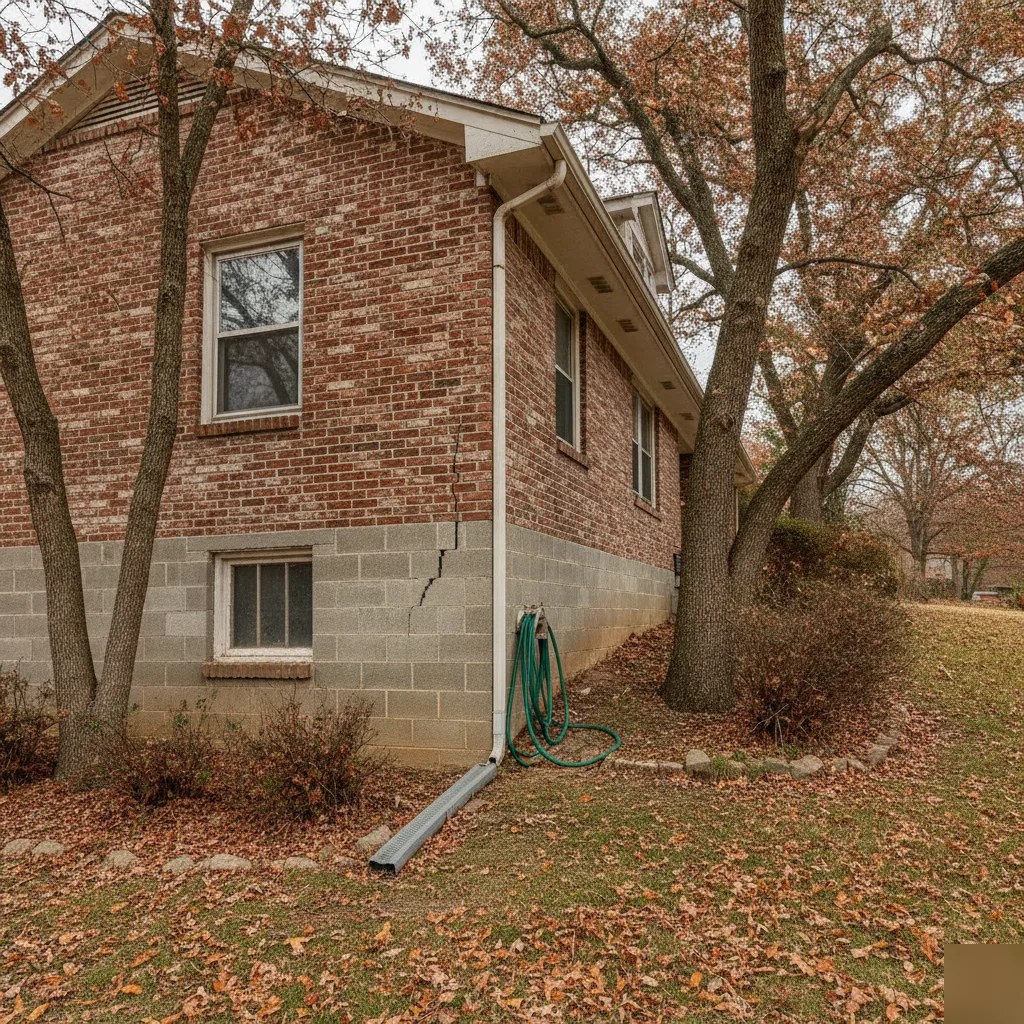
A horizontal crack means lateral pressure is pushing against your wall. This is a common issue in older Clayton homes, where soil pressure builds against aging poured concrete or stone foundations. The wall isn't just cracking, it's bowing inward. We've inspected basements in homes near Shaw Park where a single horizontal crack had already caused the wall to shift over an inch. That's a serious structural problem, and it just gets worse every season.
Stair-Step Cracks in Block Walls
These follow the mortar joints, creating a zigzag pattern. They almost always point to differential settlement. One part of your foundation is sinking, while another stays put. In the clay-heavy soils around Clayton and Richmond Heights, this happens more often than you might imagine. Seasonal moisture changes cause the soil to expand and contract, slowly pulling the foundation apart over years.
Cracks Wider Than 1/4 Inch
Width truly matters. A hairline crack might be purely cosmetic. A crack you can fit a pencil into is absolutely not. According to the American Society of Civil Engineers, cracks wider than 1/4 inch typically show active structural movement. They need professional evaluation. If you can see daylight through it, you're past the "wait and see" stage. For a deeper look at how foundation design and structural integrity affect wall performance under pressure, the American Society of Civil Engineers offers detailed technical resources for homeowners and professionals alike.
Here are the warning signs that mean you should schedule a foundation crack inspection immediately:
- Cracks that have grown wider or longer since you first noticed them.
- Water seeping through the crack during rain or snowmelt.
- Doors or windows upstairs that suddenly stick or won't close right.
- Visible displacement where one side of the crack sits higher than the other.
- Multiple cracks appearing in the same wall or across different walls.
That last point is really important. One crack can be an isolated event. But multiple cracks forming a pattern tell us the entire foundation is reacting to movement. We see this frequently in 1930s and 1940s Clayton homes with original stone foundations. They just weren't designed for modern drainage loads.
And here's something most people don't realize until it's too late. A crack that has been "stable" for years can suddenly start growing. All it takes is one heavy rainy season or a plumbing leak near the foundation. The soil conditions shift, the pressure changes, and a crack that seemed harmless becomes the weak point where your wall starts to fail.
One scenario we encounter regularly: a Clayton homeowner is planning an open-concept kitchen remodel, which means load-bearing wall removal. During the planning, they mention a basement crack they've ignored for years. We inspect it and find the foundation has shifted enough that the remodel plans need to include structural reinforcement before any walls can come down. Catching that early saved the project from major problems.
So what should you actually do? If you spot any of these warning signs, get a foundation crack inspection scheduled. You'll leave with facts, not guesses. Scott's direct experience in St. Louis County plan review means our inspection report carries real weight if permits or engineering work follow. You get clear information you can act on, whether that means monitoring the crack or addressing it before it gets worse.
Don't wait for the crack to tell you it's too late.
Frequently Asked Questions
Is one crack in my basement wall really enough reason to call for an inspection in Clayton?
Yes, one crack is always enough reason to schedule a foundation inspection. Clayton's older homes — many built in the 1930s and 1940s — have stone or early poured concrete foundations that behave differently than modern materials. They absorb moisture more easily and react to seasonal soil shifts. One crack might be simple shrinkage. It might also be early settlement. You can't tell the difference just by looking. A licensed professional can give you a clear answer in a single visit.
What's the difference between a crack I should worry about and one that can wait?
The direction and width of the crack matter most. A thin vertical crack under 1/16 of an inch wide is often from normal concrete shrinkage. It needs monitoring but rarely signals wall failure. A horizontal crack is a different story — it usually means outside soil pressure is pushing inward. That needs fast attention. Stair-step cracks in block walls suggest differential settlement. When in doubt, a foundation crack inspection removes the guesswork and tells you exactly what you're dealing with.
Does Clayton's soil actually make basement cracks more likely?
Yes, it does. The clay-heavy soil common throughout Clayton and surrounding St. Louis County expands when wet and shrinks when dry. That constant movement puts pressure on your foundation walls year-round. The American Society of Civil Engineers notes that expansive soils cause more property damage annually than floods, hurricanes, and earthquakes combined. Clayton's freeze-thaw winters add to that stress. A crack that looks small in October can widen noticeably by spring. That's why early inspection matters here specifically.
Is it a mistake to just watch a basement crack for a few months before doing anything?
Waiting without professional guidance is a common mistake. Watching a crack yourself sounds reasonable, but most homeowners don't know what changes to look for. Meanwhile, water finds the opening, freeze-thaw cycles widen it, and soil keeps shifting. What starts as a cosmetic issue can become a structural one. Monitoring makes sense after an inspection, when a professional tells you what to watch and when to act. Doing it blind first is where people lose time and money.
How does a basement crack affect a home renovation or addition project in Clayton?
A single crack can change your entire renovation plan. If you're removing a load-bearing wall, adding a room, or remodeling a kitchen, the foundation condition affects the structural engineering drawings your permit requires. St. Louis County plan reviewers look closely at existing foundation conditions. Discovering a crack after your plans are drawn can delay your permit and add cost. Getting a foundation crack inspection before you start planning keeps your project on track and avoids surprises at the permit counter.
What should I do before a foundation inspector arrives at my Clayton home?
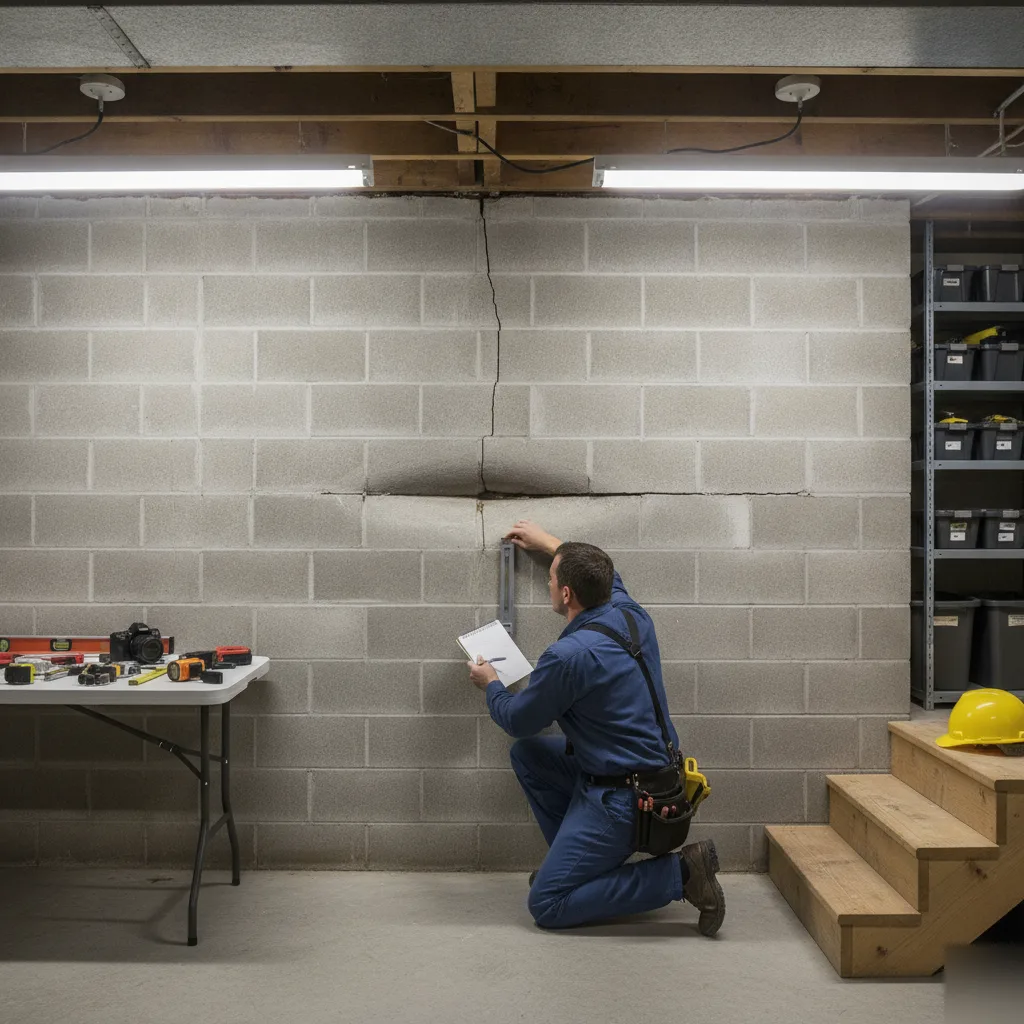
Clear access to your basement walls before the inspector arrives. Move storage boxes, shelving, or furniture away from the walls so the full surface is visible. Take a few photos of the crack beforehand — note the date. If you've seen water near the crack after rain, mention that. The more information you share, the faster the inspector can read what's happening. You don't need to do repairs or clean up the crack itself. Leave it exactly as you found it.