Older Single-Family Homes Shape Structural Work in Flordell Hills
A new crack in the basement, a door that suddenly sticks, or a floor that dips near the middle of a room can leave you wondering how serious the problem is. A structural engineer can help you find out what is causing the change and whether it needs repair. Flordell Hills is a small, separately incorporated city in north St. Louis County. Open Concept Engineering is a structural engineering firm, and our office is in Chesterfield, in west St. Louis County. In older homes, those warning signs usually point to three places: the foundation, the basement walls and the floor framing.
For an existing house, a structural visit usually centers on one question: what is making this house move? Call us with what you are seeing to ask whether a visit can be scheduled, or read more about the full range of work our licensed structural engineers in Chesterfield take on.
An older house can carry decades of small shifts, past repairs and changes made by earlier owners. A good assessment sorts those layers out so you know which ones matter today. Older homes tend to show the same trouble spots:
- Hairline cracks and stair-step cracks in the foundation (a stair-step crack follows the mortar joints in a zigzag pattern)
- Basement walls that lean or bow inward
- Floor framing that sags over time
Soil and weather can play a part. Clay soils swell when they get wet and shrink when they dry out. Missouri freeze-thaw winters add more stress to basement walls. Both forces can show up as wall movement in older homes, and they often work together over many years.
This part of north county is its own municipality, not part of Chesterfield. That matters when a repair needs a permit. Permit steps may differ from west county towns, so you should confirm with the city or St. Louis County which office reviews structural repairs for your address.
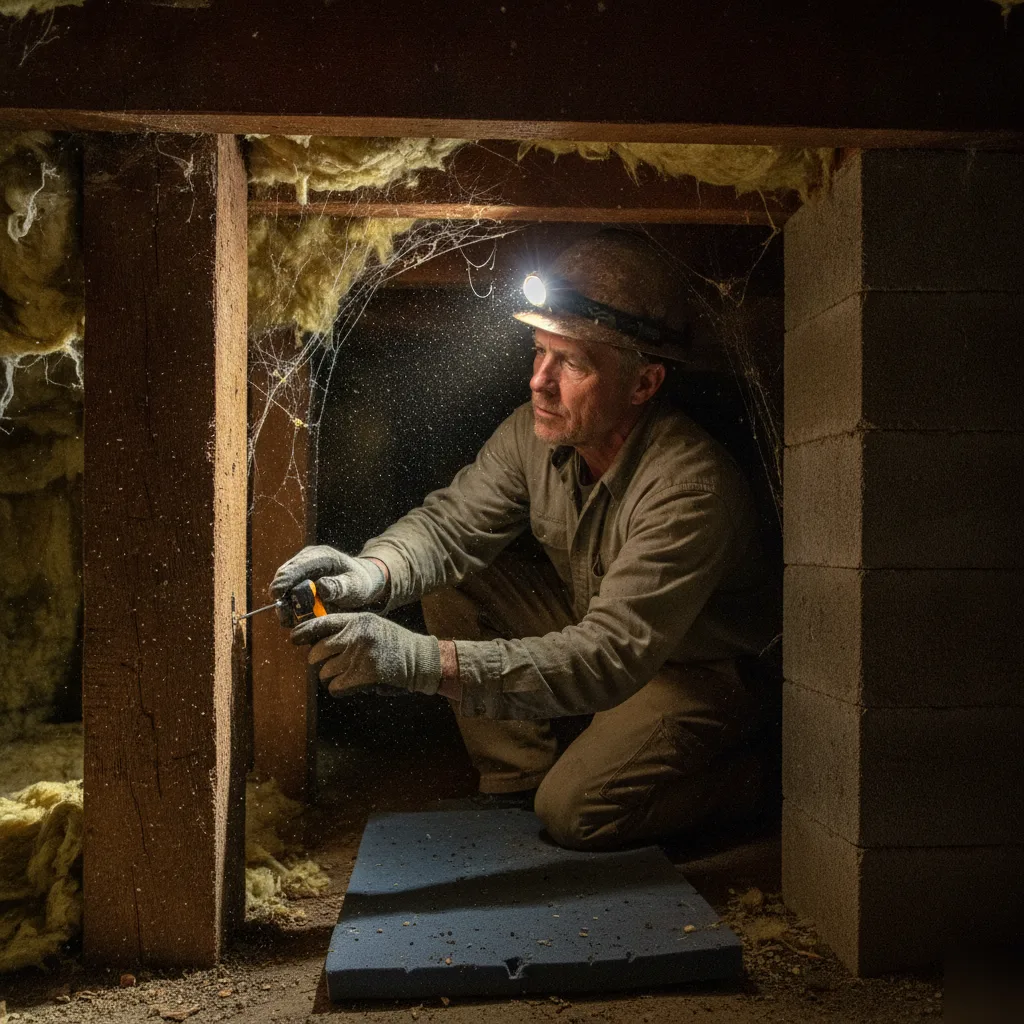
A structural assessment typically uses light tools rather than heavy equipment, so the work usually stays inside the home and around its foundation. Clear access to the basement or crawl space helps.
Foundation Crack Evaluation for Aging Flordell Hills Houses
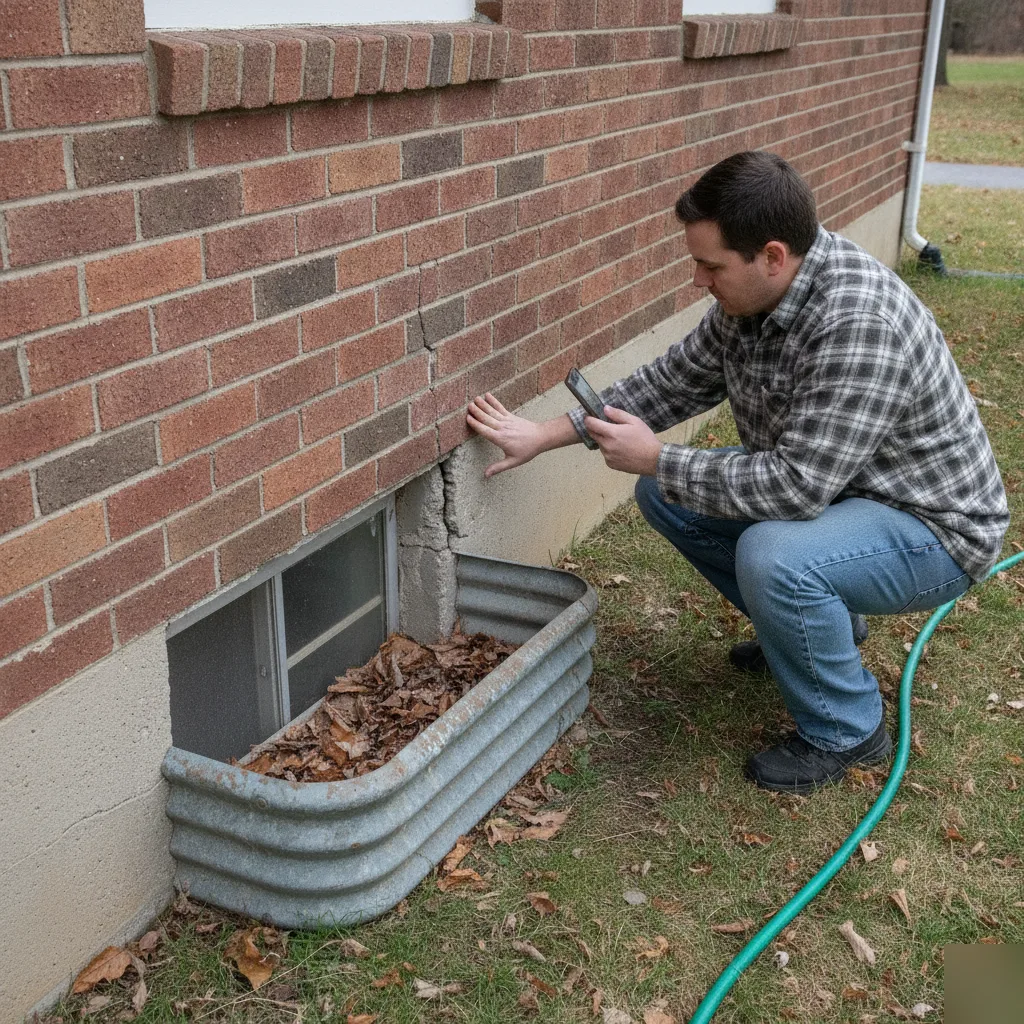
A foundation crack evaluation answers the question most homeowners ask first: is this crack normal settling, or a sign of real movement? Many cracks are harmless. Some point to a problem that keeps growing. The only way to tell the difference is to read the crack along with the rest of the house.
An evaluation typically starts with the crack itself. An engineer looks at how wide it is and whether it is wider at one end, whether it runs straight, diagonal or stair-step, and whether one side of the crack sits higher than the other (called offset).
The inside of the house is usually checked too. Doors that stick, gaps at window corners and cracks in drywall above doors and windows can all line up with a foundation crack. When those clues point the same way, they help show which part of the house has moved.
Age matters. Older foundations may have been through many wet and dry cycles in clay soil, so it helps to look for slow, long-term patterns, not just the newest crack. A crack that looks fresh can sit on top of movement that started many years ago.
The outside of the house is typically checked as well. Grading (the slope of the ground around the house) that tilts toward the walls, downspouts that dump water right next to the foundation, and gaps along the foundation line can all contribute. The EPA makes the same point in its guidance on the main ways to control moisture in your home, which notes that the ground should slope away from the house and that missing gutters are a common source of basement water. Addressing water problems like these is often part of the fix.
The goal of an evaluation is to determine whether the crack is cosmetic, needs watching, or needs repair. That is useful if you just found a crack and want an independent answer before you call a repair company. Photos of the crack can be helpful when you first get in touch.
Basement Wall Movement in North St. Louis County Homes: Deciding on a Repair Plan
A basement wall assessment helps you decide what to do when a wall in your home starts to move. Owners of older houses often report walls that bow inward, horizontal cracks, and water seeping in at those cracks. A horizontal crack deserves attention, because it often means the wall is being pushed from outside.
Soil pressure is the usual cause. Wet clay pushes on the outside of the basement wall, and in winter, freezing ground can push even harder. Over many seasons, that steady push can bend a wall that was built straight.
An engineer measures what is happening: how far the wall leans, where the cracks run, and whether the movement looks active or old. Old movement may have stopped years ago. Active movement is still going. That difference changes your next step more than anything else.
Depending on what the measurements show, your next step usually falls into one of three paths:
- Watch and re-measure. If the wall has moved a little and looks stable, tracking it over time may be enough.
- Fix drainage first. If water is the main driver, better grading and downspouts can take pressure off the wall.
- Plan a structural repair. If the wall is moving or leaning too far, it needs a designed repair.
People often ask, should I call a structural engineer or a foundation company first? In general, the engineer defines the problem, and the contractor carries out the fix. Starting with a clear diagnosis can keep you from paying for more work than the wall needs, or for a repair that falls short. An engineer who is independent of the repair contractor also gives you a fair way to compare bids, since each contractor can price the same defined problem.
If the repair needs a permit, check with whichever office reviews work for your address about what engineering documentation it requires. A wall that is moving fast or leaning sharply should be checked soon, not after the next season.
Sagging Floors and Framing Repairs in Small Flordell Hills Houses
Floor joist and beam evaluation finds out why a floor feels soft, bouncy or uneven. You might notice a bounce when you walk across a room, a dip in the middle of the floor, or cracked tile over a weak spot. These signs usually come from the framing below, not the floor surface.
Older homes have some common causes:
- Joists that were cut or notched to run old plumbing
- Beams that were too small for their span from the start
- Past water damage that weakened the wood
- A missing support post in the basement
An evaluation typically covers joist size and spacing, beam span, and the support posts that carry the beam, along with signs of rot or insect damage. A sag can have more than one cause, so it helps to check the whole load path (the route weight travels from the floor down to the foundation). From there, the repair usually means adding support, sistering damaged joists (bolting a new joist alongside the old one), or resizing a beam. Written specs a contractor can follow help make sure the fix matches the problem.
If you are planning a remodel, this step matters even more. In a small house, opening up a wall changes how loads travel through the framing. A beam size and header design (the beam that spans the new opening) should come before any demolition. Skipping that step can leave the floor or roof above without the support it needs.
After the work is done, a follow-up check can confirm the repair matches the plan. If you are selling or buying, a structural letter can document conditions or completed repairs.
Driving From Flordell Hills to Our Chesterfield Center Office
Open Concept Engineering works out of an office at 400 Chesterfield Center #400, Chesterfield 63017. If you would like to meet at the office, here is the general route from the neighborhood in north St. Louis County:
- Leave the neighborhood streets and head to I-270, the interstate beltway that loops around St. Louis County.
- Follow I-270 west and south through the county, toward the western suburbs.
- Merge onto I-64 (US-40) heading west toward Chesterfield.
- Exit toward Chesterfield.
- Follow local signs to 400 Chesterfield Center #400, Chesterfield 63017.
Drive time changes with rush hour on the interstates, so plan extra time during busy periods.
Flordell Hills Structural Engineer FAQ
Do you travel from Chesterfield to Flordell Hills for home inspections?
Open Concept Engineering's office is in Chesterfield. Contact the office to confirm whether visits to the area are available and how scheduling works.
Flordell Hills is its own city. Who handles permits for structural repairs there?
Permits for structural repairs here should be confirmed with the City of Flordell Hills or St. Louis County. It is a separate municipality, so the steps may differ from west county towns. Ask the reviewing office what engineering documentation it requires.
My older Flordell Hills home has a basement wall bowing inward. Is that urgent?
A bowing basement wall in an older home should be checked soon if it has horizontal cracks or is leaning fast. An engineer typically measures the wall and checks whether the movement is active or old, then advises whether to watch it, fix drainage, or plan a repair.
Can you check a small older house in Flordell Hills before I buy it?
A pre-purchase structural check typically looks at the foundation, basement walls and framing, and a written letter can help you have the findings in hand while you decide. Contact the office to ask what is available.
Is parking on the compact streets in Flordell Hills a problem for your visit?
Structural assessments typically use light tools rather than heavy equipment. It helps to make sure the basement or crawl space is clear and easy to reach.
What time of day is best to book a visit from Chesterfield to north county?
Interstate traffic is typically heaviest during rush hours, so contact the office to discuss a visit time that works for you.